Lebanonupdated 1h ago3 min read
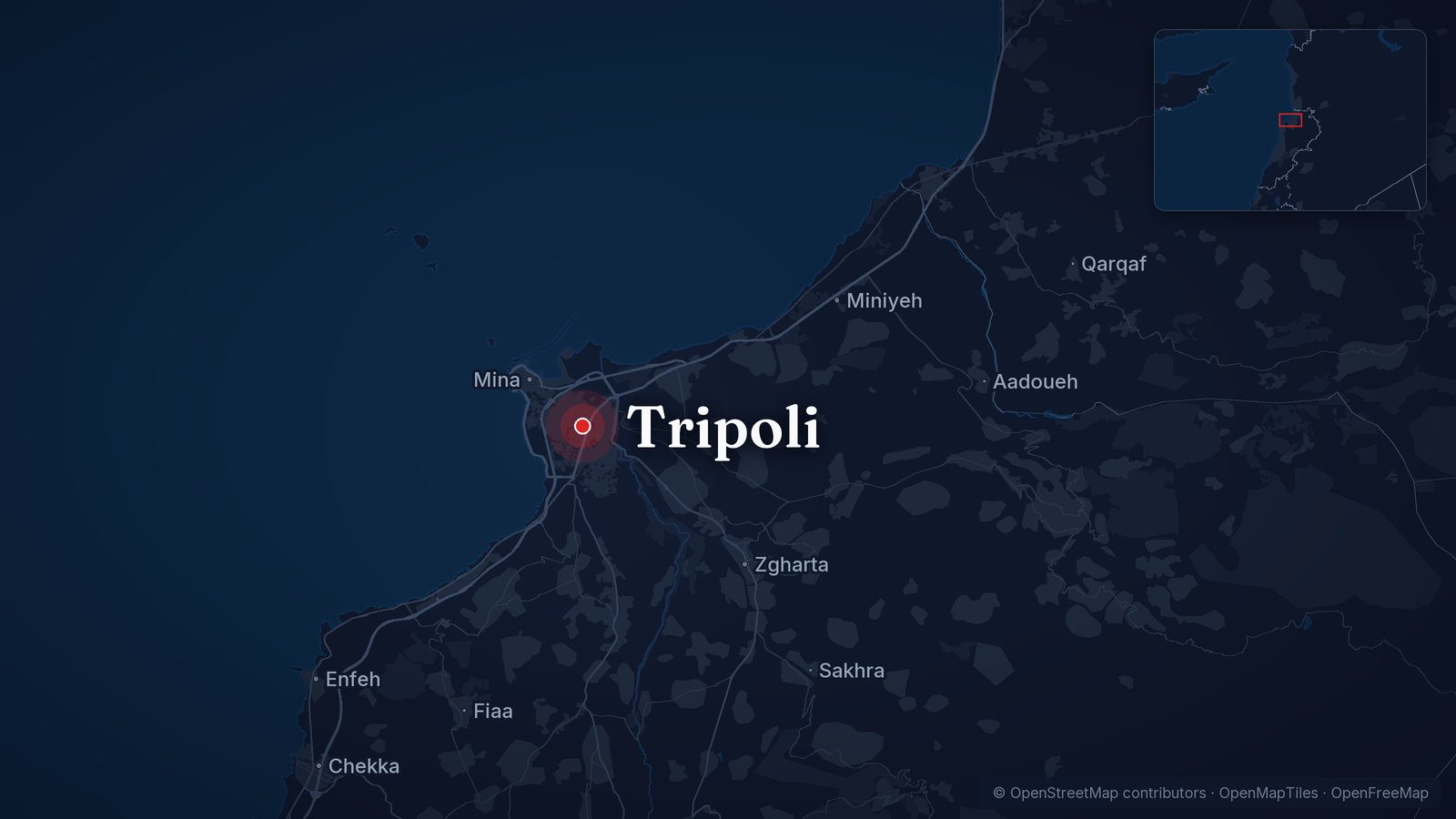
MapJoseph Aoun Visits Tripoli, Links “Anxious Waiting” To U.S.-Iran Clash Fears
6 West Asian1 OtherMap: © OpenStreetMap contributors, ODbL · Cropped for layout
This article is an automated aggregation of coverage from news outlets. Our editorials offer in-depth analysis curated by the NewsCord team.
Aoun's Tripoli visit showcased state presence, inspecting sites like the port, barracks, and economic zone. The visit unfolded amid regional anxiety over potential US-Iran clash and Israel-related escalation in Lebanon.
7 outlets told this the same way.
Outlets did split on Adel Nassar Seeks Judicial Council Referral Over Hezbollah Explosives Shipment →
Aoun’s Tripoli push
President Joseph Aoun visited Tripoli and framed the trip as a break from “anxious waiting” over a “major explosion,” while he linked the moment to fears of a military clash between the United States and Iran after Israel’s general elections next Tuesday, the 27th of this month, and the US midterm elections on the following Tuesday, November 3. Aoun told audiences at the Rashid Karami International Exhibition Center that “A stable state rests on centralizing weapons in the hands of its army,” and he said “There can be no development without an active state; the state is not the property of a faction, sect, or group but the property of all Lebanese and their shared reference.” Aoun added that “Tripoli is not a city on the margins of the homeland,” and he described Tripoli’s people as “pillars in building the state,” while he declared “The era of exclusion, deprivation, and marginalization is over.”
The Maronite Patriarch Bechara Boutros Al-Rahi delivered a sermon during a celebratory Divine Liturgy at the Notre-Dame de Mar Luwis Cathedral in central Beirut, marking four hundred years of Capuchin presence in Lebanon and the Levant, and he urged practical measures that strengthen families’ resilience and provide youths with reasons to stay rather than migrate. The U.S. embassy in Beirut issued a travel warning update that maintained the recommendation against travel to Lebanon for any reason due to risks of crime, terrorism, unrest, kidnapping, landmines, and
Border tensions and warnings
Lebanon moved through a “highly sensitive regional phase” as Israelis conducted maneuvers on the Lebanese border and as U.S. threats to Iran mixed with election calculations in Washington and Tel Aviv. The American Embassy in Beirut announced that it strongly advises U.S. citizens to avoid traveling to Beirut, including the southern suburb, and it warned that “the security environment remains unstable,” noting a high risk of exchange of fire, rocket attacks, and other violent acts. In the south, the report described continued artillery shelling and demolition or explosion operations, especially in al-Khiyam and al-Tiaba, and it said the pressure on farmers during olive harvests hit villages adjacent to the occupied areas.
Former Prime Minister Walid Jumblatt warned of the consequences of violence, writing on X: “From Jordan to France, terrorism strikes and kills to sow sedition and chaos.” The report also said diplomatic channels remained open while military preparations and political pressures heightened fears of a new confrontation Lebanon cannot afford to bear.
Explosives case and state authority
Lebanon’s cabinet session opened amid intensive political contacts that helped defuse tensions over a shipment of Hezbollah explosives seized in Dahr al-Baydar, with a dispute over whether the case should be referred to the country’s highest criminal court. Justice Minister Adel Nassar insisted on referring the case to the Judicial Council, a move opposed by Parliament Speaker Nabih Berri and Hezbollah amid concerns over its potential repercussions for Lebanon, while Prime Minister Nawaf Salam reaffirmed the state’s exclusive authority over weapons and decisions of war and peace. Salam declared, “No one can impose any limits on us other than those set by law,” and he stressed that national security and public safety must take precedence.
Aoun opened the cabinet session by welcoming Berri’s position that the Lebanese Army was a “red line,” and he warned, “The challenges facing the region are enormous, and I hope they do not lead to escalation or an explosion.” The dispute remained politically sensitive because referral required a cabinet decree issued on the justice minister’s recommendation, and the report said Hezbollah could respond to a referral by mobilizing supporters in the streets.