Iran30 April, 20266 min read
Masoud Pezeshkian Says U.S. Naval Blockade Threatens Global Peace on Persian Gulf Day
This article is an automated aggregation of coverage from news outlets. Our editorials offer in-depth analysis curated by the NewsCord team.
Naval blockade threatens global peace and stability, Pezeshkian asserts. Blockade contravenes international law and is doomed to fail.

PressTV was read line by line by the Watchdog: 3.2. See the score →
Pezeshkian on Persian Gulf Day
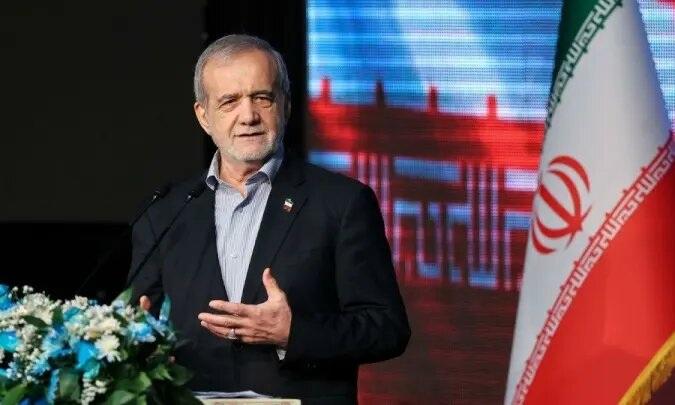
Iranian President Masoud Pezeshkian used Persian Gulf National Day to argue that a U.S. naval blockade and maritime restrictions threaten global peace and are “doomed to fail.” In a message carried by PressTV, Pezeshkian said that “any attempt to impose a maritime blockade or restrictions in the Persian Gulf was” contrary to international regulations and “poses a threat to the interests of regional nations and global peace and stability.” He framed the Persian Gulf as “an ‘inseparable’ part of Iranians’ identity” and a symbol of resistance to “old and new colonialists,” while also emphasizing the Strait of Hormuz’s importance to the world.
Pezeshkian said the “bravery of the Iranian naval forces” shows the passage “plays a key role in transferring energy” and “reflects Iran's undeniable role in ensuring regional and global security.” He also said Iran’s enemies have shifted pressure from “economic sector to naval blockade and restrictions in marine trade routes.”

In the same message, he insisted the Persian Gulf is “not an arena for imposing unilateral foreign wills,” and said security there “only makes sense in light of collective cooperation and mutual respect for the sovereignty of its coastal countries.” Pezeshkian held the United States and the Israeli regime responsible for any insecurity in the waterway and said Iran hopes stability can be restored “without the presence of foreign powers.”
Blockade, oil tankers, and response
Alongside Pezeshkian’s remarks, Türkiye Today reported that Iran’s position was backed by statements about an imminent response to the U.S. blockade.
The report said a senior unnamed security official told Press TV that Iran’s military would respond to the U.S. blockade with an “unprecedented action” in the near future.
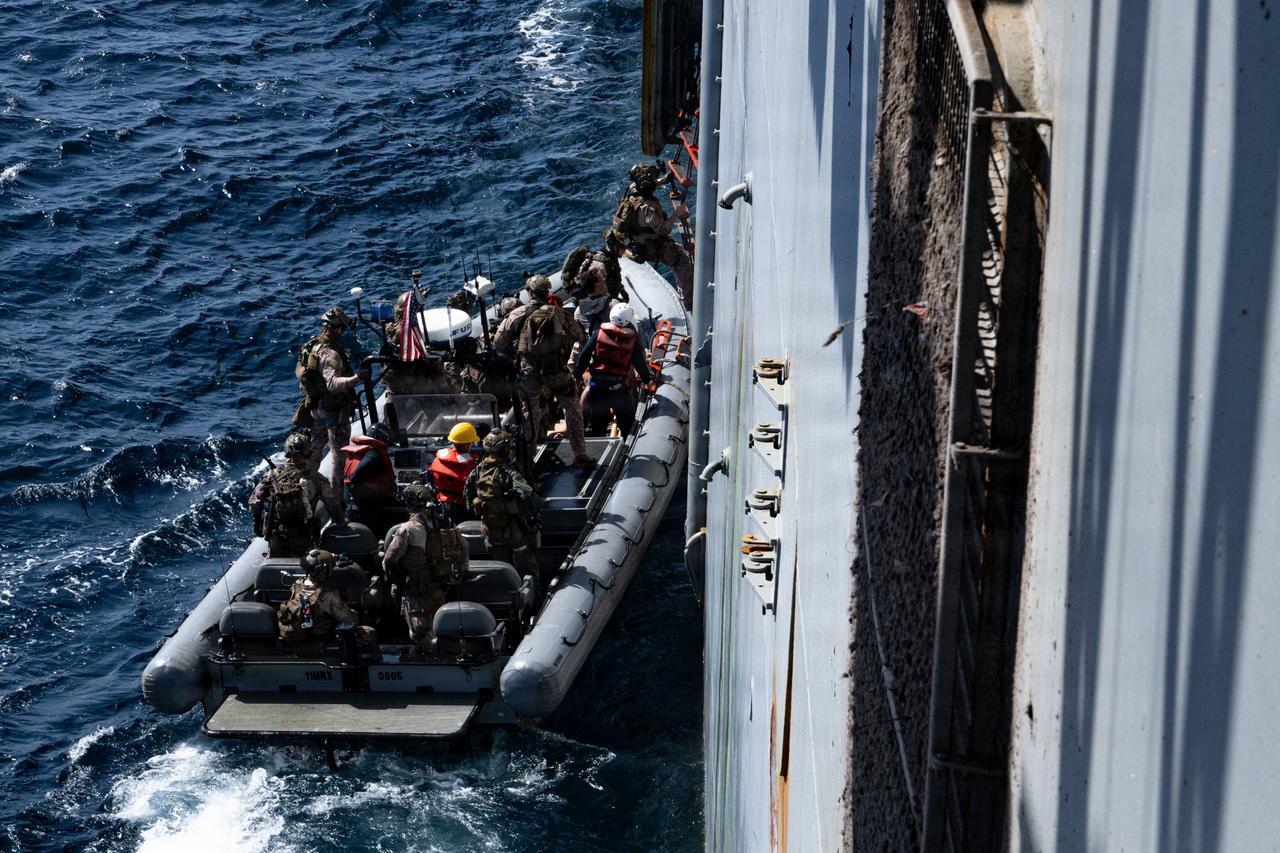
It also cited U.S. Central Command (CENTCOM) as saying “42 ships had been turned back,” with “69 million barrels of Iranian oil, worth an estimated $6 billion, currently stranded aboard 41 tankers.”
Pezeshkian’s National Day statement, as quoted by Türkiye Today, said: “Any attempt to impose a maritime blockade or restrictions is contrary to international law and against the interests of regional nations and global peace and stability and is doomed to fail.”
The same report said Pezeshkian described the Strait as “an inseparable part of Iranian national identity and a symbol of the sovereignty of the Islamic Republic of Iran.”
It added that a legislative plan addressing maritime restrictions was in its final stages after review by parliament’s judicial commission.
Iran’s Supreme Leader’s military adviser Mohsen Rezaei told state television Press TV that the U.S. blockade “will fail,” and warned that if it continued, Iran may “resort to confrontation to break it.”
Negotiations, ceasefire, and conditions
Multiple reports tied the blockade dispute to a ceasefire and stalled talks, with Iran linking any reopening of the Strait of Hormuz to lifting restrictions on Iranian vessels and ports. PressTV said that “On April 8, forty days into the war, a Pakistan-brokered temporary ceasefire took effect,” and that high-ranking Iranian and American negotiators then held talks in Islamabad but “stopped short of an agreement amid Washington’s excessive demands and insistence on unreasonable positions.” PressTV added that since then, Iran has “categorically refused to rejoin the process unless the US lifts the illegal blockade it has imposed on Iranian vessels and ports,” and that “as long as the blockade is still in place, it has no intention of reopening the Strait of Hormuz.”
Al-Manar TV Lebanon similarly described the “Ceasefire and blockade standoff,” saying that on April 8 “a Pakistan-brokered temporary ceasefire took effect following 40 days of hostilities,” and that talks in Islamabad ended “amid what Tehran described as Washington’s ‘excessive demands’ and insistence on ‘unreasonable positions.’” It also quoted the same linkage: “Iran has categorically refused to rejoin the process unless the US lifts what it calls the illegal blockade imposed on Iranian vessels and ports,” and said Tehran asserted it has “no intention of reopening the Strait of Hormuz” while the blockade remains.
The West Asian financial report from بوابة الشروق said gold prices fell as the U.S. administration hesitated on a proposed Iranian peace plan that would separate the crisis of closing the Hormuz Strait from the Iranian nuclear issue. It stated that Iran’s proposal remained under consideration while “the Hormuz Strait closure continues,” depriving global energy markets of “about one-fifth of their supply.”
War talk, costs, and market pressure
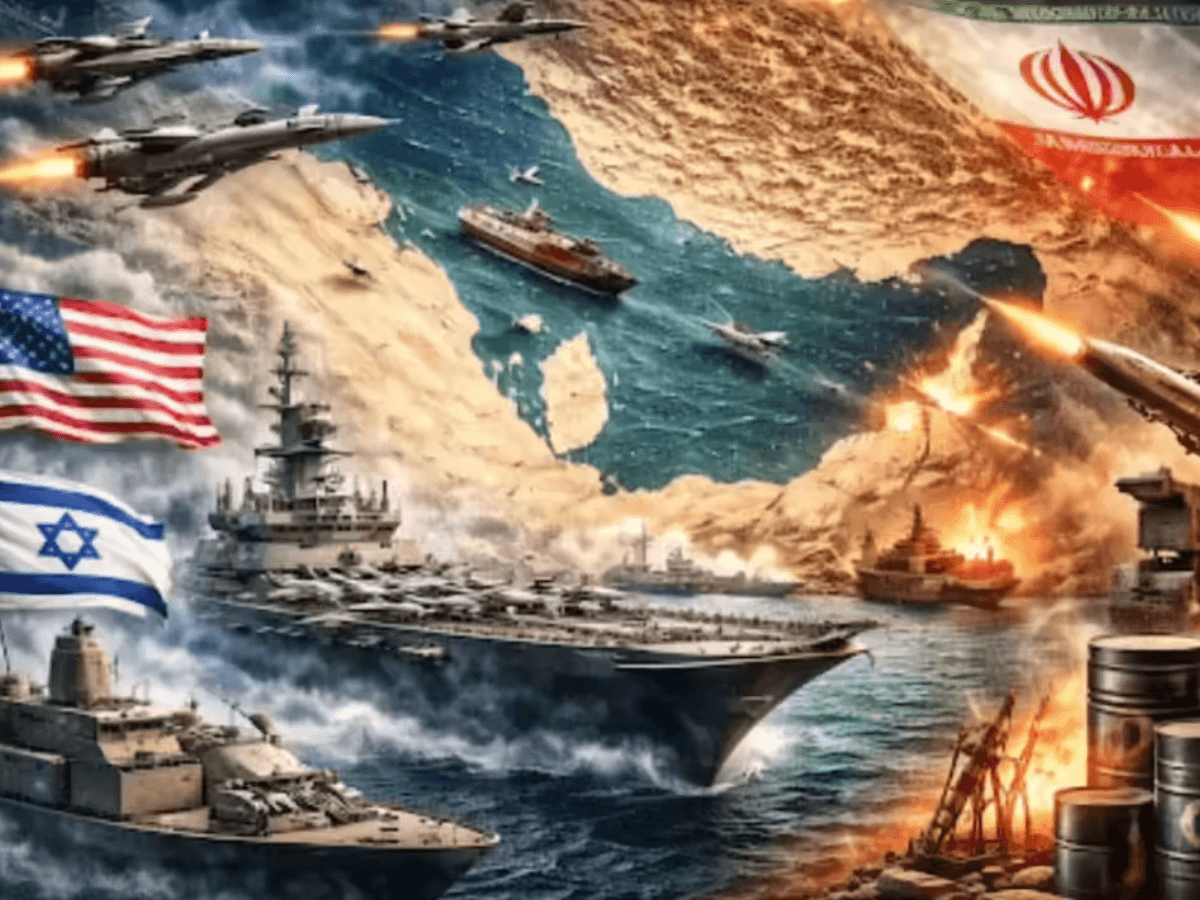
While Iranian state-linked outlets emphasized blockade illegality and future response options, the Sunday Guardian described a parallel escalation narrative that included estimates of U.S. spending and claims about contingency planning. The Sunday Guardian said tensions “have escalated sharply” as “diplomatic negotiations continue to stall,” and it reported that the Pentagon estimates the ongoing operation has already cost “around $25 billion.” It claimed that “CENTCOM has finalized contingency plans for a rapid, high-impact strike operation,” describing the objective as pressuring Iran “by targeting critical infrastructure rather than sustaining a prolonged campaign.”
The report also said the U.S. is maintaining pressure through a naval presence near the Strait of Hormuz and described the route as handling “nearly 20% of global crude shipments daily.” It further stated that Washington rejected proposals that would “reopen unrestricted Iranian access,” using the blockade as leverage in negotiations, and it quoted former President Donald Trump as supporting maintaining strict pressure, saying Iran must be prevented from acquiring nuclear weapons.
Separately, بوابة الشروق tied the standoff to market moves, saying oil prices were rising “about 3%” and the dollar’s strength weighed on gold prices, while gold on COMEX fell by “20.91 dollars, or 1.94%, to 460.20 dollars per ounce for June delivery.” It also reported silver fell by “0.56 dollars, or 2.73%, to 23.73 dollars per ounce for June delivery.”
Legal strategy and future scenarios
Türkiye Today added detail on how Iranian officials framed the blockade and potential retaliation in legal and operational terms. It reported that Mohsen Rezaei outlined scenarios for a resumed war, focused on “southern coastal areas extending toward Isfahan,” with “some activity in western regions and possible bombings and assassinations in Tehran.” The same report said Iranian parliament’s presiding board member Alireza Salimi told ICANA that Iran was pursuing a “three-step strategy for war compensation,” including classifying the U.S. as a “hostile state” under international law.
It also said Salimi’s account included that countries allowing their territory or airspace to be used for attacks could face “legal claims.” Türkiye Today also described an unnamed senior security official’s rationale for restraint, saying Iran’s restraint to date had been intended “to give diplomacy a chance and allow the U.S. to learn and accept Iran's conditions for permanently ending the war.”
In parallel, PressTV and Al-Manar TV Lebanon both emphasized that Iran would not reopen the Strait of Hormuz while the blockade remains, and that Iran sees foreign interference as a driver of tension. PressTV said “the presence and interference of foreigners will not help improve security in the region but will create tension and disrupt lasting peace in the Persian Gulf,” and Al-Manar TV Lebanon echoed that same line.