
Full story
Sanctions bite, Iran resists
Iran’s president Masoud Pezeshkian acknowledged that US sanctions and the naval blockade of Iranian ports are hurting the country’s economy, saying, “Some say sanctions have no effect at all; to those people, I really don’t know what to say,” and adding, “We are in a war situation, and we must accept these wartime conditions.”
““Some say sanctions have no effect at all; to those people, I really don't know what to say””
Pezeshkian said Iran’s exports and imports had fallen by between 25 and 35 percent as Washington maintains its naval blockade, and he linked the pressure to the wider six-month war context described in the Reuters report.

The Reuters account also said Tehran committed to resist pressure, follow the diplomatic path, and maintain what it claims is its control over the Strait of Hormuz, while the BBC reported Iran pledged to continue opposing US sanctions and what it described as the “American-Israeli plots.”
The BBC said Iran’s annual inflation rate reached 66% last month, and it reported the Supreme Leader Ayatollah Ali Khamenei urged the government to address economic challenges while not appearing publicly since the first attack on February 28 that began the war and killed his father, former Supreme Leader Ayatollah Khamenei.
Diplomacy vs pressure campaign
While Tehran insisted it would not retreat, the Gulf News report said Pezeshkian told state television on Friday, “Some say sanctions have no effect at all; to those people, I really don't know what to say,” and it said Iran’s imports and exports had fallen by between 25 and 35 per cent as Washington maintains its naval blockade.
The same Gulf News update said Iran’s Foreign Minister Abbas Araghchi told X, “Putting diplomacy back on track isn't impossible,” and added that the US needed to understand that “pressure doesn't work.”
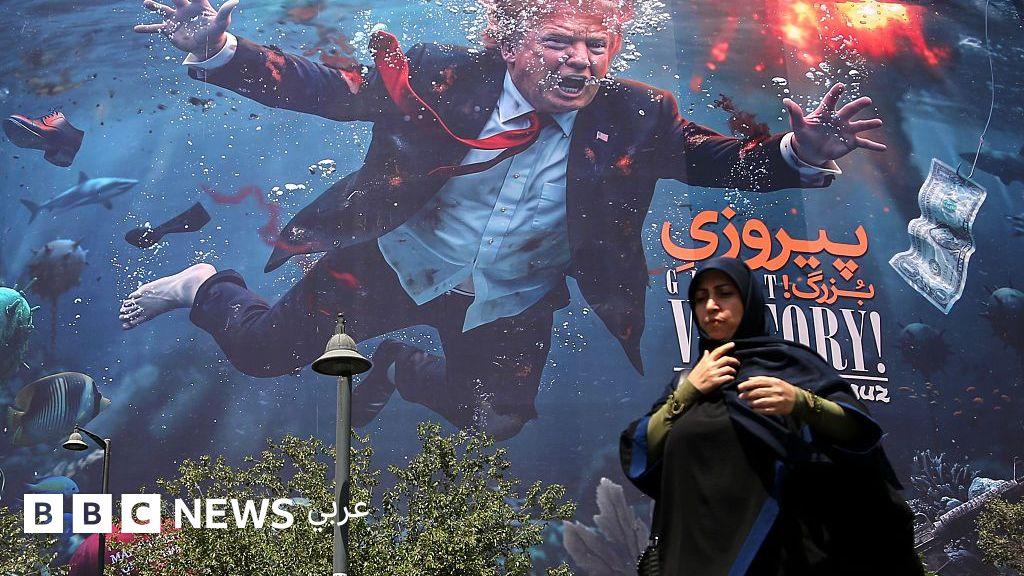
Reuters reported that the Trump administration intensified efforts to punish Iran financially with what it called an “economic D-Day,” and it said Washington warned countries they must break commercial ties with Tehran or face secondary sanctions.
Reuters also described a sanctions move targeting Banque Misr, saying the Treasury imposed sanctions on the Egyptian bank and proposed a rule that would prevent its branches in the United Arab Emirates from conducting transactions in dollars, while the bank said its UAE branch would keep serving clients under applicable rules.
Hormuz and economic stakes
Tehran’s stance on navigation remained central as the BBC reported the IRGC rejected American assertions that the Hormuz Strait is open for navigation, saying restrictions would continue until American military operations against Iran end and related commitments are fulfilled.
“the IRGC rejected American assertions that the strait was open”
The BBC also reported preliminary vessel traffic data showing navigation remains well below normal levels, with seven merchant ships transiting the strait on Thursday compared with 17 the previous day and an average of 15 ships per day over the prior ten days.
In parallel, Reuters said Iran’s president Masoud Pezeshkian told state media that Iran could sell about 90 million barrels of oil during the short-lived memorandum of understanding signed in June, when Washington allowed Iranian oil sales, and it said Tehran’s leadership framed economic priorities as curbing inflation, managing markets, creating jobs, and reducing gradual dependence on the dollar.
The BBC added that Iran said diplomacy and defense are “two integrated and coordinated tools that cannot be separated” to protect national interests, security, and Iran’s territorial integrity, as the US Treasury moved to prevent Egypt “Mits” (MISR) Bank branches in the UAE from conducting dollar transactions due to their dealings with Iran.