Iran21 September, 20263 min read
Mike Waltz Says No Timeline For Iran War End As Iran Demands Frozen Assets Release
This article is an automated aggregation of coverage from news outlets. Our editorials offer in-depth analysis curated by the NewsCord team.
Trump’s UN envoy says there is no timeline for ending the Iran war. Iran demands the release of frozen assets as a precondition for talks.

6 outlets told this the same way.
Outlets did split on Iran Reviews US Negotiation Proposals As Pakistan And Qatar Mediate Strait Of Hormuz Dispute →
Al Jazeera was read line by line by the Watchdog: 3.3. See the score →
No Timeline for War End
Mike Waltz told CNN’s “State of the Union” on Sunday that he would not put a timeline on the end of the Iran war, which has dragged on for nearly seven months despite Donald Trump’s initial insistence that it would be over within four or five weeks. Mike Waltz said time “is on the president’s and on the United States’ side,” and he said the U.S. naval blockade was having the intended effect of ratcheting up the pressure on Iran’s economy. Iranian officials said this weekend they had no intention of backing down, and they said Washington must agree to demands including releasing frozen Iranian assets and lifting the blockade on Iranian shipments.
Mohsen Rezaei said Tehran would retaliate with “painful attacks” if the U.S. “makes any mistake against” Iran, and Khatam al-Anbiya Central Headquarters said the armed forces command center would respond in that way. The Washington Post said Iran war end has no timeline, and it said Waltz made the comments as Iran-aligned Houthi militants escalated their attacks in the region with strikes Saturday on Saudi Arabia’s capital, Riyadh.
Iran’s Conditions for Talks
Mohsen Rezaei told Al Jazeera on Saturday that Tehran had conveyed its conditions to the U.S. via Qatari mediators, and he said Tehran was more battle-hardened now than in the first 40 days of the war. Mohsen Rezaei said Tehran’s conditions included an end to the war on all fronts, including in particular Lebanon, the release of frozen funds that run into billions of US dollars, and an end to the naval blockade on Iranian ports. Mohammad Bagher Ghalibaf said on Sunday morning that the Strait of Hormuz would remain closed until the U.S. fulfilled its commitments, and he said there would be no opening for a return to the previous state of negotiations or for the reopening of the Strait of Hormuz.
Mohsen Rezaei said, “It is in Washington’s interest to accept these conditions,” and he added, “We are prepared for a decisive war,” as he described Trump’s threats. NewsNation said the Strait of Hormuz would remain closed until America meets Iran’s conditions, and it quoted Mohammad Baqer Qalbaf saying there would be “no possibility of return to the previous negotiation framework” or to reopen the Strait of Hormuz.
Diplomacy and Regional Pressure
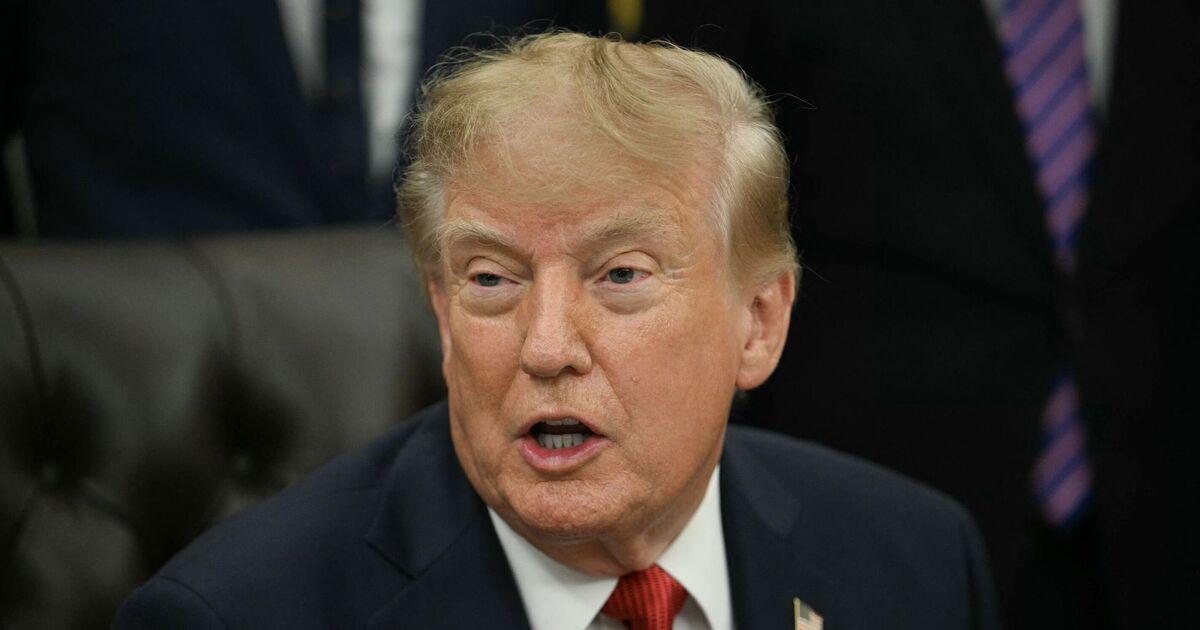
President Donald Trump was scheduled to speak at the U.N. General Assembly on Tuesday, and NewsNation said the speech came as Trump weighed whether to escalate U.S. involvement in the conflict with Iran.
NewsNation said the State Department confirmed that an Iranian delegation would attend the General Assembly, and it said the Trump administration would allow Masoud Pezeshkian and Abbas Araghchi to attend the high-level session.
NewsNation said White House sources told it that Trump was expected to meet with Gulf leaders while in New York to discuss the war and broader regional security concerns.
Mohamed al-Bukhaiti, a member of the Houthis’ political bureau, told The Associated Press in a Zoom interview from Sanaa that his group had assured the Trump administration it would not attack U.S. vessels in the Red Sea, with the sole exception of the Saudi enemy.
Mike Waltz told CNN’s “State of the Union” that the U.S. naval blockade was ratcheting up pressure on Iran’s economy, and he said time was on the president’s and on the United States’ side as the conflict approached nearly seven months.