Iran10 August, 20262 min read
Mohsen Rezaei Urges Türkiye and Pakistan to Spearhead Islamic Unity in Tehran Meeting
This article is an automated aggregation of coverage from news outlets. Our editorials offer in-depth analysis curated by the NewsCord team.
Rezaei urged six major Muslim nations to lead Islamic unity, prioritizing Türkiye. Iran and Pakistan share strategic depth with political, military, and popular ties to expand cooperation.

Tehran courts Islamabad
Iran’s top security official Mohsen Rezaei urged six major Muslim nations to spearhead Islamic unity, placing Türkiye among the countries Tehran says bear particular responsibility for advancing cooperation. Rezaei made the remarks during a Wednesday meeting in Tehran with Pakistani Interior Minister Syed Mohsin Naqvi, describing Pakistan’s government, armed forces and people as among the Islamic world’s greatest assets.
Rezaei also welcomed what he described as the growing role of Pakistani Prime Minister Shehbaz Sharif and Army Chief Field Marshal Asim Munir in regional developments, and said Iranian President Masoud Pezeshkian attaches special importance to relations with Pakistan. In the same meeting, IRNA reported that Rezaei stressed “strategic depth” of relations between Iran and Pakistan and said the two countries have developed strong political, military, and popular ties that should be used to expand bilateral cooperation.
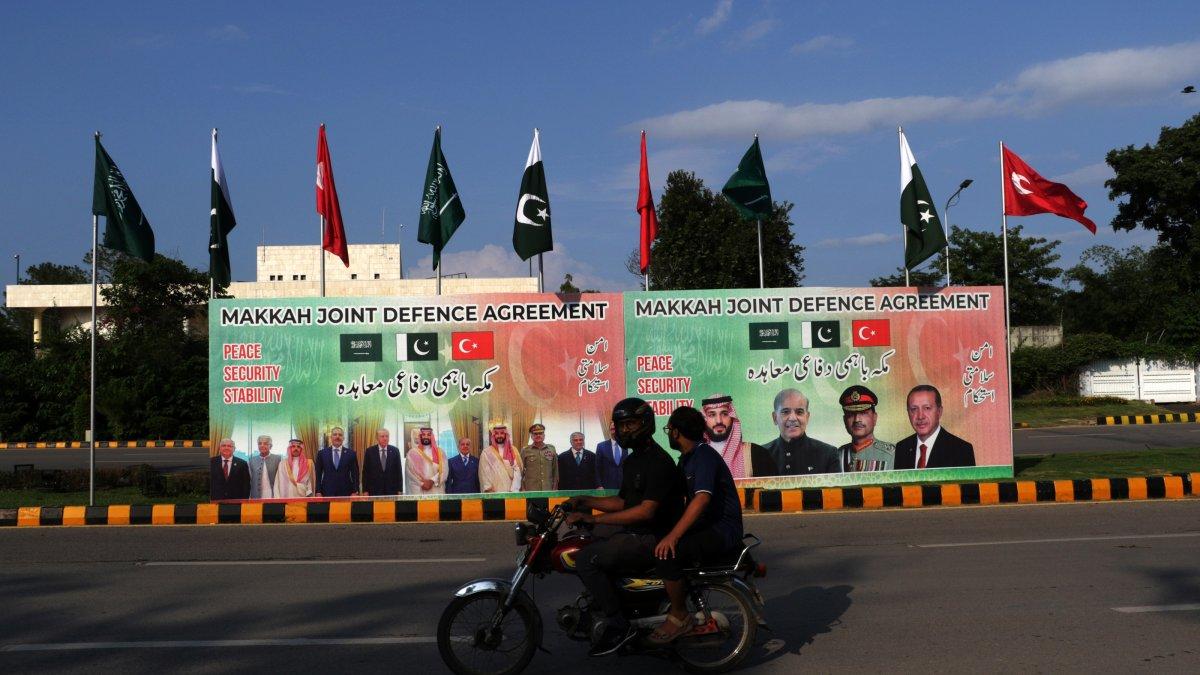
Unity through trade and ties
Rezaei told Naqvi that Iran considers Pakistan’s government, military and people to be major assets of the Muslim world, and he called for greater use of existing political, military and popular ties to promote cooperation. He said Iran, Pakistan, Türkiye, Saudi Arabia, Egypt and Indonesia have a responsibility to work toward greater unity through convergence, cooperation and stronger relations among Muslim countries.
Rezaei argued that bilateral trade between Iran and Pakistan should increase severalfold over its current level, while political relations should become stronger. Naqvi, arriving in Tehran on Tuesday for an official visit, thanked Pezeshkian, as well as Iranian Foreign Minister Abbas Araghchi and Interior Minister Eskandar Momeni, for their efforts to strengthen bilateral relations.

Leaders’ bond and regional focus
Rezaei framed the relationship between Iran and Pakistan as rooted in genuine affection and shared beliefs, describing the bond between the two neighbours as a “true and faith-based affection.” He said all Iranian leaders, namely Ayatollah Ruhollah Khomeini, Ayatollah Seyyed Ali Khamenei, and Ayatollah Seyyed Mojtaba Hosseini Khamenei, have viewed Pakistan as Iran’s strategic depth and Iran as Pakistan’s strategic depth.
Rezaei also said developments in Pakistan cause concern among the Iranian people and noted that Pakistanis strongly supported Iran during the war against the country. In response, WANA reported that Naqvi praised Rezaei’s experience and maturity and highlighted “remarkable solidarity” between the Iranian and Pakistani peoples, saying it was particularly evident in large-scale ceremonies held in Pakistan following the death of Iran’s Supreme Leader.