
Technology and Science · 07 August, 2026 · 2 min read
OpenAI’s Doughnut-Shaped ChatGPT Speaker Leaks With Moving Parts, $300-$400 Price, 2027 Release
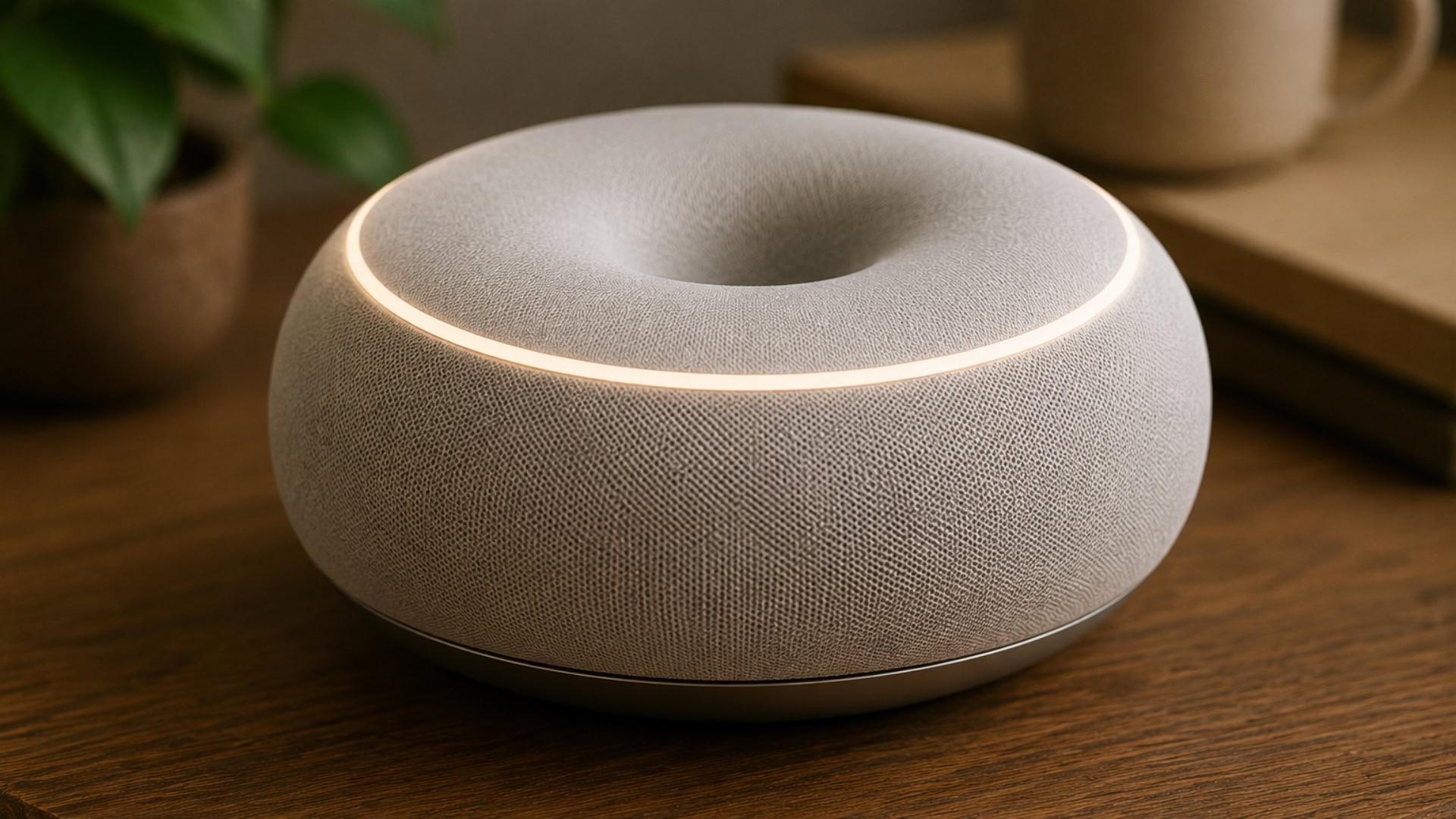
Donut-shaped AI smart speaker with moving parts and cameras. Price between $300 and $400, displayless, targeting premium market.
18 outlets, one story, no spin found.
18outlets compared
Donut Speaker Hardware Leak
OpenAI’s first consumer hardware device is reportedly a screenless, doughnut-shaped smart speaker roughly the size of a hockey puck, designed to be easy to carry around the home with one hand. The device is expected to be battery-powered and to include speaker grilles and microphones for voice commands, along with lights that indicate when it is listening. Bloomberg’s Mark Gurman is cited in multiple outlets describing the hardware as having moving parts, a camera system, and other sensors to detect the surrounding environment.
Business Standard also frames the product as an “AI-first computer” rather than another smart speaker, with microphones, speakers, cameras, and environmental sensors used for natural voice interactions. The reported price range is $300 to $400, and the device is slated for release in 2027, according to the outlets covering the leak.
Jony Ive, LoveFrom, and Apple
The hardware project is being designed in collaboration with Jony Ive’s LoveFrom studio, with multiple reports tying the industrial design effort to former Apple designers and engineers. FoneArena says the device is being developed as an AI-first computer and that it will work similarly to ChatGPT’s voice mode on smartphones, but with more advanced AI models for human-like interactions. The leak coverage also places the device inside OpenAI’s legal dispute with Apple, where Apple has alleged OpenAI asked one of its long-running suppliers to develop a metal-finishing technique similar to one used by Apple.
In the same dispute, FoneArena reports that OpenAI called Apple’s claim “too vague and generalized” and said the new device does not use or violate Apple trade secrets. MacRumors adds that OpenAI said it is “building something entirely new and different from anything at Apple,” while Apple maintains OpenAI developed its hardware using information sourced from Apple.

What It Does Next
Across the reports, OpenAI is described as expecting users to rely on the device throughout the day, with the speaker designed to learn more about its owner over time and tailor conversations. The hardware is also described as using moving mechanical components and lighting to indicate when it is responding or interacting, while a camera system and sensors are intended to feed environmental context into the AI. The Business Times report says the device is positioned as an artificial intelligence-first computer designed to help users get things done through natural conversations, with a rechargeable battery enabling it to move from room to room.
Engadget and other outlets tie the high price discussion to the hardware pivot, noting the device is reportedly planned to cost between $300 and $400 and that it lacks a screen while still using cameras and sensors. Several reports also describe the broader ambition as building a family of AI devices, with the portable speaker framed as an entry point into consumer hardware and a potential step toward devices that could eventually replace smartphones.