Pakistan17 September, 20263 min read
Pakistan Protests Indian Navy’s EEZ Incursion After SEASPARK-26 Collision in Northern Arabian Sea
This article is an automated aggregation of coverage from news outlets. Our editorials offer in-depth analysis curated by the NewsCord team.
Pakistan protests Indian Navy provocation in its EEZ after a collision with an Indian warship. Both countries summoned each other's diplomats to protest the naval collision in international waters.

EEZ collision sparks protests
Pakistan lodged a protest after what it described as a “highly provocative and unacceptable action” by an Indian Navy vessel in Pakistan’s Exclusive Economic Zone, with the incident occurring while the Pakistan Navy was undertaking its biennial exercise SEASPARK-26. Pakistan said the Indian vessel carried out “aggressive manoeuvres in dangerously close proximity” to a Pakistani naval ship, resulting in contact between the two vessels, and it summoned the Indian Charge d’Affaires in Islamabad to deliver its protest. India, in turn, summoned the Pakistani Charge d’Affaires in New Delhi and lodged a “strong protest” over what its Ministry of External Affairs said was “unacceptable and unprofessional conduct of Pakistani naval units” that led to a collision with a unit of the Indian Navy.
The two sides framed the episode as a violation of the 1991 bilateral agreement on Advance Notice on Military Exercises, Manoeuvres and Troop Movements, and Pakistan said it risked escalating tensions in the region. The incident took place in international waters in the northern Arabian Sea, according to the accounts that described it as occurring during routine surveillance and did not cause any major damage.
Quotes and competing narratives
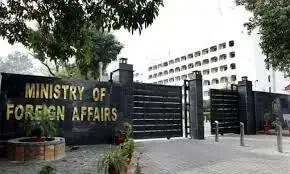
Pakistan’s Foreign Office spokesperson Sajjad Haider Khan said the incident constituted a serious violation of international law and the 1991 bilateral agreement, and he described the action as “provocative” and “irresponsible.” In Islamabad, the Foreign Office said the Ministry of Foreign Affairs summoned the Chargé d’Affaires of the Indian High Commission and conveyed Pakistan’s strong protest over the September 15 incident. Pakistan’s account, as carried by Geo News, said the Indian vessel changed course dangerously on September 15 and struck the PNS Haneen despite repeated warnings, while the Foreign Office said the professional conduct of the Pakistan Navy prevented the situation from worsening.
India’s account, as described by the New Indian Express, said the Pakistani vessel manoeuvred in an unprofessional and unsafe manner, leading to a collision, and it said the warship continued on its assigned task and “did not suffer any significant damage.” A Reuters framing cited by Global Times said the collision occurred when a Pakistan Navy vessel moved closer to a frontline Indian warship on a “routine surveillance mission” in the north Arabian Sea at high speed, contradicting Pakistan’s description of the Indian vessel’s actions.

What comes next for ties
Pakistan said the charge d’affaires of the Pakistan High Commission in New Delhi would lodge the same demarche with India’s Ministry of External Affairs, while India had instructed its Charge d’Affaires to convey its concerns to Pakistan. The Foreign Office also urged India to strictly adhere to international law and bilateral agreements aimed at preventing incidents at sea, and it called on the international community to urge India to abandon what it termed a “belligerent posture.” The dispute unfolded against a backdrop of prior military confrontation, with the Express Tribune describing the incident as the first instance of overt military tension since the four-day military conflict last year that ended with a ceasefire first announced by US President Donald Trump.
Global Times reported a Chinese expert, Qian Feng, director of the Research Department at Tsinghua University’s National Strategy Institute, saying the maritime collision was likely to further strain relations but was “unlikely to escalate into a major confrontation.” Even as both sides traded blame, the Global Times account said the collision caused no casualties or serious damage to either vessel, and it described the risk as increased friction rather than a major escalation.