USA · 07 August, 2026 · 3 min read
Pentagon Revokes Frank Kendall’s Security Clearance Over Air Force One Capabilities Disclosure
Kendall's eligibility to access classified information revoked and barred from holding sensitive positions. Defense Department cites unauthorized disclosure of Air Force One capabilities to a media outlet.
Whether the Pentagon action signals potential prosecution/charges.
2 of 5 outlets skipped it: a Secret Service urging led Trump to switch planes leaving NATO summit.
18outlets compared
Same story, two versions
tap a side to read it in full
India Today
““Such accusations are typically accompanied by referrals for prosecution under the Espionage Act.””Read the original ↗
ABC News
““Parnell didn't say if Kendall was being referred for prosecution, and the Pentagon didn't immediately respond to questions on the topic.””Read the original ↗
India Today adds likely Espionage Act prosecution, while ABC stresses prosecution referral was not stated
Clearance Revoked
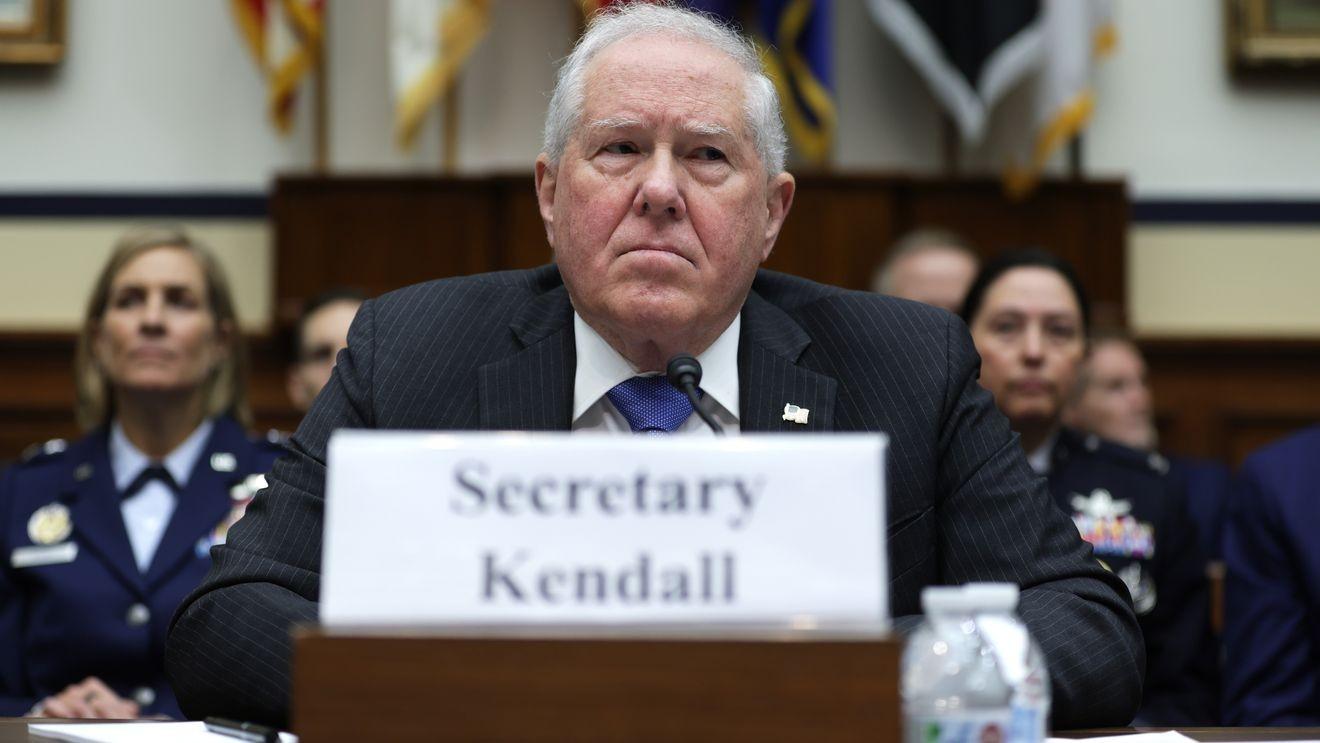
The Pentagon revoked former U.S. Air Force Secretary Frank Kendall’s “eligibility” to access classified information and barred him from holding “any sensitive position,” alleging Friday that he disclosed sensitive information about Air Force One’s capabilities to the media.
Pentagon spokesperson Sean Parnell said the action took effect immediately and that it “follows his unauthorized disclosure of classified information regarding Air Force One’s capabilities to a media outlet.”

Kendall told The Associated Press late Friday that he was “completely mystified” by the revocation and said, “I've always been extremely careful to not say anything classified, and as far as I know I have not.”
The dispute centers on a new, Qatari-gifted Air Force One that underwent a $400 million retrofit and upgrade, while President Donald Trump also used an older model Air Force One jet to leave the NATO summit in Turkey as the U.S. launched airstrikes on Iran and Tehran attacked three Gulf Arab states.
The Pentagon’s action followed reporting last month, including from The New York Times, on security concerns over the new aircraft, including that it lacked the advanced antimissile capabilities of its forebear.
Press-Freedom Fight
The revocation came as the Justice Department subpoenaed The New York Times reporters in an effort to make them reveal their sources after the paper’s coverage of safety concerns about the new, Qatari-gifted Air Force One. ABC News said the department, after criticism from the judge for sloppy legal work, “grudgingly withdrew the subpoenas last month,” while the Pentagon spokesperson Sean Parnell did not specify in a post on X which media outlet Kendall was accused of sharing classified information with. AKendall, who served as Air Force secretary under President Joe Biden from 2021 to 2025, told The Hill he had been “extremely careful to not say anything that could be classified, and as far as I know I have not.”
The Hill reported that the Pentagon’s claims arrived amid a broader crackdown on press freedom, including the Trump administration subpoenaing reporters from The New York Times over their coverage of the Air Force One conversion. In response to the Pentagon’s statement, Parnell wrote, “Safeguarding classified information is a non-negotiable duty,” and added, “Those who violate that trust forfeit the privilege of access and any role requiring it.”

Capabilities and Fallout
CBS News reported that U.S. officials previously told CBS News the Secret Service swapped to a backup strategy after the U.S. detected a credible plot to fire a missile at the plane, and that the Secret Service suggested the president take the old plane with secure communication systems and sophisticated military defenses.
The dispute over capabilities also drew on reporting that the newer aircraft lacks some of the advanced security features of the older Air Force One, including that it lacked the advanced antimissile capabilities of its forebear.
The Times of India quoted Kendall saying, “Time didn’t permit all the normal Air Force One modifications, so some mix of security, communications and support is missing,” and added that he said, “Frankly, I’m surprised to see this plane used outside the U.S.”
The Air Force defended the rapid conversion as being done “without accepting any risk regarding security, safety, or secure communications,” while acknowledging that “several highly complex engineering modifications” were deliberately excluded from the Qatari jet’s conversion.
In the background of the Kendall case, ABC News noted that Defense Secretary Pete Hegseth pulled security protections and clearance for Gen. AMark Milley, and that the Trump administration revoked security clearances of 37 then-current and former national security officials last year.