Chinaupdated 1h ago3 min read
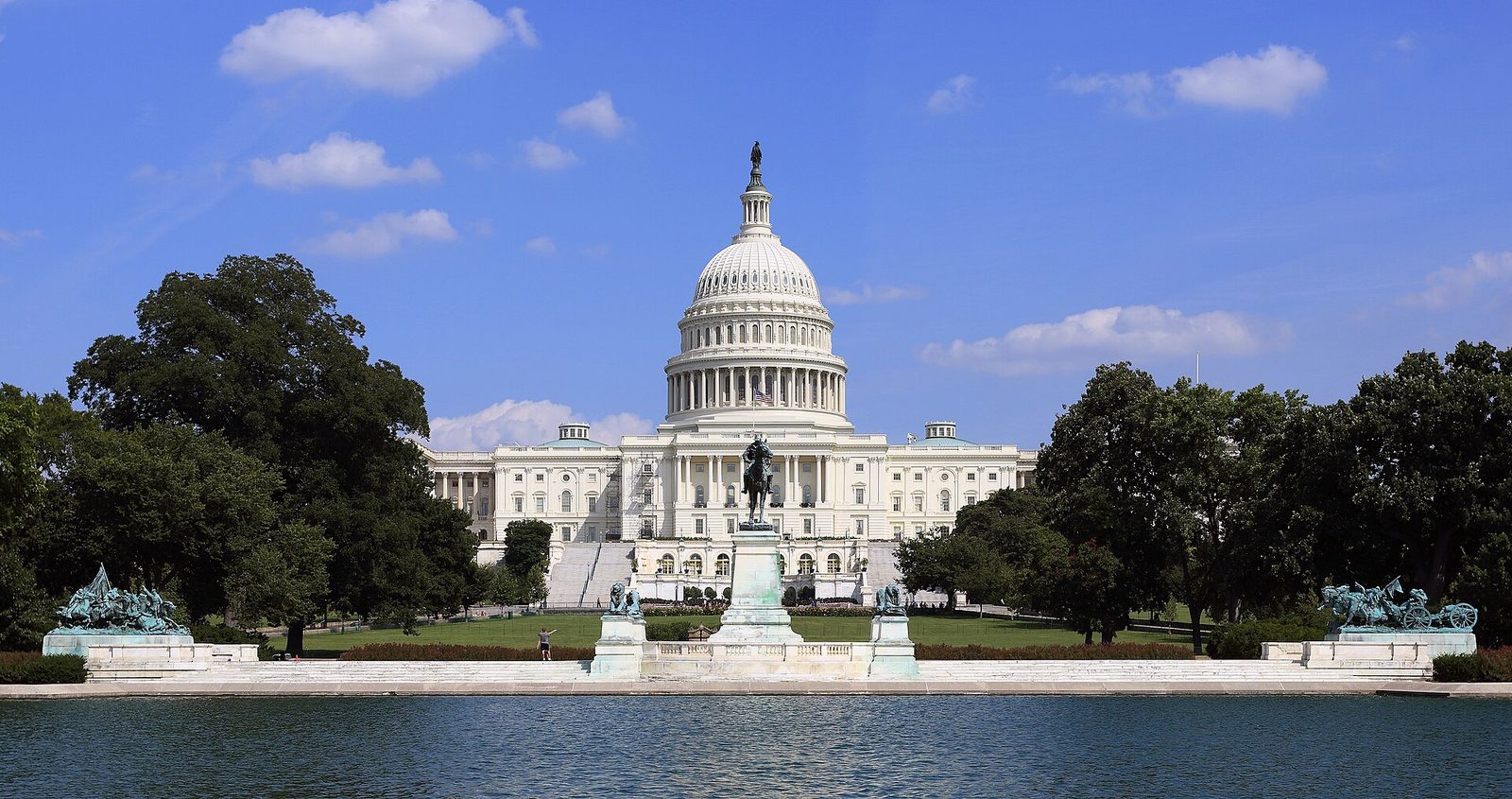
Archive photo · 5 September 2013Democrats Flip House And Senate, Putting Trump’s China Truce To The Test
3 Asian2 West Asian2 Western Mainstream3 Other source typesPhoto: Martin Falbisoner, CC BY-SA 3.0 · Cropped for layout
This article is an automated aggregation of coverage from news outlets. Our editorials offer in-depth analysis curated by the NewsCord team.
Democrats win both chambers, constraining Trump's room to maneuver on China policy. Increased congressional oversight over Taiwan, technology restrictions, and Washington-Beijing policy.
Save coverage image
Midterms and diplomacy
Democrats’ sweeping victory in the US midterm elections, where they flipped both the House of Representatives and the Senate on Nov 3, raised questions about whether President Donald Trump would keep a current bilateral truce or adopt a tougher stance toward China in the second half of his presidency. Sun Chenghao, a senior fellow at Tsinghua University’s Center for International Security and Strategy in Beijing, said, “Democratic control of both chambers will change how Washington makes China policy more than its underlying competitive direction,” while adding that stronger congressional oversight could constrain some disruptive initiatives. Chinese Foreign Ministry spokeswoman Mao Ning told a regular press briefing on Nov 4 that the midterm elections are the internal affairs of the US and that China was willing to continue working with the US to uphold and implement the consensus reached by the two heads of state.
The article also tied the political shift to an existing period of relative stability in China-US relations, after two meetings between Trump and Xi this year, first in Beijing in May and then in Washington in September, with the leaders’ latest summit producing an extension of a trade truce and a commitment to deepen economic engagement and establish dialogue on artificial intelligence. The sources said the next test of whether the US political environment affects efforts to stabilise ties would come at the Asia-Pacific Economic Cooperation (APEC) Leaders’ Summit in Shenzhen on Nov 18 and 19.
Tariffs, technology, Taiwan
Stephen Olson, visiting senior fellow at ISEAS-Yusof Ishak Institute in Singapore, warned that with electoral pressure behind him, Trump could become less constrained in pursuing an aggressive trade policy, including potentially imposing further tariffs on China and other Asian economies. Olson said, “Section 301 tariffs on excess capacity could be forthcoming shortly,” and he added that Democrats’ gains could embolden lawmakers to challenge Trump’s trade agenda and open the door to greater congressional scrutiny. Adrian Ang, research fellow and coordinator of the United States Programme at the S Rajaratnam School of International Studies in Singapore, said a Democratic-controlled Congress could take a “more hawkish (stance towards) China” than Trump himself, translating into pressure for tougher measures on trade and technology restrictions.
Ang also warned that renewed scrutiny could fall on a delayed US$14 billion US arms package for Taiwan, and he said “All of those, but especially the last item, will place stress on the new US-China constructive strategic stability” agreed by Trump and Xi. Chinese policy researcher Li Yaqi said Democrats could raise the political cost of Trump’s dealings with Beijing through tools including investigations, summoning administration officials, and influencing government spending.
Beijing’s stance and next steps
Beijing’s public posture in the sources emphasized non-interference and continued engagement, with Mao Ning saying, “China stands ready to continue working with the United States” on issues of common interest and areas of disagreement. The sources linked that stance to a trade truce that began in October 2025 and was extended until January 10 after a third summit between the two presidents within a year, while analysts weighed how Democratic control could narrow Trump’s maneuvering room on tariffs. Wu Xingbo, dean of the Institute of International Studies at Fudan University in Shanghai, argued that Democrats controlling both houses could leave Trump with “less room to maneuver to use the tariff card in his negotiations with China,” while Drew Thompson said, “Congress will seize any opportunity to obstruct (Trump) over the next two years.”
On Taiwan, the sources said Trump had delayed for months a $14 billion weapons deal and that Beijing could use the remaining two years of his term to increase pressure on the island, especially if it sees Washington preoccupied or Trump willing to accept non-interference conditions. The sources also described analysts’ expectations that Beijing would continue working with Trump through high-level leader-to-leader communications with Xi Jinping, with Steve Tsang saying Beijing “will pace its steps” and “will not want to overdo it, for fear of pushing Trump toward behavior that is completely irresponsible.”