Iran15 September, 20262 min read
Qassim Suleimani Tells David Petraeus Iran Controls Iraq, Syria, Lebanon, Gaza, Afghanistan
This article is an automated aggregation of coverage from news outlets. Our editorials offer in-depth analysis curated by the NewsCord team.
9/11 and the 2003 Iraq invasion expanded Iran's regional influence across the Middle East. Middle East power order is being reconfigured among US, Israel, Iran, Turkey, Saudi Arabia, Pakistan.
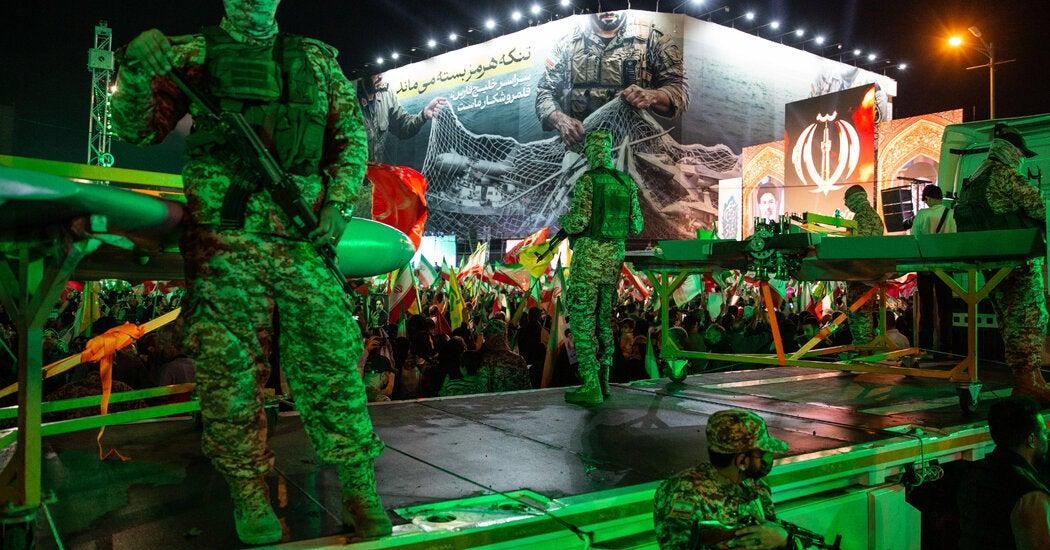
5 outlets told this the same way.
Outlets did split on Iran Reviews US Negotiation Proposals As Pakistan And Qatar Mediate Strait Of Hormuz Dispute →
New York Times was read line by line by the Watchdog: 3.2. See the score →
Suleimani’s message after 9/11
The New York Times says the American invasion of Iraq in 2003 helped Tehran dominate its neighbor and expand influence across the greater Middle East, with a message conveyed through an intermediary to Gen. David Petraeus.
In the account, the shadowy general in charge of Iran’s overseas forces addressed Petraeus as a peer, saying: “General Petraeus, you should know that I, Qassim Suleimani, control the policy of Iran for Iraq, and also for Syria, Lebanon, Gaza and Afghanistan.”
The Times adds that Petraeus recounted and confirmed the message in a recent email, and it describes the message sent during the Iraq war in 2008 as a milestone marking “the rise of Iran as a regional power.”
The Times also quotes Stéphane Lacroix of Sciences Po in Paris saying: “The war in Iraq really changed everything because it made Iran a much bigger part of the equation.”
Regional rebalancing around Syria
The Arab Weekly frames the Middle East’s evolving geopolitical configuration as shaped by changes in the distribution of power and restructuring of alliances involving the United States, Israel, Turkey, Iran, Saudi Arabia and Pakistan. It says Carnegie Endowment research describes the post-Assad environment as a new contest where Turkish and Gulf cooperation around Syria’s new leadership intersects with efforts to curb Iranian influence.
The piece also states that Carnegie Endowment notes Saudi Arabia and Turkey agree on a common objective of reducing Iranian influence in Syria and across the region, even as it says convergence does not mean identical strategic outlooks. It warns that analysts have warned the 2018 US decision to withdraw forces from Syria could create a vacuum that risked being exploited by Iran, and it cites Brookings arguing that a withdrawal would give Iran greater room to shape Syria’s political and security environment.

Clashes and security stakes
Sky News Arabia reports intense clashes between Iranian security forces and militants in the Bakhshan area of Saravan, a city in southeastern Iran, with casualties among security forces. The outlet places the clashes in a Monday, September 14, 2026 report dated 16:16 Abu Dhabi time, and it notes the confrontations occurred in Saravan.
In parallel, the Arab Weekly describes Iran’s regional strategy as frequently analyzed through the concept of strategic depth and its use of regional proxies, saying Tehran developed a network of non-state actors to provide strategic encroachment beyond its national borders. It adds that Syria was particularly important because it formed part of the geographic and logistical environment connecting Iran to its wider regional network, and it says the fall of Bashar al-Assad changed that environment.