Iran22 September, 20262 min read
Qatar’s Emir Sheikh Tamim Warns Gulf Crisis Could Spark War, Calls To Reopen Strait Of Hormuz
This article is an automated aggregation of coverage from news outlets. Our editorials offer in-depth analysis curated by the NewsCord team.
Gulf crisis described as one of its most dangerous phases; diplomacy urged at the UN. Qatar presents itself as a trusted mediator seeking a diplomatic settlement in the Gulf.

6 outlets told this the same way.
Outlets did split on Iran Reviews US Negotiation Proposals As Pakistan And Qatar Mediate Strait Of Hormuz Dispute →
Al Jazeera was read line by line by the Watchdog: 3.6. See the score →
Qatar urges diplomacy
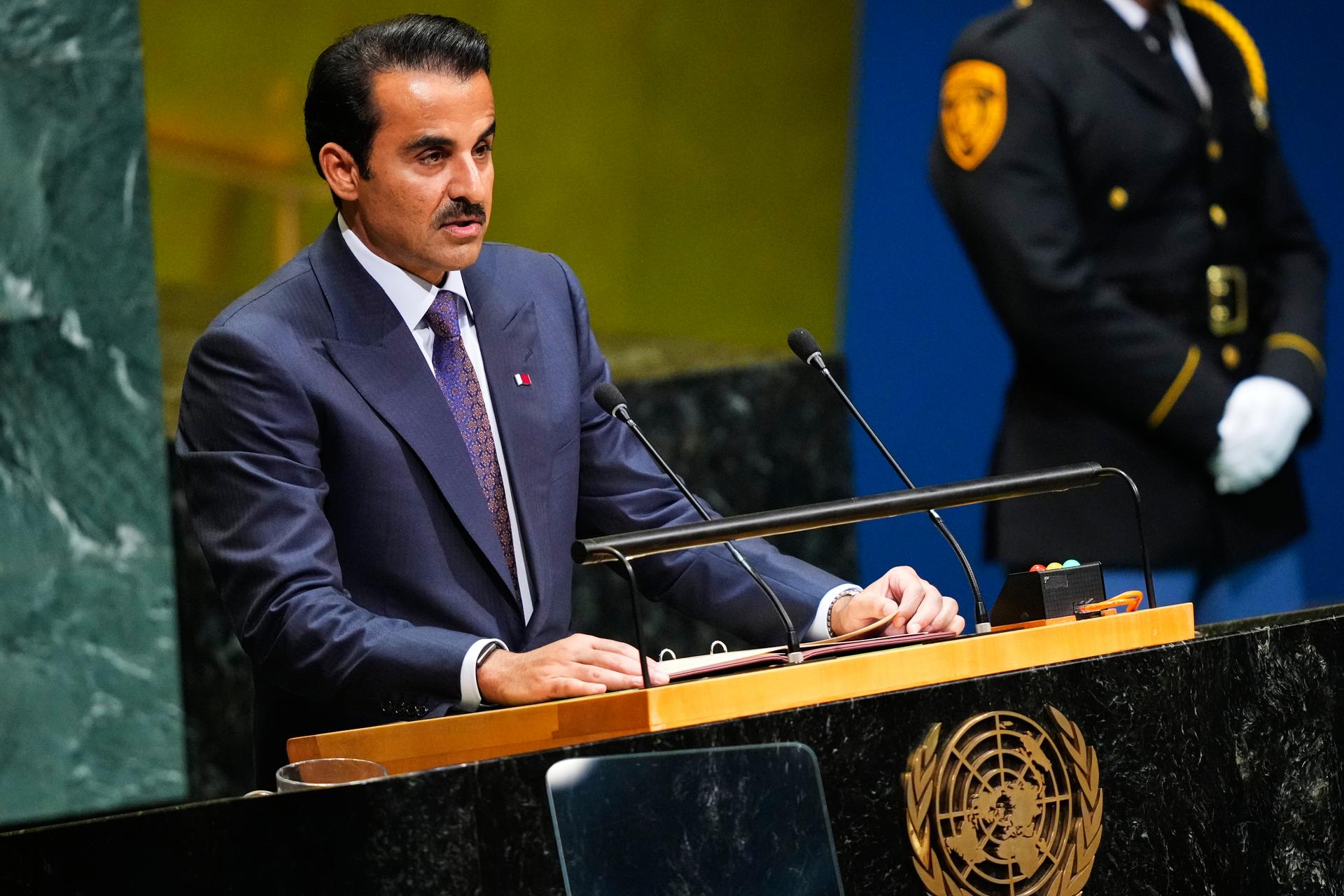
Qatar’s Emir Sheikh Tamim bin Hamad Al Thani told the United Nations General Assembly that the Gulf is in “one of the most dangerous phases” because the US-Israel war on Iran “can be resolved through diplomatic means”. Sheikh Tamim said Qatar would avert war by “reopening the Strait of Hormuz to maritime navigation” and by returning to negotiations to reach a lasting solution that ensures security for the entire region, including Iran. Sheikh Tamim said the war on Iran was the “cumulative result of years” of postponing diplomatic resolutions and called for a “regional system of collective security”.
Sheikh Tamim warned that “In the absence of such a system, it has become possible for a war to erupt,” and he said attacks have expanded to neighbouring countries, “affecting the security of the region as a whole”. Sheikh Tamim also condemned Israel’s “aggression” in the occupied West Bank and Gaza, saying “What has transpired in Gaza is genocide in every sense of the word.”

US, Iran talks
United States President Donald Trump said officials held a “very good” three-hour meeting with the Iranian delegation shortly after Sheikh Tamim’s address at the United Nations General Assembly. Trump repeated threats to “annihilate” Iran in his UN speech, while Qatar’s emir said the crisis in the Gulf could be resolved through diplomatic means by reopening the Strait of Hormuz to maritime navigation. US Secretary of State Marco Rubio said Washington was open to meeting Iranian officials during the UNGA session, and Rubio told NBC’s Today show, “We’re open to that”.
Tehran conveyed a proposal through mediators offering to reopen the Strait of Hormuz within seven days if Washington took initial measures to reduce military pressure. An unnamed Iranian official said the proposal included a call for renewed negotiations aimed at securing a permanent end to hostilities between the two countries, while the official ruled out a meeting between Masoud Pezeshkian and Donald Trump on the sidelines of the UN General Assembly this week.
Gulf stakes and markets
The Gulf crisis threatened economic lifelines as the US and Iran traded strikes on oil tankers and other vessels in the Strait of Hormuz, and the nearly seven-month-old war increasingly threatened the region’s energy routes. Most Gulf bourses ended lower on Monday as the escalating regional conflict outpaced cautious optimism over diplomatic progress at UN meetings this week. Saudi Arabia’s benchmark index declined 0.6% and Abu Dhabi’s index fell 1.6%, with International Holding Co down 4.6% after confirming a corporate restructuring.
Energy markets remained on edge after weekend drone and missile attacks by Yemen’s Houthis targeting Riyadh and Saudi Aramco’s Yanbu energy hub, and traders took some heart from China’s intervention urging Tehran to restrain Houthi attacks. Qatar’s benchmark ended 0.1% higher and Qatar’s sovereign wealth fund (QIA) was launching a domestic investment division to offset financial strain as the closure of the Strait of Hormuz disrupted its vital LNG exports.