Lebanon14 August, 20263 min read
Israel Demands Hezbollah Withdraw From Ali al-Taher, Seeks U.S. Signal for Offensive
This article is an automated aggregation of coverage from news outlets. Our editorials offer in-depth analysis curated by the NewsCord team.
Israel preparing to launch offensive to seize Ali al-Taher hills, awaiting U.S. green light. Israel awaits U.S. green light to proceed with the operation.
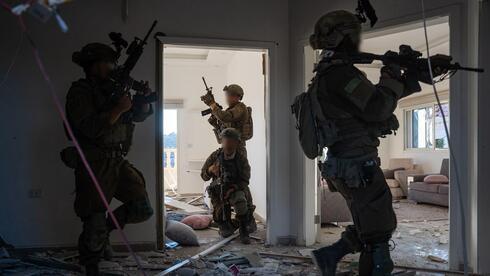
Ali al-Taher at center
Israel is shifting its battle in southern Lebanon from the battlefield to the negotiating table, with Tel Aviv placing the strategic highlands of 'Ali al-Taher', east of Nabatieh, at the core of its terms for a new phase of de-escalation. The Lebanon Debate account says Israel demands the withdrawal of Hezbollah from 'Ali al-Taher' and its handover to the Lebanese army, and that the file is expected to be strongly present in the third round of negotiations anticipated in Rome at the beginning of September. It also says Defense Minister Israel Katz boasted of destruction in southern towns, adding that 'dozens of border Lebanese villages have become ruins,' before claiming that the Israeli army currently controls roughly 700 square kilometers of Lebanese territory.
Naharnet, citing a senior security official, says messages reached relevant parties in Lebanon indicating Israel is preparing to launch an offensive to occupy the Ali al-Taher hills and is on high alert, awaiting a signal from the United States. Naharnet adds that the U.S. informed Lebanese authorities it would not be able to completely prevent the Israeli operation, but requested it be a precise, surgical operation with minimal explosions and terrorization of civilians.

US signal and Hezbollah response
Naharnet says the senior security official framed the U.S. request as keeping the operation from undermining the framework agreement, while adding, "The Israelis need this achievement and will not back down from it,". The same Naharnet report says the source concluded that "all eyes are on Hezbollah's reaction: will it engage in a full-scale battle or deal with the matter in a way that does not give the enemy a pretext". Lebanon Debate portrays Israel’s approach as turning a cessation of aggression into a reward conditioned on additional Lebanese concessions, and it asks whether a government that boasts the ruin of villages is talking about a real ceasefire.
In that account, Defense Minister Israel Katz’s comparison between settlements in the West Bank and destruction inside Lebanon is presented as exposing the approach, with the Israeli formula described as maintaining military pressure until political concessions are extracted. Ynetnews similarly reports that a Lebanese security official said the U.S. side told Beirut it could not completely prevent the Israeli operation, but asked for a precise, surgical move with minimal civilian casualties and that it not harm the framework agreement between Jerusalem and Beirut.

Framework talks and looming escalation
A political source cited by Naharnet says Hezbollah's complete surrender of the Ali al-Taher hills to the Lebanese Army is a prerequisite for fully implementing the Framework Agreement, and it ties that to solidifying the ceasefire and expanding pilot zones. Naharnet reports that the same source said the evacuation of the Ali al-Taher hills is at the top of the agenda for the negotiations session to be hosted by Rome for the third time in early September, and that the future of southern Lebanon hinges on Hezbollah’s response to President Joseph Aoun’s demand. It adds that the source told Asharq al-Awsat that the evacuation demand includes the military installations Hezbollah has constructed beneath the hills, and that Hezbollah "has not yet responded as it should" to the government’s desire for army deployment there.
Lebanon Debate warns that if 'Ali al-Taher' becomes a price demanded for stopping the aggression, another area could become a new condition tomorrow, describing the danger as Israel negotiating to take from negotiations what it could not obtain through war. Ynetnews also says the talks are expected to resume in early September, but their fate remains unclear, while it reports that Beirut is toughening its demands regarding a cease-fire and the expansion of pilot areas before proceeding to another round of negotiations with Israel.