Lebanonupdated 21m ago3 min read
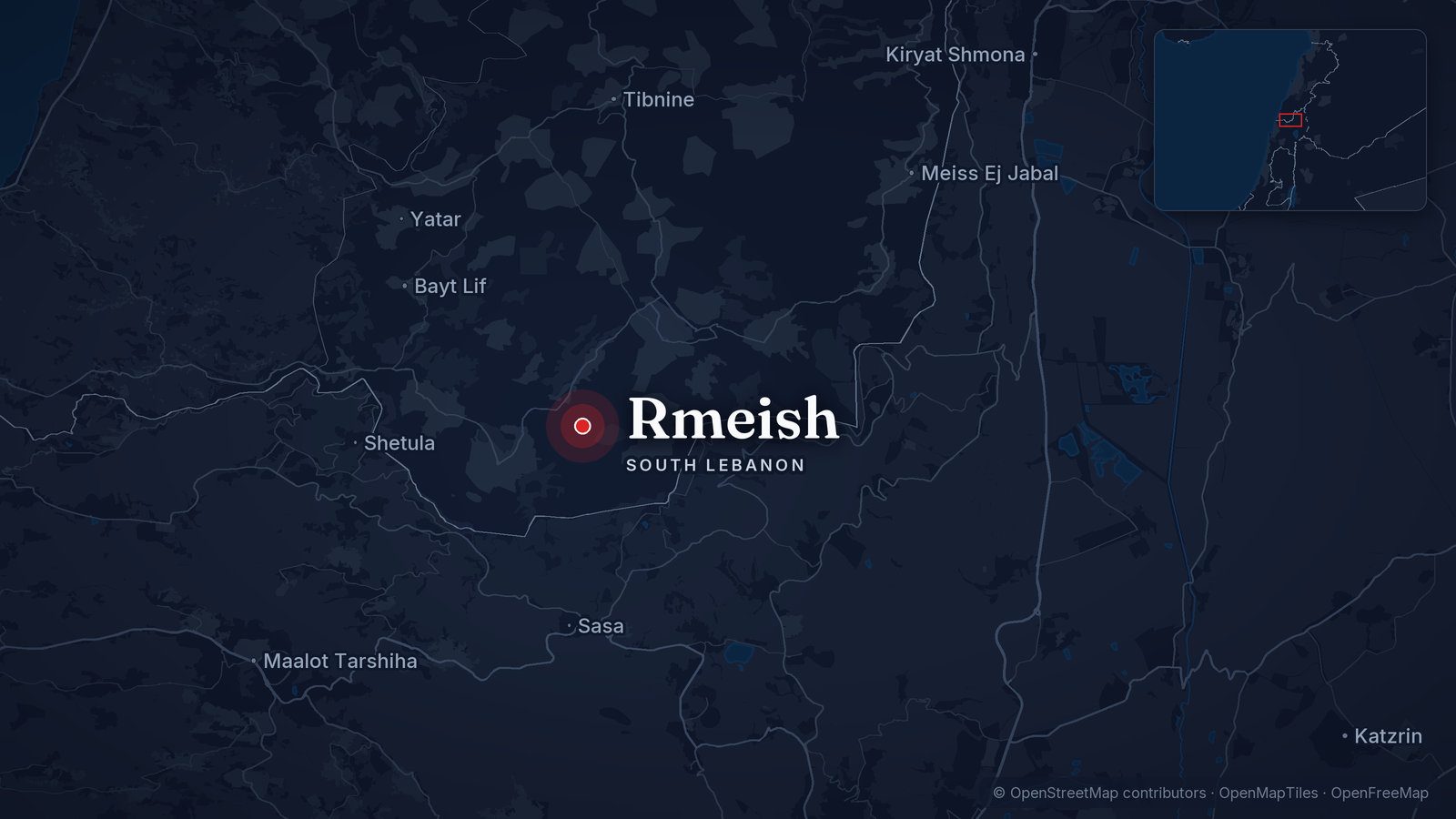
MapMunicipality of Rmeish Says Father Naji al-‘Aml Summons Followed Roof Building Violation
6 West AsianMap: © OpenStreetMap contributors, ODbL · Cropped for layout
This article is an automated aggregation of coverage from news outlets. Our editorials offer in-depth analysis curated by the NewsCord team.
Rmeish summons parish priest Father Naji al-‘Aml over a building violation. Outskirts and lands reportedly under Israeli occupation, shaping the case context.
Save coverage image
6 outlets in this story. Read their headlines below.
Rmeish priest summoned
Father Naji al-‘Aml, the pastor of the Rmeish parish, was summoned after a building violation on a house roof became a judicial and security case in Rmeish, where parts of its surroundings and lands remain under Israeli occupation. The Municipality of Rmeish said it clarified that the phrase attributed to Father al-‘Aml was said in a sarcastic context to express the difficulty of handling the matter under the current security circumstances, not in a context of threats or intimidation by any external party. The Municipality of Rmeish said the case began after one of the sons of Rmeish carried out building work without a permit above the roof of his house, prompting judicial measures to stop the violation and leading to a request for demolition by the municipality.
“What do we do, should we cry to the Israelis?”
The Municipality of Rmeish said it believed carrying out a demolition decision without security backing could put it in direct confrontation with one of the town’s residents, threatening civil peace and residents’ safety. The Municipality of Rmeish said Father al-‘Ameel’s intervention with the concerned judge aimed to prevent clashes among the town’s residents and what remains of the state’s legitimacy in the area.
Opposition demands reconsideration
The Free Patriotic Movement said the summons of the Rimash parish priest Father Najeeb al-‘Ameel raises a question that goes beyond judicial procedures to the state’s responsibility toward its citizens who cling to their land in the face of Israeli occupation and harsh security conditions. The Free Patriotic Movement said, “Respect for the judiciary, its independence, and the application of the law are principles non-negotiable,” while also arguing that justice requires taking into account exceptional circumstances, proportionality in procedures, and understanding words in their real context. The Free Patriotic Movement expressed solidarity with Father Najeeb and the residents of Rimash and said it hoped for reconsideration of the procedures taken, in light of Rimash Municipality’s clarifications.
The Free Patriotic Movement said the movement affirmed that state responsibility is not limited to applying the law but also to ensuring the conditions for its application, protecting citizens, and guaranteeing their ability to remain on their land and legally and safely repair their homes. The Free Patriotic Movement stressed that Rimash and its people need state protection, not additional burdens, and said protecting all border village residents is integral to protecting Lebanon’s sovereignty, its land’s unity, and its people.
Law enforcement and security
Al-Nahr framed the Rmeish objection as inseparable from the reality of the town, where parts of its surroundings and lands remain under Israeli occupation, and from the security and exceptional conditions in which its residents live. Al-Nahr said the demand to apply the law does not erase the private nature of this reality, just as respecting the law does not mean ignoring the conditions that make its enforcement more complex. Al-Nahr said the issue becomes more complex after wars, when the files of encroachments return to the forefront with the start of the reconstruction project, and it described how new damages mingle with old violations.
Al-Nahr said the Ministry of Interior says its institutions are performing their duties in suppressing violations on Lebanese lands, while it argued that what happens on the ground reveals a disparity in the state’s ability to enforce the law. Al-Nahr said Law 22 of 2025 on rebuilding damaged buildings distinguished between building on one’s own land and building on someone else’s land, encroachment on public property and state property and municipalities, and did not grant automatic reconstruction rights to solidify these encroachments.