Gaza Genocide24 August, 20262 min read
San Francisco Court Sentences Seven Pro-Palestinian Protesters to 30 Days for Blocking Golden Gate Bridge
This article is an automated aggregation of coverage from news outlets. Our editorials offer in-depth analysis curated by the NewsCord team.
Seven protesters sentenced to 30 days in jail for blocking Golden Gate Bridge in 2024. Each defendant faces a $1,000 fine, six months' probation.
8 outlets told this the same way.
Outlets did split on Thousands March in London Calling for Britain to Stop Arming Israel and Impose Sanctions →
Golden Gate Bridge sentences
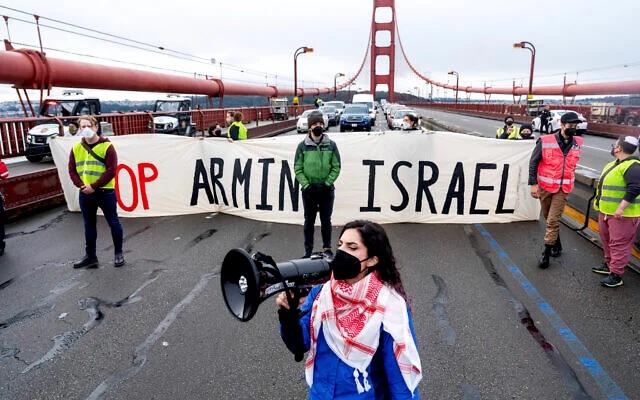
A San Francisco court sentenced seven pro-Palestinian protesters who blocked traffic on the Golden Gate Bridge in 2024 to 30 days in jail, with the sentence including six months of probation and a fine of $1,000. The case followed a jury verdict in July that convicted the protesters on misdemeanor counts while deadlocking on the most serious charge of conspiracy, and prosecutors said they would not retry the defendants on that charge.
Superior Court Judge Teresa Caffese said, "Throughout history, civil disobedience has mostly involved accepting legal consequences," before reading the sentences. The Golden Gate 26 Solidarity Committee said the ruling celebrated the decision, writing, "The government’s attempts to scare and silence the people will never work," in a statement.

Prosecutors, defense, and appeals
San Francisco District Attorney Brooke Jenkins said the prosecutions were a reminder that when unlawful acts compromise public safety there will be consequences, and she said, "We hope that imposing a custodial sentence will hopefully act as a deterrent to future criminal conduct." Assistant District Attorney Angela Roze announced that the remaining charges would all be dropped after jurors deadlocked in June over the most serious charges, and the seven defendants’ attorneys said they all plan to appeal.
Protesters argued their actions were a desperate attempt to stop the war on Gaza and halt a planned Israeli incursion into Rafah, where some 1.5 million refugees were sheltered, and Conrad de Jesus testified that his participation in open rescues was based on a belief he had held for more than ten years. Jordan Harger, one of the 19 defendants who had received diversion, described the decision to drop the conspiracy charges as relief, saying, "We were absolutely worried there’d be a new trial."
What the Gaza-linked case means
The trial record described the protest as part of a global day of action known as A15, with prosecutors arguing the bridge closure endangered safety and cost the bridge authority thousands of dollars in lost tolls. Defense accounts tied the bridge action to Gaza and to U.S. support for Israel, with Ferrell saying, "The executive branch was completely failing us," and with the defense describing the closure as an ethical responsibility to oppose devastation caused by Israeli strikes on Gaza.
The Mondoweiss account of defendant Sara Cantor said she knew "it was happening in my name as both an American and a Jew," and it described her following live-streams by Motaz Azaiza, Plestia Alaqad, and Bisan Owda. The consequences of the convictions were immediate in the courtroom and procedural in the aftermath: the seven defendants would remain free while their attorneys appeal the verdicts, and the sentence structure required half the term in county jail with the remainder eligible for a work reintegration program administered by the San Francisco Sheriff’s Office.