Iranupdated 45m ago3 min read
Saudi Arabia Expands Ballistic Missile Factory at al-Duwadimi To Build Larger Solid-Fuel Missiles
This article is an automated aggregation of coverage from news outlets. Our editorials offer in-depth analysis curated by the NewsCord team.
Saudi facility at al-Duwadimi expanding to build larger solid-fuel ballistic missiles. Reuters-based analysis from two US researchers used satellite imagery.
Explore source coverage 4 source types
Directory totals describe our source library, not outlets checked for this story.
Saudi expands missile plant
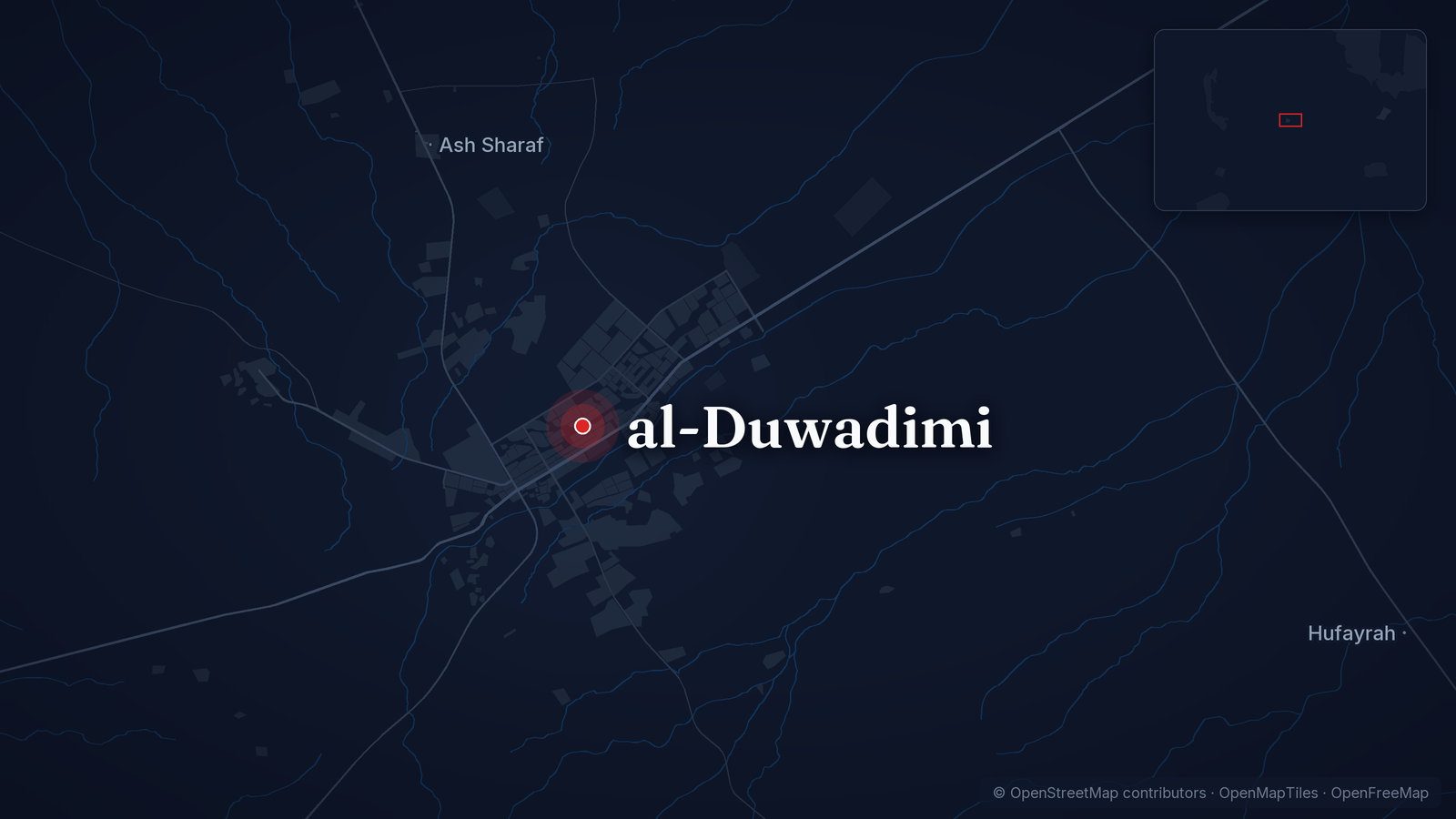
Saudi Arabia is expanding its ballistic missile factory at the al-Duwadimi complex to build larger solid-fuel missiles that could fly farther or carry heavier payloads, according to two US researchers who analyzed more than a year of commercial satellite images. Planet Labs took images of the al-Duwadimi complex about 125 miles (200 km) west of Riyadh between April 2025 and September 2026, and the researchers said the imagery shows a new building that houses casting pits. Sam Lair and Michael Duitsman of the Foreign Policy Research Institute assessed that the new building is at least twice as large as the one believed to house the plant’s existing casting pits.
Sascha Bruchmann of the London-based International Institute for Strategic Studies said longer-range missiles would allow Saudi Arabia to strike Iran without risking its US-supplied F-15 jet fighters against Iranian air defenses. Bruchmann said, "You’d want a system to threaten whatever is holy to Tehran … if you don’t have the political will to send an F-15 with JDAMs over Tehran," as the expansion raised questions about deterrence and regional escalation.
Chinese technology and balance
Lair and Duitsman and experts from the London-based International Institute for Strategic Studies and the CNA research and analysis organization told Reuters that the makeup of Saudi Arabia’s missile force suggests that the al-Duwadimi complex relies on Chinese technology. The researchers said the characteristics of the complex are similar to Chinese missile plants, and they cited that Saudi Arabia secretly acquired about 40 liquid-fuel DF-3 ballistic missiles from China in 1987. Lair said the kingdom may now be producing the solid-fuel DF-15, and the expansion of al-Duwadimi is likely for the production of the longer-range DF-21 or a similar missile.
Bruchmann said, "Iran has a lead because its missiles and drones can strike Saudi wherever it wants," and he added that the Saudis could close that capability gap a bit. Janes reviewed the expansion and said the buildings "may suggest an effort to expand production capability or support the development of longer-range missiles," linking the construction to longer-range options in the Iran deterrence context.
US nuclear deal scrutiny
The expansion of al-Duwadimi is also tied to US political debate, because the researchers said it could deepen opposition in the US Congress to a US-Saudi civilian nuclear agreement that has already raised concerns about proliferation.
“Opponents say that the deal lacks sufficient safeguards to prevent Riyadh from secretly building a nuclear weapon.”
Opponents say that the deal lacks sufficient safeguards to prevent Riyadh from secretly building a nuclear weapon, while the kingdom has denied any such plan.
Decker Eveleth, a CNA analyst who tracked the al-Duwadimi construction with commercial satellite imagery, said the pattern of missile buildouts is being replicated across the region.
Eveleth said, "This is being replicated across the Middle East," and he added, "You see exactly the same thing happening in the UAE. You see the exact same thing happening in Turkey. Everybody is doing this now."
The Foreign Policy Research Institute’s analysis described new buildings at the site, including one assessed to be for casting solid-propellant rocket motors and another assessed for storing precursor materials or finished missile components, as the Saudi-Iran rivalry shaped the strategic stakes.