Technology and Science19 July, 20262 min read
Skyroot Launches Vikram-1 From Satish Dhawan Space Centre, Injecting Payloads Into 450 km Orbit
This article is an automated aggregation of coverage from news outlets. Our editorials offer in-depth analysis curated by the NewsCord team.
Vikram-1, India's first privately developed orbital rocket, launched from Sriharikota. Injected multiple payloads into a nearly 450-km low-Earth orbit.
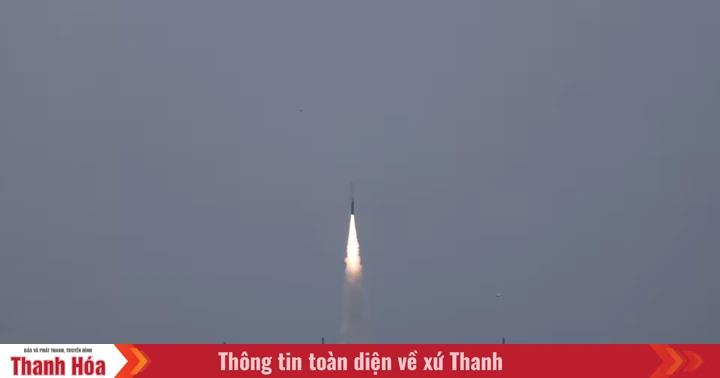
Vikram-1 reaches orbit
Skyroot Aerospace launched Vikram-1, India’s first privately developed orbital rocket, from the Satish Dhawan Space Centre in Sriharikota on July 18, 2026, injecting multiple payloads into a 450 km orbit about 15 minutes later. The mission, dubbed “Mission Aagaman,” was described as a “grand success” by Skyroot, with the company saying it would do “a few of these before we move into routine commercial flights.” The launch was temporarily put on hold from its original time of 11:30 a.m., and then rescheduled to 12:05 p.m. as Skyroot announced a ‘planned hold’ five minutes before liftoff.
“‘Mission Aagaman is a grand success,’ the company said in a statement.”
The Hindu said Vikram-1 flew a nominal profile to reach its target in low earth orbit of approximately 450 km at a 60-degree inclination, where it successfully deployed its payloads. The Economic Times framed the flight as the culmination of a 6-year policy push that began when India opened the space sector to private participation in 2020 and formalised it through Indian Space Policy 2023.

Policy, people, and proof
IN-SPACe granted launch authorisation for Vikram-1, and The Hindu quoted IN-SPACe chairman Pawan Goenka saying, “You have given us an India moment,” after the payloads were deployed.
Skyroot co-founder and CEO Pawan Kumar Chandana said the vehicle “completed every principal mission milestone,” validating performance of its propulsion, avionics, and guidance, navigation and control systems under true operational conditions.
The Economic Times contrasted India’s approach with the US, saying that under Nasa’s Commercial Orbital Transportation Services programme, SpaceX designed, built and tested independently, with Nasa acting as a customer through fixed-price milestone contracts.
The Star reported that Vikram-1 lifted off from the Satish Dhawan Space Centre in Sriharikota and successfully injected its payload into a 450km orbit about 15 minutes later, making India the third country to achieve orbital launch capability through private enterprise.
Space.com quoted Lt. Gen. AK Bhatt (retired) saying, “By executing the nation's first fully private orbital flight, Skyroot has shattered legacy boundaries.”
What comes next
The Economic Times said the next few flights and whether the cryogenic Vikram-2 arrives on schedule in 2027 will “tell us more,” positioning Vikram-1 as a test of whether India’s private sector can turn one perfect launch into a routine exercise. The Hindu said Vikram-1 will be a partially commercial flight, with Skyroot planning to commence full commercial flights after one or two successful demonstrations to orbit. The Economic Times warned that Isro is stretched thin, juggling Chandrayaan-4, Shukrayaan and Gaganyaan alongside routine launches, and said failure of PSLV-C62 grounded the PSLV fleet for over a month, delaying NewSpace India Ltd's commercial customers.
The Star described Vikram-1 as designed to carry payloads of up to 350kg into low-Earth orbit, using three solid-fuel stages and a liquid-fuel orbital adjustment module powered by a 3D-printed engine. The Economic Times said the small satellite launch market is exclusive, noting that only the US and China have private companies that have independently reached orbit, while Europe and Japan are still trying.