Asia03 September, 20263 min read
South Korea Reviews Military Options for Strait of Hormuz, Denies Deployment Decision
This article is an automated aggregation of coverage from news outlets. Our editorials offer in-depth analysis curated by the NewsCord team.
No final decision has been reached on dispatching forces to the Strait of Hormuz. Seoul weighing various options to contribute to Strait of Hormuz navigation security, within readiness limits.

15 outlets told this the same way.
Outlets did split on Sri Lanka Suffers Islandwide Power Outage After Upper Kotmale Power Station Breakdown →
Seoul weighs Hormuz role
South Korea said it was reviewing options, including military measures, to support freedom of navigation in the Strait of Hormuz while denying media reports that it had already decided on a deployment. A South Korean presidential official told reporters, "Contributions to the Strait of Hormuz could be managed within limits that do not compromise military readiness," and the president’s office added, "Nothing has been decided" regarding actual contributions. The Reuters report said several South Korean media outlets, including JTBC and MBC, had reported late on Thursday that Seoul was preparing to deploy military assets before the end of the year and could seek parliamentary approval this month.
Those reports described options under consideration as a maritime patrol aircraft, a logistics support vessel or a mine detection and clearance unit, and said Seoul was also discussing the scale and nature of a potential contribution with countries including the United States, Britain and France. Reuters also reported that South Korea relied on the Strait of Hormuz for 61% of its crude oil imports and 54% of its naphtha imports last year, underscoring the stakes for any overseas mission.
Assets, limits, and debate
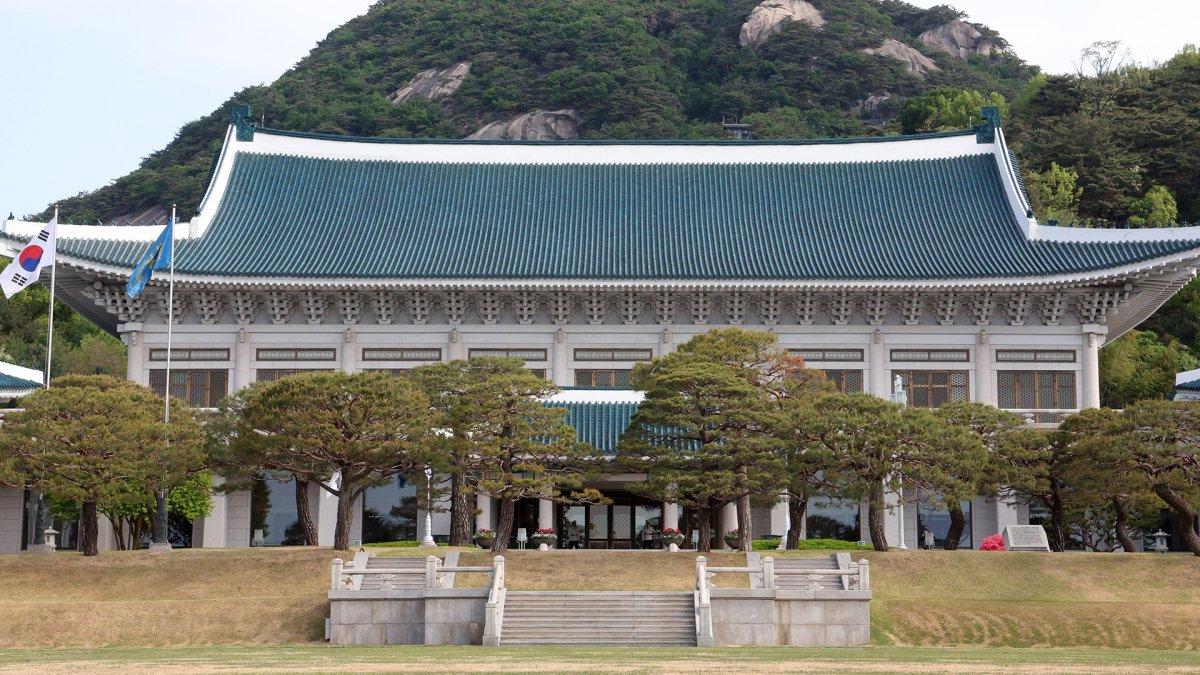
As Seoul weighs how to contribute to efforts to restore freedom of navigation in the Strait of Hormuz, attention is turning to what military assets Korea could send and what missions they could perform without drawing the country directly into combat with Iran. Kang Eun-ho, former head of the Defense Acquisition Program Administration and a professor at Korea Aerospace University’s Graduate School of Aerospace Policy, said, "Direct military support or combat involvement would be going a bit too far," adding that logistics support or mine-clearing operations would be appropriate. The Korea Times reported that Cheong Wa Dae said Friday that no decision has been made on whether to deploy forces or what assets could be sent, and it is considering a range of options, including combat, noncombat and search missions.
Among the assets reportedly being considered were the Navy’s P-8A Poseidon maritime patrol aircraft and the 11,000-ton fast combat support ship ROKS Soyang, while the Ministry of National Defense said Friday that nothing has been decided. Shin Jong-woo, secretary general of the Korea Defense & Security Forum, said even if Seoul sends maritime patrol aircraft or a support ship, "they are not assets that would turn the situation around in the war," framing the move as participation rather than a decisive shift.

Alliance pressure and next steps
The debate over Hormuz contributions is unfolding as the United States presses allies to help in the six-month conflict with Iran, with Reuters reporting that U.S. President Donald Trump said in an August social media post he had scaled back U.S.-South Korea joint military exercises in part because Seoul declined to help in the war against Iran.
Reuters quoted retired Lieutenant General Chun In-bum saying, "It is important to contribute to ensuring the Strait of Hormuz remains open because South Korea has significant economic interests tied to the waterway," while noting that overseas military deployments require approval by the National Assembly.
The Reuters report also said a March Gallup Korea poll found 55% opposed sending South Korean warships to the Strait of Hormuz, while 30% supported such a move, placing domestic politics alongside readiness concerns.
In a separate account, the presidential office told reporters, "Nothing has been decided," and said any decision would have to take into account domestic legal procedures, military readiness on the Korean Peninsula and parliamentary approval.
The presidential office also said President Lee Jae Myung may discuss options on the Strait of Hormuz when he meets French President Emmanuel Macron next week, as Seoul continues assessing what form, if any, its contribution should take.