Business04 August, 20263 min read
SpaceX Reports $7.81 Billion Revenue, Narrows Net Loss to $541 Million
This article is an automated aggregation of coverage from news outlets. Our editorials offer in-depth analysis curated by the NewsCord team.
Second-quarter revenue totaled about $7.8 billion, up roughly 92% year over year. First quarterly results since SpaceX went public.
First public earnings
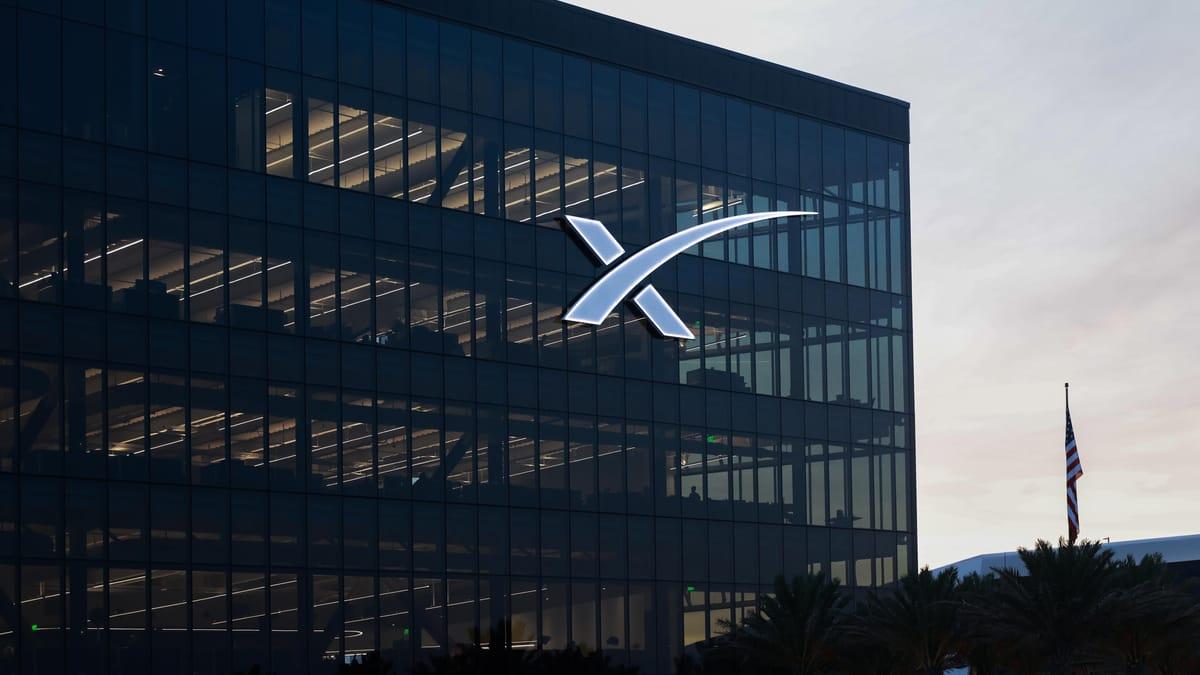
SpaceX reported its first quarterly financial results as a public company Tuesday after market close, posting second-quarter revenue of $7.81 billion that topped Wall Street expectations of $6.93 billion. The company narrowed its net loss to $541 million, and adjusted EBITDA nearly tripled to $3.5 billion as growth accelerated across launch, Starlink and AI businesses. SpaceX said it held onto $1.1 billion in digital assets at the end of the quarter, down from $1.6 billion in the previous quarter.
“SpaceX reported second-quarter revenue of $7.81 billion, up 92% year-over-year.”
Bret Johnsen said in the results that “This financial strength gives us substantial capacity to invest in Starship, Starlink Broadband and Mobile satellites, and our AI platform,” as the company ended the quarter with $100 billion in cash and cash equivalents. SpaceX also reported a total backlog of $47.5 billion at the end of the quarter, while after-hours trading reflected a share drop of 6.20% to $117.56.

AI deals, Starlink growth
SpaceX’s revenue jump was driven largely by Starlink satellite connectivity and compute deals, with TechCrunch saying total sales grew from $4 billion in the second quarter of 2025 to $7.8 billion in Q2 2026, a jump of 92%. TechCrunch reported that nearly $2 billion of that growth came from its AI division, while Starlink revenue also grew by $1.7 billion, and the company still lost $541 million in the quarter. France 24 said Starlink’s satellite connectivity service grew to 12 million subscribers, doubling from a year earlier, while rocket launches brought in $962 million in revenue but posted an operating loss of $542 million.
France 24 also reported that SpaceX’s AI segment tripled to $2.6 billion in revenue but posted a $1.3 billion operating loss, and that more than 86 percent of capital expenditures exceeding $18 billion in the three months ending in June went to its artificial intelligence division. During the analyst call, COO Gwynne Shotwell said, “On the government side, we won more than $6 billion in US contracts in Q2,” as investors weighed whether SpaceX could deliver on its longer-term promises.

Lock-up expiry and outlook
Investors’ focus shifted from the top-line beat to cash burn and the timing of supply, with AFP reporting that uncertainty would linger until a lockup period expires on Thursday, allowing a portion of SpaceX employees to sell their shares post-IPO. AFP said the lockup could more than double the already limited number of shares in circulation, which currently sits at around 5 percent, as SpaceX shares dropped more than 8 percent during after-hours trading. Invezz said the overhang from the lock-up expiration could create a short-term supply shock, while also arguing that Starlink’s profitability in the Connectivity segment—operating income of $1.66 billion—was the profitability engine.
Invezz also pointed to the company’s AI economics, noting that AI revenue in Q2 ($2.56 billion) generated an operating loss of $1.26 billion, and that the stock had fallen by more than 16% since the IPO. SpaceX CFO Bret Johnsen said compute leases under contract would bring in “an additional $6.7 billion in compute leases over the six months beginning in October,” as the company said it had $100 billion in cash and cash equivalents at quarter-end.