
Technology and Science · updated 1h ago · 3 min read
SpaceX Targets September 22 for Starship Flight 14 Orbital Attempt and Starlink V3 Deployment
SpaceX targets September 22 for Starship's first orbital flight within a 75-minute launch window. Mission will deploy Starlink V3 satellites during the orbital test.
Whether Flight 14 will use tower “catch” operations.
3 of 4 outlets skipped it: cameras will photograph the heat shield after Starship deployment.
10outlets compared
Same story, two versions
tap a side to read it in full
Space
“there will be no catch — of either Ship or Super Heavy — by the "chopstick" arms of Starbase's launch tower on Flight 14.”Read the original ↗
TechCrunch
“Musk recently walked back previous claims that SpaceX might try to use its launch tower to catch the Starship upper stage during this flight, saying an explosion would be too big a setback for the company at this point.”Read the original ↗
This affects expectations for recovery method and perceived risk during the orbital test.
Starship aims for orbit
SpaceX is preparing its 14th Starship test flight, targeting September 22 for the first orbital attempt that would place the upper stage into low Earth orbit and deploy the first batch of third-generation Starlink satellites.
“By going to orbit, the next phase of developing Starship to be fully and rapidly reusable can begin”
The launch is planned from SpaceX's Starbase site in South Texas during a 75-minute window, with Reuters saying it is expected to last nearly 10 hours and complete about six orbits before splashdown in the Pacific Ocean west of Chile.
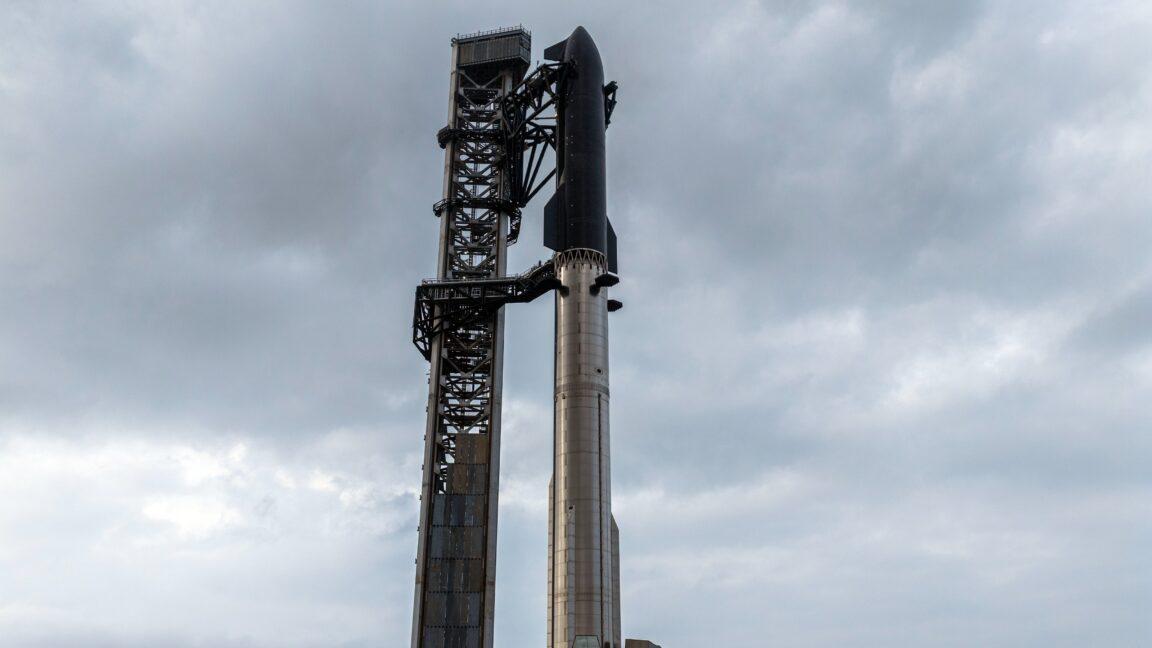
SpaceX said in a Flight 14 mission description that "By going to orbit, the next phase of developing Starship to be fully and rapidly reusable can begin," and Space.com reported that Flight 14 would be the first time Starship plans to deploy Starlink V3 satellites into the constellation.S
The mission is designed to carry 26 V3 spacecraft, and Space.com reported that Starlink currently consists of more than 11,000 active spacecraft while none of those are the larger V3 version.S
Reuters also said the mission is pending regulatory approval and would test procedures including launch, separation, boostback and splashdown as SpaceX advances toward a fully reusable orbital launch system.
Hardware changes and scrutiny
SpaceX said it made changes to the hardware and software of Super Heavy to address problems identified during the previous mission in July, when Starlink V3 satellites were deployed for the first time but burned up in the atmosphere approximately 20 minutes later.
TechCrunch reported that SpaceX made another round of "several modifications" to the booster’s hardware and software to "address issues seen on the previous flight," after the booster struggled to properly relight its engines after separating from the Starship upper stage on Flight 13 in July.T

SpaceX also upgraded Starship’s heat shield after analyzing the upper stage, which was successfully returned to Texas following its splashdown in the Indian Ocean, and Space.com said three Starlink craft launching on Flight 14 have cameras to photograph the heat shield after deployment.S
Ars Technica quoted SpaceX describing a July 24 problem in which "the three center engines showed signs of ice clogging, which triggered an early end to the maneuver," and it said the Super Heavy on the upcoming flight has hardware modifications and software changes to enhance relight reliability.
The mission plan also includes a different recovery approach for Flight 14, with Space.com stating there will be no catch of either Ship or Super Heavy by the "chopstick" arms of Starbase's launch tower on Flight 14.
What success would enable
SpaceX’s orbital test is framed as a step toward regular orbital flights and rapid turnaround, with the September 22 attempt testing only the first part of the program by focusing on the upper stage’s ascent into orbit.
“dramatically expand connectivity speeds and reliability around the world”
Space.com reported that if all goes to plan on Sept. S22, the 171-foot-tall (52-m-tall) Ship will complete six orbits at an altitude of about 171 miles (275 kilometers) before maneuvering to a splashdown in the Pacific Ocean west of Chile about 10 hours after launch.
The mission’s satellite deployment is also tied to connectivity goals, with Space.com saying the payload would "dramatically expand connectivity speeds and reliability around the world" and that SpaceX founder Elon Musk has said the Starlink megaconstellation could eventually consist of 100,000 V3 satellites.S
Ars Technica said reaching orbit would mark a significant milestone because it would be the first time SpaceX attempts to launch the experimental vehicle into orbit, and it noted the company’s first test flight on April 20, 2023.
If Flight 14 succeeds, the sources describe it as moving Starship from suborbital demonstrations toward operational use, with Space.com saying the next milestones reserved for future flights include a Ship tower catch and refueling in orbit.S