Sudan18 April, 20267 min read
Sudan Holds Secondary School Certificate Exams Amid War, With 560,000 Students Taking Tests
This article is an automated aggregation of coverage from news outlets. Our editorials offer in-depth analysis curated by the NewsCord team.
More than 560,000 students take the Sudanese secondary certificate exams inside the country and abroad. Exams proceed under extraordinary wartime circumstances amid displacement and instability.
Exams Continue Amid War
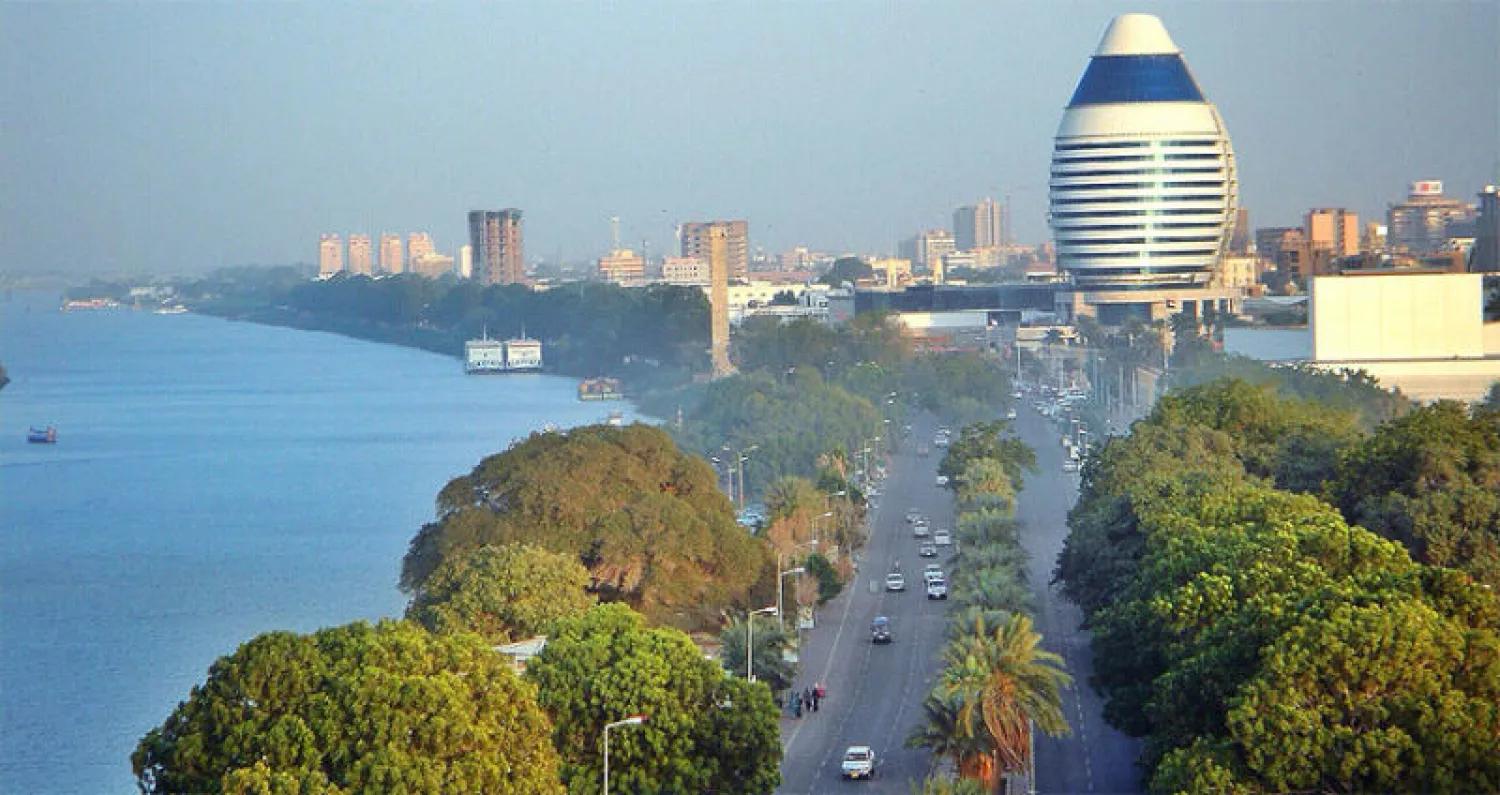
Sudan’s war has pushed the education system into a fragile, improvised reality, but exams for the Sudanese secondary school certificate are still being held “under extraordinary circumstances imposed by the war.” Al Jazeera reports that “more than 560,000 male and female students” are taking the exam “inside the country and abroad,” while “the dreams of hundreds of thousands of others falter between displacement and lack of stability.” The Al Jazeera correspondent Al-Taher Al-Mardi describes scenes ranging from “the ringing of a school bell” to students “sitting under the shade of trees reviewing their lessons” and others “inside classrooms preparing to receive the exam papers.”
The Sudanese Ministry of Education says “technical and administrative preparations have been completed to ensure the exams run smoothly,” aiming “to restore a measure of stability to the educational process.” Minister of Education Tahami Al-Zein Hajar says the number of students sitting for the exams in Khartoum State reached “156,000,” compared to “30,000 last year.”

Yet the report emphasizes that the improvement is uneven, describing “a mix of fully equipped halls and empty seats” where some students can reach exams while others are “prisoners of the war conditions.” In Darfur and Kordofan, Al Jazeera says “schools become silent buildings,” and “unofficial estimates indicate that more than 200,000 students in these regions face a different reality,” including closed roads to exam centers.
Power Cuts and Fuel Prices
As the war enters its fourth year, Sudan’s power grid and fuel supply have deteriorated into a daily crisis that directly shapes how people study, work, and survive. Al Jazeera describes Khartoum residents dealing with power cuts that “in the past two weeks” have become “crippling,” disrupting “nearly every aspect of daily life across the country.” The report ties the breakdown to structural weakness “long before the current breakdown,” while saying “the war in the country between the Sudanese Armed Forces and the paramilitary Rapid Support Forces… has accelerated the collapse.”
It also points to “regional shockwaves from the US-Israeli war with Iran” and says Sudan “relies heavily on imported fuel,” leaving it “caught in the disruption to Gulf energy supply chains and shipping routes.” The Sudanese pound has “lost roughly 20 percent of its value in recent weeks,” and the US dollar is said to be “trading at more than 390 pounds on the black market.” In households, Husna Mohamed’s daily routine is reshaped by power outages: she carries jerrycans to a shared water pipe because the electric motor is “now useless,” and her daughter’s high school exams are affected by the “lack of electricity.”

Husna tells Al Jazeera, “The lack of electricity becomes a direct obstacle to her studies,” and says her daughter is “forced to rely on candle lights that do not provide a suitable environment for concentration.” The fuel crisis is quantified through prices that Al Jazeera says rose from “4,860 Sudanese pounds (about $12.50) per litre” at the end of March to “6,870 pounds (about $17.60),” an increase of “more than 40 percent,” while Ahmed Ali says, “The cost of running the generator has become more than we can afford.”
Who Is Fighting, and How
The war’s impact on education and daily life is rooted in the conflict’s structure and shifting fronts, as described by Tribune India’s overview of Sudan’s fourth year. The Tribune India piece says the war pits “the Sudanese army, led by General Abdel Fattah al-Burhan, against the Rapid Support Forces, a paramilitary group led by General Mohamed Hamdan Dagalo.” It adds that “The two men had joined forces in 2019 to overthrow veteran autocrat Omar al-Bashir,” after which “Burhan became head of state,” before they “fell out over plans to launch a new transition and integrate their forces.”
Tribune India dates the outbreak to “April 15, 2023,” and says it “entered its fourth year on April 15” with the conflict “overshadowed by other regional and global turmoil.” The article describes how the fighting drew in “myriad local militias” and says “Most prominently, U.N. researchers, U.S. lawmakers, and the Sudanese army say the United Arab Emirates has provided critical support to the RSF via several of Sudan's neighbors.” It also states that “The Gulf power denies” that charge, while the Sudanese army “counts other regional powers including Egypt, Turkey, Saudi Arabia, and Qatar as supporters to varying extents.”
On the ground, Tribune India says “The RSF last year cemented control of the vast Darfur region” and “quickly began setting up a parallel government,” while “The army maintains control over the eastern half of the country.” The fight is “currently centered around the Kordofan region,” and Tribune India says “a new front opened up by the RSF along the Sudanese border with Ethiopia in the southeast.” The piece also emphasizes changes in tactics, saying “Drone warfare has displaced ground campaigns as the primary mode of fighting,” and that it “has also added to the human toll of the conflict, claiming at least 700 civilian lives this year, according to the UN.”
Aid, Displacement, and School Seats
While the conflict reshapes access to exams and basic services, Khartoum State officials describe a policy of absorbing displaced students and keeping exam access open.
A Sudafax report says Khartoum State’s Humanitarian Aid Committee met to review aid for “war-affected arrivals from Kordofan and Darfur,” chaired by “Sadiq Hassan Farini, the minister-designate and director-general of the Ministry of Social Development in Khartoum State.”
The report says the meeting was held “in implementation of the decision of the High Emergency Committee and Crisis Management chaired by the Governor of Khartoum,” and it reviewed “comprehensive reports” from “the state Commission for Voluntary and Humanitarian Work.”
Farini’s message is explicit about education access: “No student will be turned away.. Khartoum guarantees a seat for every arrival from war zones.”
He stresses that “the admissions door for the Secondary School Certificate exams is wide open to every student coming from Kordofan and Darfur,” and says that “any student who goes to the Ministry of Education will receive an immediate response including the allocation of an exam center and a seat number without delay.”
The report frames this as a reciprocal obligation, saying Farini “invok[ed] the principle of reciprocity, as Khartoum residents had previously resorted to those areas at the start of the war.”
It also describes the policy as a “humanitarian duty,” stating that “welcoming the displaced and providing the necessary care for them is not a favor but a humanitarian duty.”
In parallel, UNICEF’s profile of a young Sudanese refugee in Chad shows how education and literacy efforts can continue even when formal schooling is disrupted by flight from Sudan.
UNICEF quotes Mouwahib Mahamat Adam, a “23-year-old girl” who fled Sudan in “April 2023,” saying, “They share with us their lands, I share with them my knowledge; I will always remember my time in Chad, and the Chadians will remember me too.”
Humanitarian Crisis and What Next
The sources portray a widening humanitarian and development crisis that threatens Sudan’s future beyond the immediate exam period. Tribune India says the war has created “what the United Nations calls the world's worst humanitarian crisis,” and it reports that “The U.N. estimating that almost three-quarters are in need of humanitarian aid.” It adds that “Famine or risk of famine has been declared in conflict hotspots across the country,” and says this is “often exacerbated by blockades and bureaucratic impediments placed by the warring parties.”
The same report says “Diseases including dengue fever have run rampant as the country's healthcare system collapsed in many areas,” and it describes “waves of ethnically targeted killings” later cited as bearing “the hallmarks of genocide by UN researchers,” “most recently in North Darfur's al-Fashir.” It also states that “Violence and reduced funding have prevented the calculation of a comprehensive death toll,” while noting that “Sudan's health ministry tells Reuters it has documented 11,209 deaths across most of Sudan's states.” Tribune India further says “experts say excess deaths since the war began are in the hundreds of thousands,” and it highlights funding constraints by stating that “the U.N.'s 2026 appeal for aid to Sudan is only 17% funded.”
The report also describes how aid delivery is being scaled back, saying “Aid agencies report scaling back their services,” while Sudanese mutual aid groups including “the Nobel Peace Prize-nominated Emergency Response Rooms” try to fill gaps. A study by Islamic Relief is cited as showing that “more than 40% of the local community kitchens run by these groups have had to shut down due to lack of support.”
Against that backdrop, Tribune India says “The U.S. has led a so-called Quad” including Egypt, Saudi Arabia, and the United Arab Emirates, and it notes that the UAE presented “a preliminary proposal for a ceasefire to both sides last year.” It concludes that “both the army and RSF have by turns welcomed and rejected mediation,” with “no let-up in fighting on the horizon,” linking the immediate education and power crises to a conflict with no clear end.