Lebanon29 September, 20262 min read
Nawaf Salam Meets Marco Rubio in Washington, Presses Israel Deal Timetable
This article is an automated aggregation of coverage from news outlets. Our editorials offer in-depth analysis curated by the NewsCord team.
Salam urged full implementation and a clear timetable for the Lebanon-Israel framework. He called for concrete steps toward Israeli withdrawal and Lebanese sovereignty restoration.

The Times of Israel was read line by line by the Watchdog: 3.7. See the score →
Salam and Rubio Demand
Lebanese Prime Minister Nawaf Salam met U.S. Secretary of State Marco Rubio in Washington and pressed for the activation phase of the trilateral framework agreement signed in June, calling for a clear timetable to implement obligations.
Salam’s media office denied that Lebanese media circulated statements attributed to Salam and Rubio, saying the statements were “entirely fabricated” and had not been made during the talks.
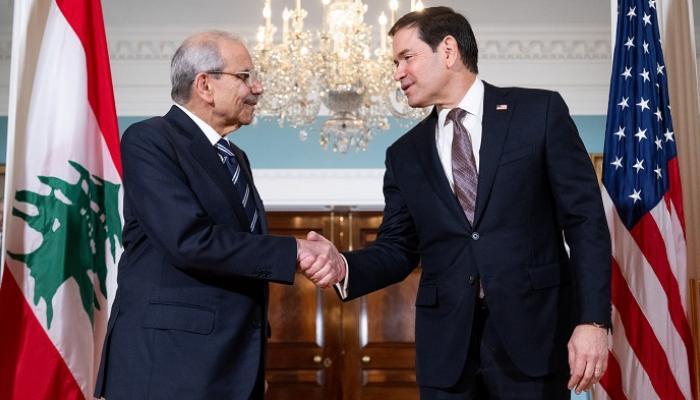
Salam’s office said the meeting focused on translating the principles of reciprocity and phased implementation into concrete steps and tangible results on the ground, including the complete withdrawal of the Israeli regime from Lebanese territory and restoration of Lebanon’s sovereignty.
Salam also urged the establishment of a credible monitoring mechanism to oversee implementation and ensure all parties fulfil their commitments, while Rubio reaffirmed Washington’s support for Lebanon’s sovereignty and legitimate institutions.
Salam’s office added that “any other statement or position attributed to President Salam or Secretary Rubio, beyond what was officially issued by both parties, does not reflect in any way the content of the meeting.”
Hezbollah Confrontation
Lebanon’s Prime Minister’s Press Office and related reporting framed the U.S. response as concise, with Washington tying any progress to the Lebanese state moving to confront Hezbollah “on all fronts, especially militarily and financially.” Nidaa al-Watan described informed diplomatic sources saying the American side’s data could be summarized as “face Hezbollah,” while Salam’s office emphasized U.S. support for implementing the framework agreement. Naharnet reported that Salam told MTV that disarming Hezbollah is “a Lebanese demand above all else,” and Salam said Rubio was “very understanding.”
Salam told MTV that “you need two to tango, whereas we are three today,” linking the remark to Israel’s occupation of south Lebanon. The İlke Haber Ajansı account said Rubio reaffirmed Washington’s support for Lebanon and its institutions and backed the implementation of the trilateral framework agreement, including assistance to the Lebanese Armed Forces.

What Is at Stake
Lebanon’s leaders tied the meeting to the framework’s phased Israeli withdrawal and the deployment of the Lebanese Armed Forces in areas vacated by Israeli troops, with the agreement providing for a credible verification mechanism to monitor implementation. Gulf Times said Salam called for continued U.S. support for the Lebanese military, tasked with disarming Hezbollah, and noted that the group refuses to lay down its weapons while Israel still carries out strikes and occupies a swath of southern Lebanon. Al-Ain Al-Ikhbariyah said the delay in implementing the agreement came as another round of negotiations between Lebanon and Israel was postponed to October, while it described Israeli attacks and demolitions in towns it occupies.
Espacio Diario said Rubio and Salam discussed security and stability in Lebanon and agreed on the need to continue dialogue and cooperation in the near future to strengthen bilateral ties. The Daily Beirut account said the Prime Minister’s Office reaffirmed commitments on sovereignty and an Israeli withdrawal, while it insisted that only the official statements issued by both parties reflect the content of the meeting.