Iran19 September, 20263 min read
Trump Addresses UN General Assembly as Houthis Threaten Shipping in Bab El-Mandeb Strait
This article is an automated aggregation of coverage from news outlets. Our editorials offer in-depth analysis curated by the NewsCord team.
Trump to address UN General Assembly amid Middle East tensions. Houthis threaten shipping as Iran war escalates in the region.
AL-MONITOR was read line by line by the Watchdog: 5.8. See the score →
UN spotlight on Iran
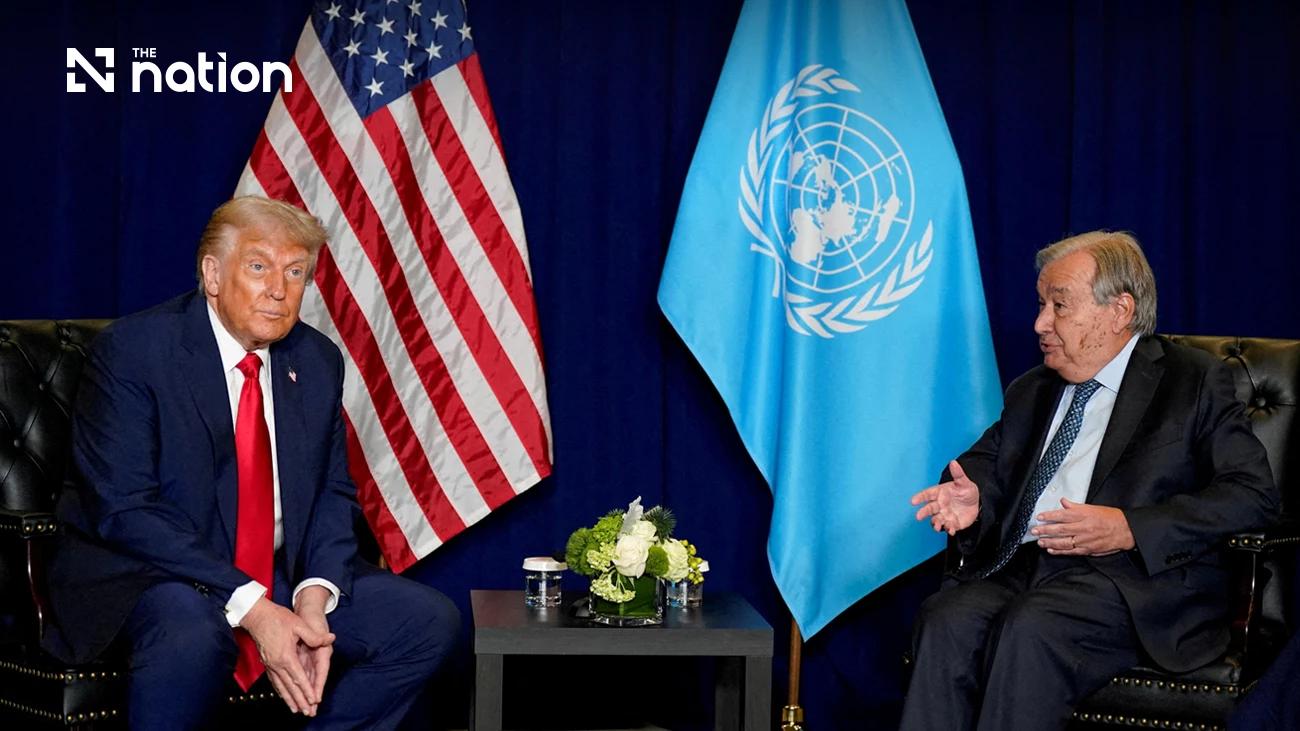
World leaders are set to gather in New York for the UN General Assembly as the Iran war and a new escalation by Yemen’s Houthis roil the Middle East, with President Donald Trump scheduled to address the General Assembly on Tuesday. AL-MONITOR says other key speeches include Iranian President Masoud Pezeshkian and Syrian President Ahmed al-Shaara on Wednesday and Israeli Prime Minister Benjamin Netanyahu on Thursday, while Chinese President Xi Jinping will skip the UN gathering. Reuters frames the same week as centering on widening conflicts in the Middle East and Ukraine and the risks of artificial intelligence, with nearly 130 heads of state meeting under the post-World War Two order under strain.
Reuters adds that the Middle East will again be a focus as the US-Israeli war on Iran continues to drive global inflation and destabilize the region, with recent gains by Houthi militants threatening shipping in the vital Bab el-Mandeb Strait. In the run-up to the speeches, Reuters reports that Iranian President Masoud Pezeshkian is scheduled to address the assembly on Wednesday and Netanyahu is to speak on Thursday, with Netanyahu wanted by the International Criminal Court over alleged war crimes and crimes against humanity in Gaza that Israel denies.

UN strain and competing claims
The UN’s ability to respond to overlapping crises is under scrutiny as nearly 130 heads of state gather, with Richard Gowan of the International Crisis Group describing the UN as “stuck in an open-ended crisis.” Nation Thailand reports that the United States paid US$725 million into the UN’s regular budget this week to retain its General Assembly vote, but it still owes more than US$1 billion and continues to demand spending cuts and reforms. Reuters similarly says the US avoided losing its vote by paying $725 million this week, but it still owes more than a billion dollars and makes ongoing demands for cuts and reforms.
Nation Thailand also highlights that Secretary-General Antonio Guterres will complete his term at the end of 2026 with no clear frontrunner, while Reuters adds that the 15-member UN Security Council may hold high-level meetings on Ukraine, AI and the Middle East. Against that backdrop, Reuters reports that Guterres cautioned against relying on military force, saying “It’s very difficult to have a military solution for that problem,” and tied the warning to the experience of fighting in Yemen.
Sanctions, strikes, and vetoes
A separate UN flashpoint centers on sanctions oversight for Tehran’s nuclear program, where Negocios says Russia and China vetoed on September 17 a US-backed resolution to extend for one year the mandate of an expert panel monitoring sanctions on Iran. Negocios reports that the panel’s current mandate ends on September 26, 2026, and that the veto would not automatically remove existing sanctions but would end the independent mechanism tasked with investigating violations and assisting the relevant committee. Negocios also says an independent mission found “reasonable grounds” to consider that American forces conducted the attack on February 28, 2026, at Shajareh Tayyebeh Elementary School in Minab, south of the country.
The same report says the UN puts the number of victims above 150 dead, including approximately 120 children, while Amnesty International had previously counted 156 dead and 120 children. In parallel, AL-MONITOR says Trump will address the General Assembly on Tuesday and that Chinese President Xi Jinping will meet with Trump in Washington on Thursday instead of attending the UN gathering, as the Iran war and Yemen’s Houthis escalation shape the agenda.