Iran · updated 1h ago · 3 min read
Trump Weighs Annihilating Iranian Regime After Strait Of Hormuz Tanker Attack
Iranian drone and missile attack hit a US-contracted vessel near Strait of Hormuz, injuring crew. Trump says a big decision on resuming major strikes to annihilate Iran.
Whether Iran’s claim matches the specific vessel.
5 of 7 outlets skipped it: UN fact-finding panel says US strikes were likely war crimes.
Anadolu Ajansı was read line by line by the Watchdog: 4.2. See the score →
12outlets compared
Same story, two versions
tap a side to read it in full
KRCR
“It was not immediately clear whether Iran’s claim involved the same tanker cited”Read the original ↗
Anadolu Ajansı
“An Iranian drone and missile barrage struck a vessel contracted by the US”Read the original ↗
KRCR questions whether Iran’s claim matched the specific UKMTO tanker, while Anadolu treats an Iranian barrage as the strike on the US-contracted vessel.
Ships hit, decision looms
In the Strait of Hormuz, a tanker was hit by a projectile and a fire onboard was extinguished, according to the United Kingdom Maritime Trade Operations center (UKMTO) reporting that the crew was safe and the environmental impact was "unconfirmed."
“"unconfirmed"”
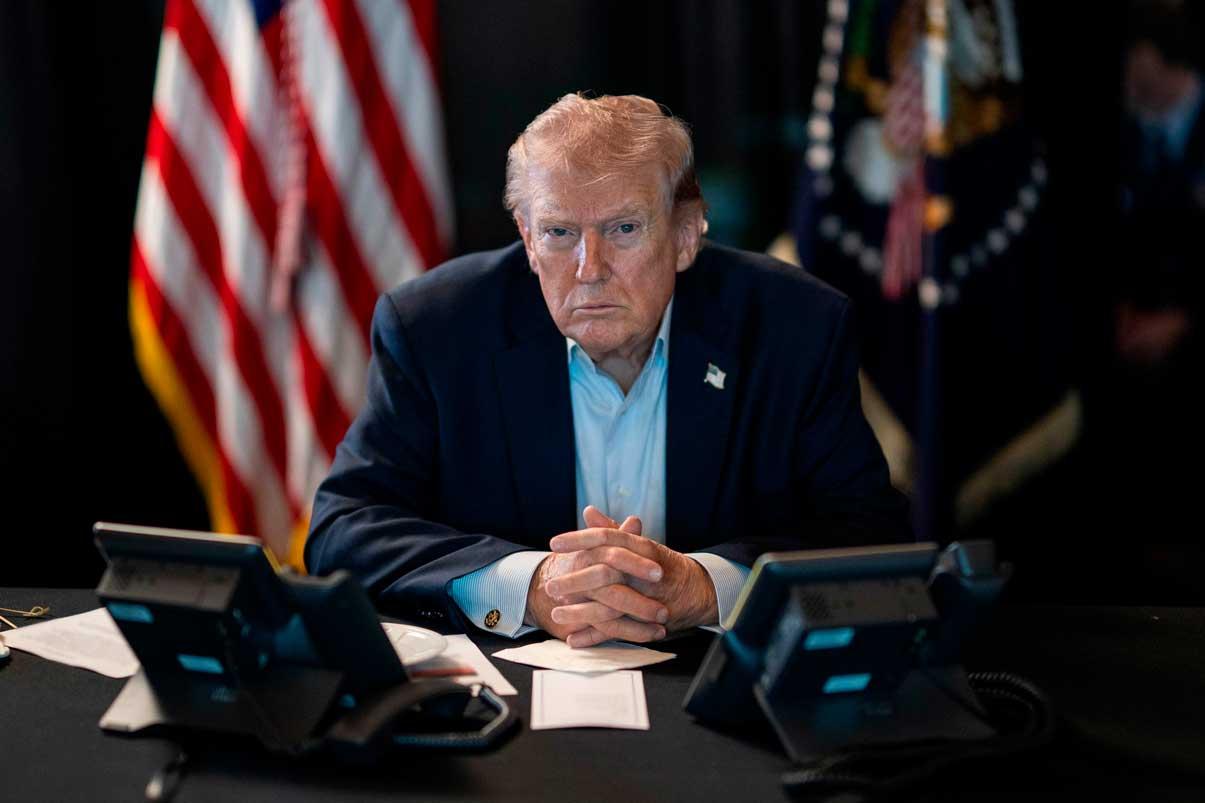
President Donald Trump said Thursday that he is poised to make a "big decision" on whether to launch a major assault to "annihilate" the Iranian regime, telling Axios, "Anything could happen with me."

Iran claimed it struck a ship attempting an "illegal crossing" of the strait, as the attacks on commercial vessels continued.
The latest incidents came as CBS News described a wider war context in which Iran has targeted Gulf states and the United States and Israel launched the war jointly at the end of February.
Earlier historical context: the CBS News report also referenced a U.N.-commissioned panel finding "reasonable grounds" to believe two U.S. strikes on Iran early in the conflict constituted war crimes.
Gulf meeting and GOP splits
Trump’s comments to Axios were framed as coming ahead of a planned meeting with Persian Gulf leaders expected next week on the sidelines of the U.N. General Assembly, where he said, "I want to find out where they are and how they are doing."
In parallel, The Guardian reported that when the House of Representatives considered its sixth war powers resolution on Tuesday evening, three Republicans who had not supported previous efforts broke with their party to vote for passage.

The Guardian quoted Mariannette Miller-Meeks saying, "I will not vote to keep our soldiers in an open-ended war, with Iowans paying too much at the pump," while Zach Nunn said his state "has already paid a devastating price" in the conflict.
The Guardian also described the political backdrop as Democrats using war powers resolutions to press Republicans on a conflict that polls indicate is not popular with the public.
Historical context: CBS News described that Trump’s planned meeting would take place next week on the sidelines of the U.N. General Assembly in New York, as Gulf states host American military forces and were targeted by Iran in retaliation.
War costs and what’s at risk
As the war with Iran drags on toward the November midterm elections, El País reported that spending through August has hovered around $40 billion and that the Pentagon inspector general acknowledged shortages in ammunition stockpiles.
“exceeded $38.1 billion as of August 1”
El País said the CBO estimated direct cost to the United States exceeded $38.1 billion as of August 1, with each additional month of fighting adding between $2–3 billion more, and it warned that rebuilding stocks to pre-June 2025 levels could take five years or more.
The Guardian’s account of the political stakes echoed that lawmakers were increasingly focused on whether the conflict is open-ended, with Miller-Meeks and Nunn arguing for congressional oversight and objectives.
In the same period, CBS News described a U.K. maritime monitor reporting a fire onboard after a tanker was hit, while Iran’s Islamic Revolutionary Guard Corps claimed to strike a Togo-flagged ship over an "illegal crossing."
Historical context: The Times of Israel reported that the U.S. and Israel launched the war on February 28 with stated goals including eliminating Iran’s nuclear and ballistic missile threats, and it said the Gulf states have borne the brunt of Iran’s anger.