Finance02 October, 20262 min read
Handful Of G20 Trade Ministers Reject U.S. Excess Capacity And Forced Labor Push
G20 ministers largely rejected U.S. calls to curb excess industrial capacity and forced labor. Only Mexico and Argentina backed the US proposals on excess capacity.
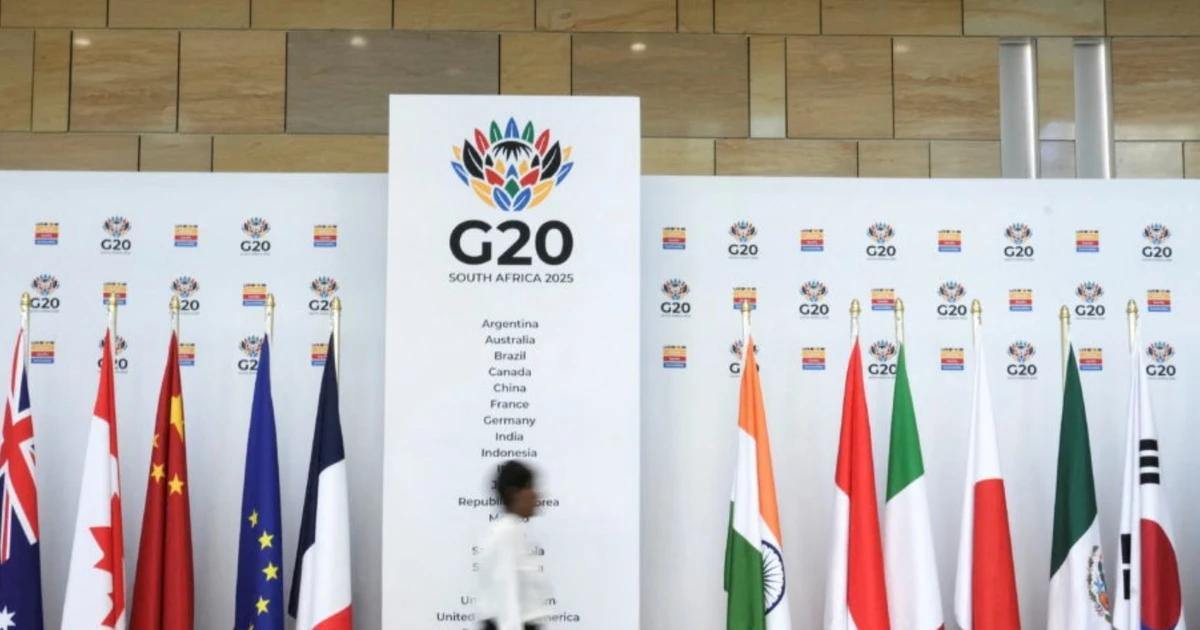
G20 splits on overcapacity
The U.S. Trade Representative’s office said on Friday that a “handful” of G20 trade ministers rejected U.S. calls to curb excess industrial capacity and “non-market” policies, exposing divisions within the group of major economies.
The U.S. issued its statement after a trade meeting in Milwaukee where only Mexico and Argentina joined a U.S.-led statement calling for more work and cooperation to eliminate goods produced with forced labor from supply chains.
The U.S. administration imposed tariffs of 10% or 12.5% on goods from 59 countries and the European Union, and it also conducted a second “Section 301” tariff investigation into 16 trading partners over signs of excess industrial capacity.
The U.S. statement said the draft ministerial statement was supported by all but a few members, and it added that several members “firmly rejected” creating a pathway toward cooperative action on excess capacity.
China rejected the U.S. framing of industrial overcapacity and industrial subsidies, and the U.S. said it was “severely disappointed” by the opposition to the excess-capacity initiative.
Forced labor and food trade
The U.S. Trade Representative Jamieson Greer defended Washington’s approach at a Tuesday roundtable in Milwaukee, saying the administration “is not anti-trade”.
Greer said countries faced similar challenges with global overcapacity and “non-market policies”, and he also said the U.S. did not seek a joint statement on reforming the World Trade Organization’s most-favoured-nation (MFN) system.

The G20 trade ministers reached consensus on denouncing the weaponisation of food and agricultural trade, and the joint statement defined food weaponisation as measures intended to “slow, stop, block or direct the flow of food and agricultural inputs”.
The ministers said, “We condemn food weaponization, as it poses a significant humanitarian and economic threat,” and they agreed that trade in food and agricultural inputs should not be used as a tool for economic or political coercion.
The U.S. statement also said the draft ministerial statement was supported by all but a handful of members, while a few “firmly rejected” creating a pathway toward cooperative action on excess capacity.
Tariffs, diesel, and MFN
The U.S. said it was conducting a second “Section 301” tariff investigation into 16 trading partners over signs of excess industrial capacity, and the probe could result in additional tariffs in the coming months. The U.S. also imposed tariffs of 10% or 12.5% on goods from 59 countries and the European Union, and the USTR did not identify the countries that opposed the excess-capacity initiative. After pressure from President Donald Trump, G7 countries agreed on Friday to release about 100 million barrels of diesel reserves to bring down record-high US diesel prices, and diesel is widely used in agriculture and other industrial activities.
Jamieson Greer said he did not seek a joint statement on reforming the World Trade Organization’s MFN system, and he argued that the MFN principle does not adequately address economies that provide industrial subsidies, particularly China. The U.S. said some G20 members expressed willingness to consider changes to MFN, including broader exceptions and new legal interpretations that could allow greater use of existing provisions.