Africa01 October, 20262 min read
Tunisia Replaces Prison Terms With Fines For False News Under Decree 54
This article is an automated aggregation of coverage from news outlets. Our editorials offer in-depth analysis curated by the NewsCord team.
Prison terms for spreading false news under Decree 54 are abolished. First offense fines set at 10,000 to 20,000 Tunisian dinars.
Fines replace prison
Tunisia softened its cybercrime penalty for “false news” by amending Decree 54, with the amendment taking effect on Wednesday and setting fines of 10,000 to 20,000 Tunisian dinars for a first offence. The amendment replaced a five-year prison sentence, while repeat offenders may still face jail under the revised framework. The amendment also kept prison for repeat offences at six months, alongside a 50,000-dinar fine, and it doubled penalties when the targeted person was a public official or equivalent status.
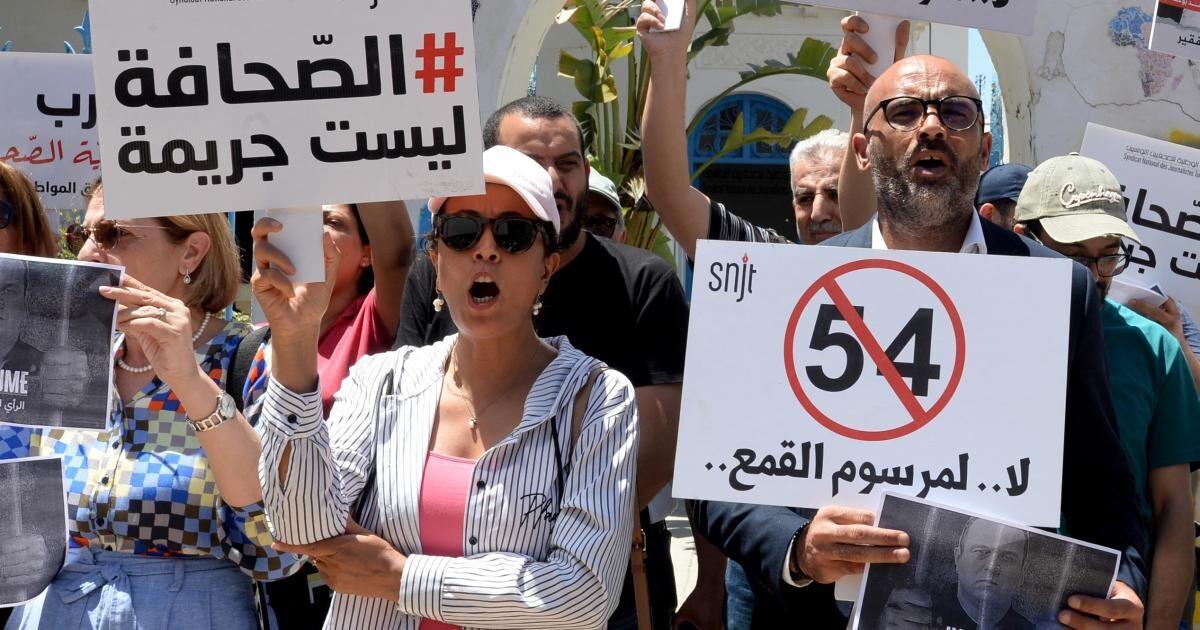
The amendment came after a Cabinet meeting chaired Tuesday by President Kais Saied to consider changes to Decree 54 and other legislation, and it was published in the country’s Official Gazette. Rights and media freedom advocates said the decree had been wielded against President Kais Saied’s opposition, activists and reporters, even as the government said the decree protects people and public order from attack and is needed to tackle online crime and disinformation.

Critics vs government
Said Benarbia, the International Commission of Jurists director for the Middle East and North Africa, told Al Jazeera that the decree was “one of the potent tools of oppression used by the government to crush dissent, crack down on civic space and arbitrarily restrict the freedom of expression in the country,”. Rafik Abdessalem, Tunisia’s foreign minister from 2011 to 2013 and a senior figure in the Islamist Ennahdha party, said the decree had been used “to silence every voice critical of the regime”. Journalist Wissam Hamdi told Euronews that it would have been “wiser from the start not to issue this decree, and not to reach a stage where it needed to be amended in the first place.”
Euronews described Article 24 as the most controversial part of Decree 54, with the original text providing a five-year prison term and a fine of 50,000 dinars for first offences. Euronews also quoted Hamdi arguing that the discussion around Decree 54 cannot be separated from how it was issued, saying the decree was enacted “by a unilateral political decision”.

What changes, what stays
The revision approved at the end of September 2026 changed the main penalty in Article 24 by replacing first-offence prison with a fine ranging from 10,000 to 20,000 dinars, while prison for repeat offences remained six months with a 50,000-dinar fine. Al Jazeera said repeat offenders may still face jail, and it also described how penalties were doubled when the offence was aimed at a public official or someone of equivalent status. Euronews said the first substantial amendment to Article 24 removed prison for first offences and replaced it with a financial penalty, while prison remains for repeat offences.
The amendment did not end criticism that the decree continues to shape prosecutions, with the National Syndicate of Tunisian Journalists recording 14 prosecutions of journalists between April 2025 and April 2026, including six under the decree. Al Jazeera reported that Tunisia’s largest labour union had unveiled plans hours before Wednesday’s amendment came into effect, as the country’s debate over Decree 54 continued.