
USA · 21 August, 2026 · 3 min read
Supreme Court Chief Justice John Roberts Allows Trump White House East Wing Ballroom Project To Continue
Chief Justice Roberts granted an administrative stay allowing construction to continue for now. Stay pauses lower court order halting above-ground work on the $400 million White House ballroom.
Scope of what is paused or allowed (above-ground vs underground).
3 of 4 outlets skipped it: ballroom described as a 'military complex' with a drone-attack roof.
61outlets compared
Same story, two versions
tap a side to read it in full
Al Jazeera
“temporarily pausing a judicial order that would halt much of the development”Read the original ↗
ABC says work can proceed unabated; Al Jazeera says the stay halts much of development
Ballroom construction allowed
The U.S. Supreme Court, with Chief Justice John Roberts issuing an administrative stay, allowed President Donald Trump’s White House East Wing ballroom project to continue for now while the court considers the administration’s emergency request.
The project is estimated to cost $400 million, and ABC News reported that Roberts’ order came hours before lower-court rulings would have forced a halt to aboveground construction because Trump did not get congressional approval.A
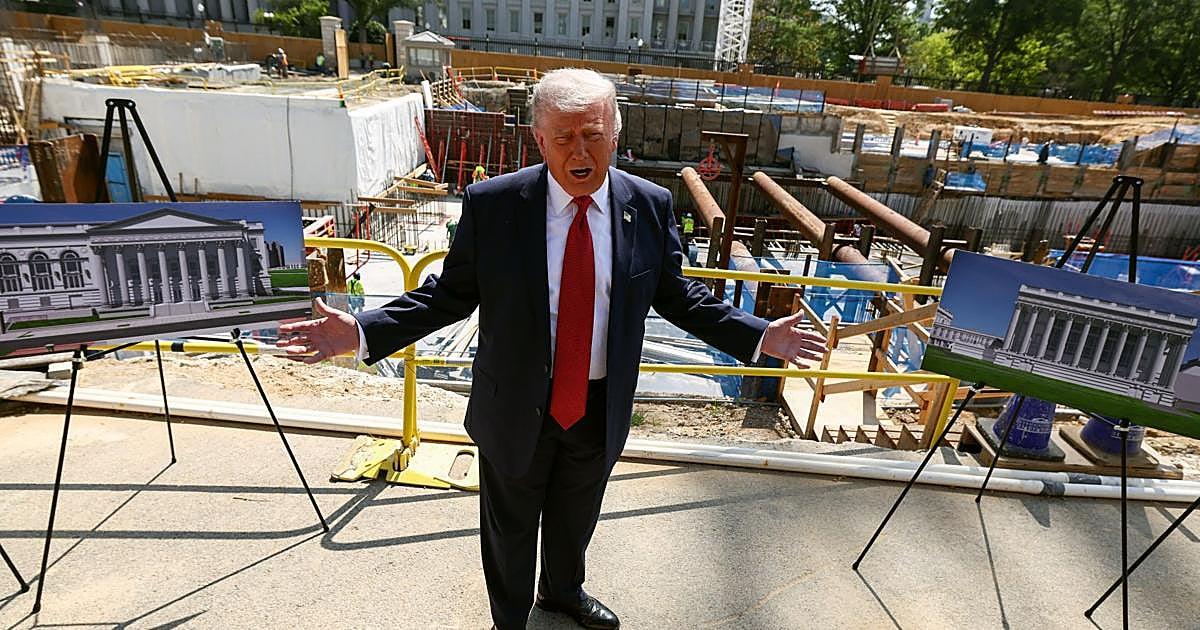
ABC News said the lower court had ruled Trump exceeded his authority by demolishing the East Wing and beginning to erect the 90,000-square-foot structure without congressional approval, and it noted that a divided appeals court earlier this month affirmed that finding.A
In the same dispute, the National Trust for Historic Preservation argued that only Congress can approve major changes to the White House, while the Trump administration argued upgrades are his prerogative and that national security matters should not be reviewed by a judge.
Al Jazeera added that the Supreme Court’s temporary order pauses a judicial halt while it considers the emergency appeal, and it described the ballroom as part of an “integrated military complex” at the East Wing.A
Competing legal and political voices
The appeals court that previously blocked the project said the Constitution grants Congress—not the executive branch—the responsibility to decide whether proposed changes to the White House’s physical design can proceed, and it framed the issue as one of congressional authority rather than presidential self-help.
In that ruling, judges Patricia Millett and Bradley Garcia wrote that “Whether or not a massive ballroom should be constructed is for Congress to decide and is not a matter for Executive self-help,” and they said Congress must be involved to protect safety and preserve historical and architectural significance.

Judge Neomi Rao dissented, arguing that the preservation group lacked jurisdiction and warning that halting construction “inevitably extends the time during which the President's residence remains less secure,” while she pointed to a footnote about an assassination attempt at the Washington Hilton during the White House Correspondents' Dinner.
The Trump administration, through the DOJ, asked the Supreme Court to intervene, with solicitor general D. John Sauer arguing that the case involves “an extraordinary and unlawful injunction that will halt the ongoing construction of the integrated military complex,” and it said the ballroom is “vitally required by national security.”
AP also reported that the administration’s filing cited “the threat of a missile attack against Air Force One on July 8” and said the project is “on time and under budget” with approximately $400 million in private donations.
What happens next
While the Supreme Court’s temporary order keeps construction going, the legal fight continues over whether Trump can proceed without congressional approval, with the National Trust for Historic Preservation insisting the president must follow federal law for federal property. AP reported that the full Supreme Court will likely weigh in next on whether construction can continue for the potentially long duration of the lawsuit, and it said a spokesperson for the trust described the Roberts order as “not a final decision.” The administration said the ballroom is already far along, with court documents cited by AP stating that 65% of the work has been completed and that crews are working 20 hours a day, seven days a week.
AP also said the project’s security rationale is central to the administration’s case, including that District Judge Richard Leon allowed work to continue only belowground on bunkers and military installations, while aboveground construction was halted. In parallel, Al Jazeera reported that Trump celebrated the Supreme Court’s move on social media, writing he was “grateful” to the court and adding that the ballroom would be “THE GREATEST OF ITS KIND,” as the dispute over presidential power and the White House’s historic structure remains unresolved.A