Iran17 July, 20263 min read
US Bombs Iran For Ninth Consecutive Night, Striking Jask, Sirik, Tabriz, Chabahar
This article is an automated aggregation of coverage from news outlets. Our editorials offer in-depth analysis curated by the NewsCord team.
US conducts ninth consecutive night of air strikes on Iran targeting multiple sites. Explosions reported in Sirik, Jask, Tabriz, and Chabahar as strikes unfold.
Anadolu Ajansı was read line by line by the Watchdog: 8.1. See the score →
Ninth Night Strikes
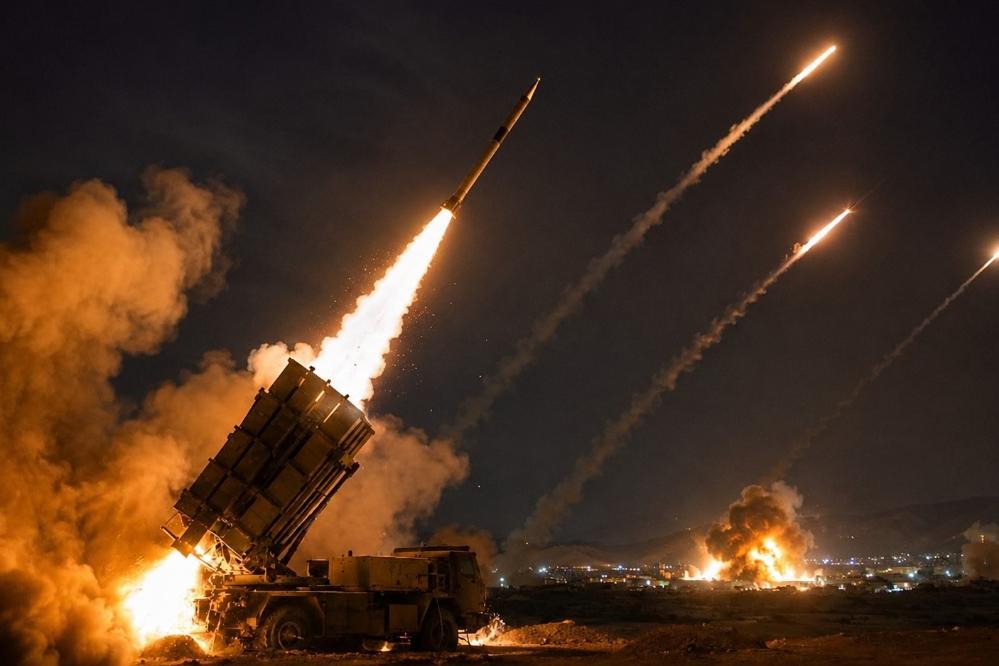
The United States carried out its ninth consecutive night of air strikes against Iran, with Iranian media reporting explosions in multiple cities including Sirik, Jask, Tabriz and Chabahar. Al Jazeera’s Tohid Asadi, reporting from Tehran, said the latest US strikes again targeted Iran’s southern coast, an area that has been hit repeatedly over the past nine days, and that Jask and Sirik were struck again while the explosions in Tabriz marked the first time the northwestern city had come under attack since the escalation began. The US military said the attacks were aimed at “degrading Iranian military capabilities used to attack commercial vessels and mariners transiting the Strait of Hormuz,” and it said it targeted Iranian military command centres, air defence and coastal surveillance sites, maritime capabilities, missile and drone launch sites, as well as communications networks.
Iranian state broadcaster IRIB reported explosions across Iran from the port cities of Bandar Mahshahr and Bandar Imam Khomeini in the Gulf to Jask and Sirik near the Strait of Hormuz, while the Fars news agency said air defence systems were activated in Konarak and Chabahar. In Washington, DC, US President Donald Trump told reporters the Pentagon was hitting Iran “very hard” to honour the three service members killed in Jordan and Iraq, adding that “Iran cannot have a nuclear weapon.”

Retaliation and Diplomacy
Iranian leaders said they were also talking about their retaliatory strikes, with state media saying Tehran had launched a wave of missiles from Lorestan province at US military bases and other assets across the region. The Islamic Revolutionary Guard Corps (IRGC) said it retaliated with missile and drone strikes on Jordan and Kuwait, and it claimed to have struck US aircraft at Jordan’s Aqaba airport and destroyed hangars at the Muwaffaq Salti airbase in Azraq. In the same reporting, Al Jazeera said sirens sounded in Bahrain, where the IRGC claimed it had struck US aircraft at Jordan’s Aqaba airport and claimed to have destroyed hangars at the Muwaffaq Salti airbase in Azraq.
US Secretary of State Marco Rubio said Washington was still open to diplomacy, but “it has to be real,” and he urged “other countries” to “step up” to help protect shipping in the Strait of Hormuz. Al Jazeera also reported that the IRGC said two oil tankers attempting to transit the waterway the previous night had “exploded” while attempting to use an “unsafe” corridor there, adding that the corridor would remain unsafe as long as US military operations in the region continue.

Regional Ripples and Shipping
As the US and Iran traded blows, Al Jazeera reported that the conflict began when the US and Israel attacked Iran on February 28, and it said the fighting has killed thousands of people, mostly in Iran and Lebanon, while disrupting energy supplies and raising fears over global inflation. Al Jazeera said separately that Iran and the US had taken aim at shipping traffic, with Washington saying it was enforcing a naval blockade on Iranian ports and Tehran saying it targets vessels violating its rules on navigating the Strait of Hormuz. The IRGC warned that “This passage is unsafe for the transport of chemical fertiliser or even a single drop of oil and gas,” and it said the corridor would remain unsafe as long as US military operations in the region continue.
In a separate account, IranWire said CENTCOM announced strikes against a range of military targets in Iran early on Monday, July 20, 2026, with the operation commencing at 2:30 AM Iran time and lasting three hours, concluding at 5:30 AM. IranWire added that CENTCOM described the objective of the strikes as to “degrade the Islamic Republic’s capability to attack commercial vessels and civilian mariners transiting the Strait of Hormuz,” while it said CENTCOM did not release details on the exact number of targets, precise locations, munitions used, or potential casualties and damage estimates.