Iranupdated 1h ago3 min read
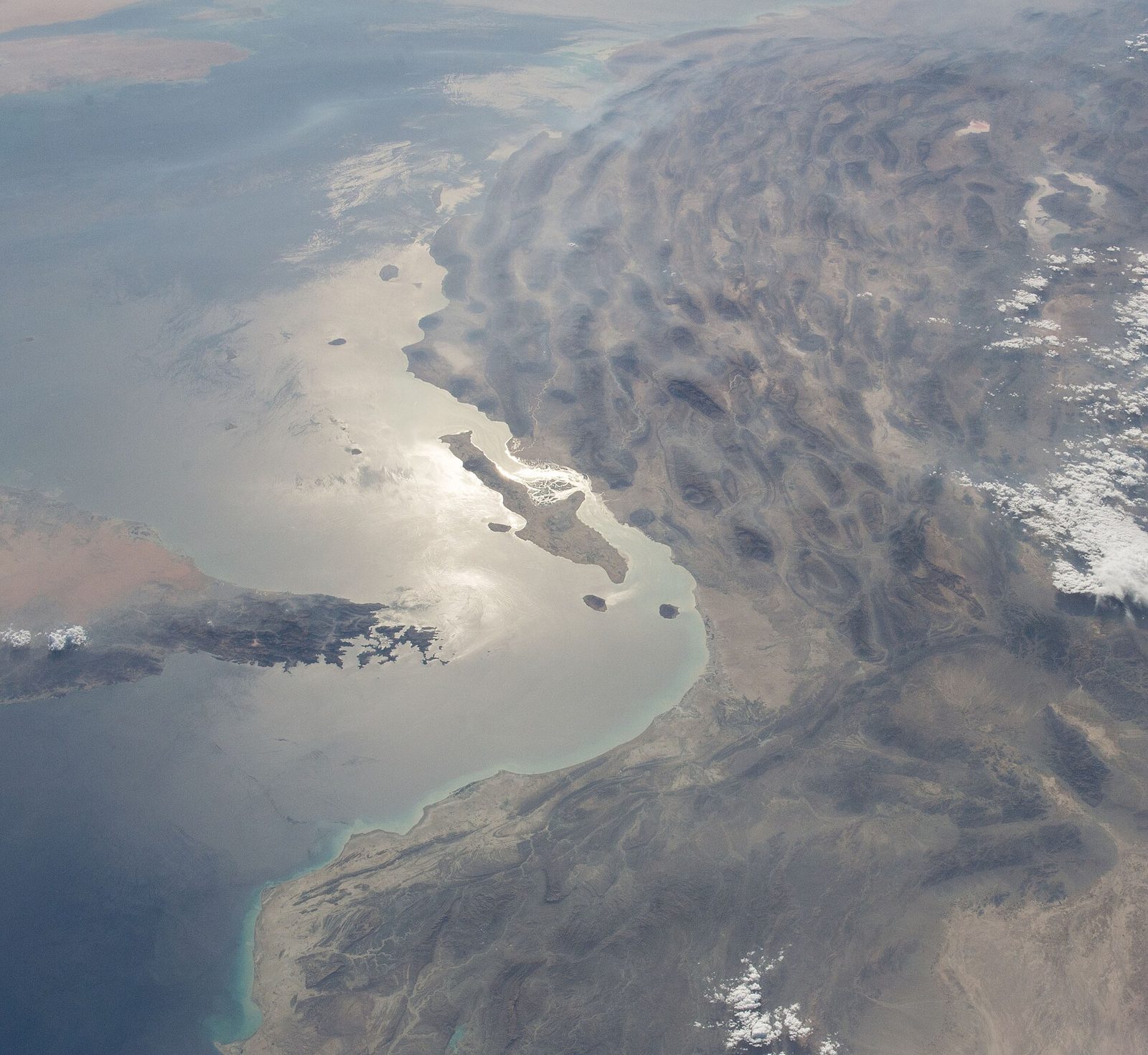
Archive photo · 5 June 2016U.S. Carries Out Limited Strikes On Iran’s Qeshm Island After Tehran Fires On U.S. Aircraft
“They described the attacks as self-defense in response to Iran’s ongoing efforts to target maritime shipping and U.S. assets.”
“But the new action, on the eve of Election Day, is a reminder that the situation in Iran is still unresolved, and combat is still very much on the table.”
Photo: Earth Science and Remote Sensing Unit, Lyndon B. Johnson Space Center / US federal government, Public domain · Cropped for layout
This article is an automated aggregation of coverage from news outlets. Our editorials offer in-depth analysis curated by the NewsCord team.
U.S. carried out limited defensive strikes on Qeshm Island in the Strait of Hormuz. The strikes followed Iran's firing on a U.S. aircraft, officials say.
Save coverage image
France 24 was read line by line by the Watchdog: 6.0. See the score →
Qeshm strikes, Trump threats
The United States carried out limited strikes on Iran’s Qeshm Island in the Strait of Hormuz after Tehran fired on a U.S. aircraft, according to the New York Times as cited by Al-Jazira Net.
The Islamic Revolutionary Guard Corps announced the downing of an American drone east of the Strait of Hormuz, and U.S. President Donald Trump said he might be forced to strike the Mount Fiz site near the Natanz nuclear facility.
An American official told the New York Times that the strikes on Qeshm were limited with no immediate plans for escalation, and the official said the IRGC fired at two American fighter jets flying over the Strait of Hormuz but missed them.
Trump also told Fox News that American forces could strike the Mount Fiz site “within an hour,” and the site was described as an underground fortified complex south of Tehran less than two kilometers south of the Natanz uranium enrichment facility.
The reports placed the Qeshm operation alongside U.S. efforts described as aimed at preventing Iran from attacking ships in the Strait of Hormuz, while the Washington Post quoted officials as saying American forces continued secret airstrikes on Iran over the past weeks.
Defensive framing, competing claims
U.S. officials described the Qeshm strikes as “limited” and “defensive measures against the Iranian use of surface-to-air missiles against U.S. sites,” according to annahar. Iran’s official IRNA news agency reported hearing five consecutive explosions on the island, while residents said they saw two aircraft flying in its airspace. Trump told Fox News that the United States “may need to target Pickaxe,” and Trump said the matter “is not a big deal” and could be carried out in 'one hour'.
A U.S. official said the United States struck Iran’s Qeshm Island, while a senior Iranian official said Tehran and Washington were “far from reaching a deal to end the war” and that Iran would not accept Washington’s “excessive demands.” Oil prices rose more than $1 on Tuesday as the Qeshm strike and the renewed risk of escalation fed into energy markets, with West Texas Intermediate up $1.6, or 1.66%, at $98.06 a barrel and Brent up $1.84, or 1.76%, to $106.61 a barrel by 0744 GMT.
Negotiations, escalation risks
Iran’s Foreign Ministry spokesman Ismail Baqaei said the possibility of reopening the Strait of Hormuz within two days was “additional evidence of Iran’s good faith,” and he said “exchanges of messages between Washington and Tehran are still ongoing” via intermediaries, according to the BBC. Iranian Foreign Minister Abbas Araghchi said, “Consultations via mediators are extremely intensive,” and he said “everything depends on Washington’s political rationality.” A U.S. official said, “This was a defensive measure for Iranians using surface-to-air missiles against U.S. assets,” and the same report said the U.S. strike came after Iran tried to target a U.S. aircraft again.
Tehran gave Washington a “strong and rational response,” and “The ball is in the US' court,” as markets reacted to the reminder of ongoing military activity. The war started in late February and became “a leading cause of high gasoline prices weighing on voters,” while mid-term elections were set for Tuesday.