Iran30 August, 20263 min read
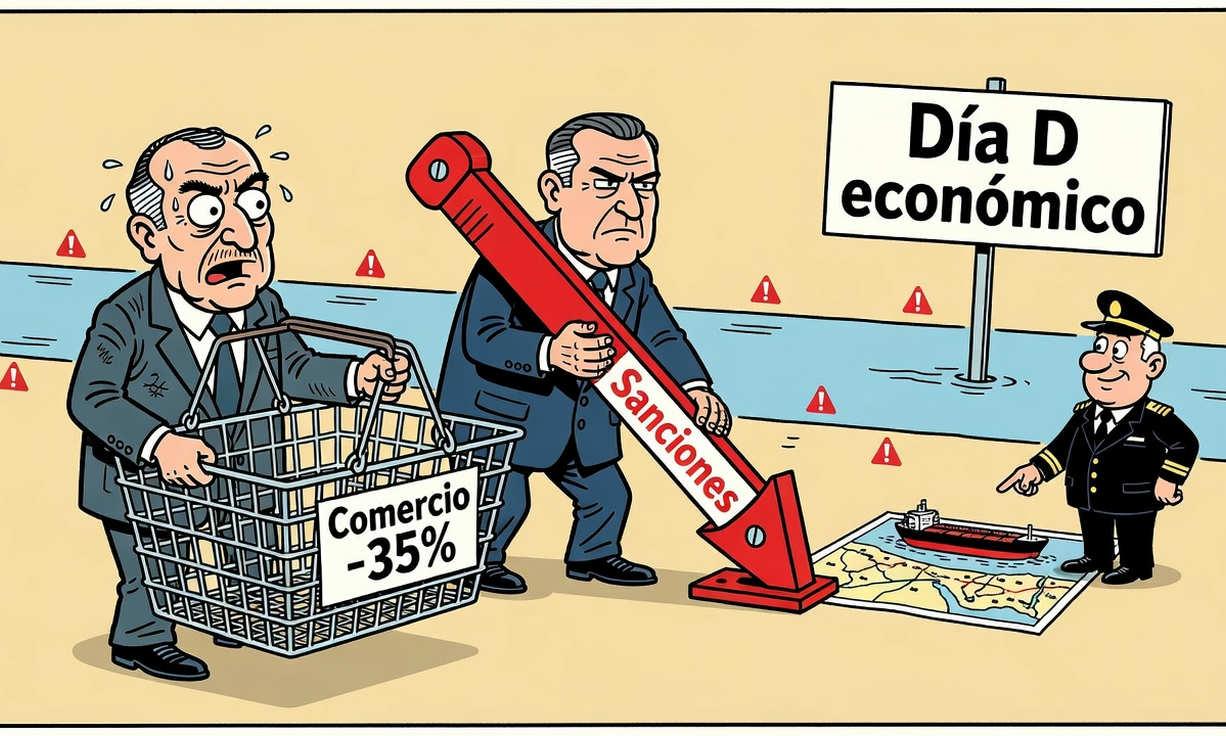
U.S. Sanctions Squeeze Iran’s Hard-Currency Access, Shrinking Trade Nearly 35%
This article is an automated aggregation of coverage from news outlets. Our editorials offer in-depth analysis curated by the NewsCord team.
Foreign trade slumped about 35% as US sanctions and port blockade tighten Iran's economy. Leadership acknowledges hardship and warns inflation if sanctions continue.
The Jerusalem Post was read line by line by the Watchdog: 0.0. See the score →
Sanctions and “Economic D-Day”
The U.S. sanctions campaign against Iran is increasingly squeezing Tehran’s access to hard currency and shrinking trade, with Professor Uzi Rabi telling 103FM radio on Thursday that “Iran has been forced in recent weeks to manage with fewer and fewer dollars.” Rabi, head of the Moshe Dayan Center for Middle Eastern and African Studies at Tel Aviv University, warned against assuming that economic collapse would inevitably topple the regime, saying “The economic path is not certain.” Treasury Secretary Scott Bessent laid out plans for an “economic D-Day” against Iran on Monday, seeking to further isolate the regime through expanded secondary sanctions and restrictions tied to the dollar-based financial system.
In parallel, Reuters reported that Iranian leaders acknowledged the economic toll of war with the U.S., with President Donald Trump’s administration stepping up efforts to punish Iran financially while Tehran vowed to withstand U.S. pressure and maintain what it said was control over the Strait of Hormuz. Reuters also said Iran’s president told state media that foreign trade had slumped nearly 35% due to U.S. sanctions and a naval blockade of Iranian ports, while Supreme Leader Ayatollah Mojtaba Khamenei urged the government to address inflation, unemployment, and price management.

Hardship, protests, and diplomacy
Iran’s leaders and officials publicly linked economic hardship to sanctions and the blockade, with Masoud Pezeshkian telling state TV that “We have had a decrease of between 25% and 35%.” In the same reporting, Supreme Leader Mojtaba Khamenei urged a written shift toward economic self-reliance, calling for “gradually phasing out the US dollar from playing a pivotal role.” Fortune reported that Bessent targeted five of Iran’s “most vital lifelines”: digital assets, technology, gold, aviation, and shipping, while Esfandyar Batmanghelidj argued those were “lifelines for the Iranian people, not the regime.”
Fortune also described protests tied to the cost-of-living crisis, including oil and gas workers in Asaluyeh staging a protest and state media reporting that they said they shouldn’t have to suffer while keeping oil production online. Reuters said Iran signaled no retreat on Saturday, vowing to pursue diplomacy and defense while others sought to revive talks, including Qatari Prime Minister Sheikh Mohammed bin Abdulrahman Al Thani meeting Iranian leaders in Tehran on Thursday.
Strait of Hormuz and escalation risk
The economic pressure campaign is intertwined with the Strait of Hormuz, where Reuters reported that before the war the strait carried 20% of the world’s oil and LNG and that U.S. military commanders said American forces have cleared sea mines from the strait laid months ago by Iran’s Islamic Revolutionary Guard Corps. Reuters also reported that the Revolutionary Guards’ navy said in a statement that U.S. claims the strait is open were “an obvious lie,” reiterating that the waterway remained closed to ships without Iranian permission. The Jerusalem Post’s Uzi Rabi similarly framed the strategic stakes, warning that “The Strait of Hormuz is not what it used to be,” after “the great damage caused to Hormuz” early in the war.
Fox News also relayed an Israeli warning from Energy Minister Eli Cohen, who told Ynet, “If Iran makes the mistake and tries to renew its nuclear programme or ballistic missile programme, even if there is an agreement with the United States, we will be there to attack.” Against that backdrop, Reuters reported that Iran’s diplomacy and defense were “two complementary, coordinated and inseparable wings” for protecting national interests, security, and territorial integrity, while the U.S. continued to press its “economic D-Day” approach.