Iran29 August, 20263 min read
Masoud Pezeshkian Says U.S. Sanctions Cut Iran Foreign Trade By About A Third
This article is an automated aggregation of coverage from news outlets. Our editorials offer in-depth analysis curated by the NewsCord team.
Iran's foreign trade declined about one-third due to U.S. sanctions and port blockade. Pezeshkian acknowledged sanctions hurting the economy and warned inflation could rise.

New York Post was read line by line by the Watchdog: 2.3. See the score →
Sanctions bite, regime resists
Iranian leaders acknowledged the economic toll of the war with the United States, with the supreme leader urging the government to address hardship and President Masoud Pezeshkian saying foreign trade has shrunk by about a third due to U.S. sanctions and the Washington-imposed blockade. Professor Uzi Rabi, head of the Moshe Dayan Center for Middle Eastern and African Studies at Tel Aviv University, told 103FM radio on Thursday that “The economic path is not certain,” warning against concluding that economic collapse would inevitably bring regime change. Rabi said Iran has been forced “to manage with fewer and fewer dollars,” adding that when it lacks hard currency “it cannot even operate its agriculture and industry.”
Reuters reported that six months after the U.S. and Israel launched the war, negotiations are at an impasse and President Donald Trump’s administration has stepped up efforts to punish Iran financially with what it has billed as an “economic D-Day.” Tehran signaled no retreat on Saturday, vowing to withstand U.S. pressure, pursue diplomacy, and maintain what it said was control over the Strait of Hormuz, which it says gives Iran leverage by disrupting global energy markets.

Diplomacy vs pressure campaign
Pezeshkian acknowledged on state television that sanctions are hurting the economy, telling viewers: “Some say sanctions have no effect at all; to those people, I really don't know what to say.”
In the same interview, he said, “We are in a war situation, and we must accept these wartime conditions,” while Reuters reported that Iran’s government said addressing economic pressures from sanctions and war was a central focus.
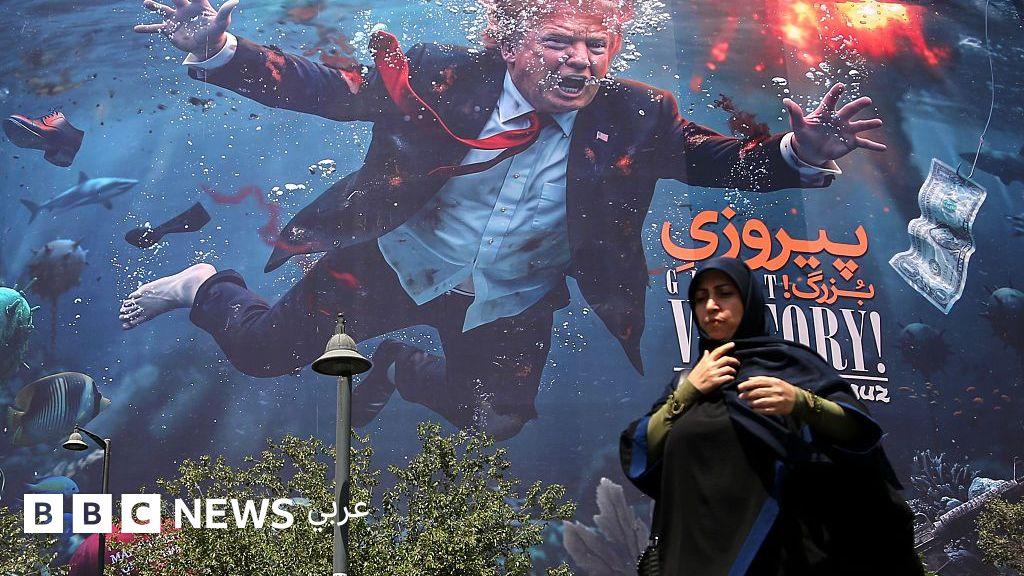
The Reuters report said Washington warned countries to cut business ties with Iran or face secondary sanctions, while the Treasury Department stopped short of imposing penalties against major Iranian trade partners such as China and India.
The BBC reported that the U.S. Treasury Department moved to block Emirates-based branches of Banque Misr from conducting dollar transactions due to their dealings with Iran, and that the bank said on Saturday it was reviewing the American notice while stressing its branch would continue to provide banking services.
Iran’s government also insisted it would pursue both diplomacy and defense, with the BBC quoting a statement carried by official media that diplomacy and defense are “two integrated and coordinated tools that cannot be separated” to protect national interests, security, and territorial integrity.
Hormuz leverage and economic stakes
Iran’s stance on the Strait of Hormuz remained a central point of contention, with the BBC reporting that the IRGC Navy rejected American claims that the strait is open for navigation and said restrictions would continue until U.S. military operations against Iran end and related commitments are fulfilled. The BBC said initial vessel-tracking data showed traffic far below normal levels, with seven commercial ships transiting the Strait on Thursday compared with 17 the previous day and an average of 15 ships per day over the prior ten days. Reuters reported that before the war, the Strait of Hormuz carried 20% of the world’s oil and LNG, and that U.S. military commanders say American forces have cleared sea mines from the strait that had been laid months ago by Iran’s Islamic Revolutionary Guard Corps.
Pezeshkian told state media that Iran was able to sell about 90 million barrels of oil during the short-lived memorandum of understanding signed in June, and Reuters said he later called for a revival of the interim deal that unraveled amid disagreements over the status of the Strait of Hormuz. The economic stakes were underscored by Reuters’ account that annual inflation hit 66% last month, while the BBC tied the pressure to a broader domestic agenda of reducing inflation, creating jobs, supporting domestic production, and gradually reducing reliance on the dollar.