Iran07 June, 20263 min read
U.S. Strike Targets Iran Radar Sites in Sirik Region and Qeshm Island
This article is an automated aggregation of coverage from news outlets. Our editorials offer in-depth analysis curated by the NewsCord team.
US strikes targeted Iran's radar and coastal surveillance sites in Sirik and Qeshm. Iran condemns US and Israeli attacks on Iranian facilities, calls for zero tolerance.

Radar Strikes and Missile Claims
Iran’s Ministry of Foreign Affairs condemned a U.S. military strike targeting radar and coastal surveillance facilities in the Sirik region and on Qeshm Island, calling it a “blatant violation of the April 8 ceasefire” and an act against Iran’s sovereignty and territorial integrity.
The WANA report said the attack took place in the early hours of Saturday, June 6, and targeted facilities responsible for safeguarding Iran’s borders and ensuring the security of international maritime navigation.
WANA also reported that U.S. Central Command (CENTCOM) confirmed Iran launched seven ballistic missiles toward U.S. bases in Kuwait and Bahrain, while also saying American forces intercepted multiple Iranian ballistic missiles and drones launched toward the Strait of Hormuz and neighboring Gulf countries on June 5.
In parallel, DW reported CENTCOM said the United States attacked Iran’s coastal radar sites at Guruk and Qeshm Island after downing drones Iran launched toward the Strait of Hormuz.
DW further framed the exchange as Iran saying, “We targeted American bases in the Persian Gulf,” while the U.S. said it shot down Iranian drones directed toward the Strait of Hormuz.
IAEA Dispute and Condemnations
Iran’s officials also attacked the International Atomic Energy Agency’s handling of Iran’s nuclear file, with WANA reporting Deputy Foreign Minister Kazem Gharibabadi criticizing the IAEA over its latest report and arguing the agency cannot ignore the impact of military attacks while expecting Tehran to bear the political and technical costs. WANA quoted Gharibabadi saying in a post on X that the issues regarding inspector access and alleged ambiguities are a direct consequence of U.S. and Israeli military strikes on Iranian nuclear facilities under IAEA safeguards. DW added that Iran condemned the IAEA’s report as a “tool of political pressure,” and said Tehran was negotiating with Washington over its nuclear program after the United States and Israel attacked on February 28.
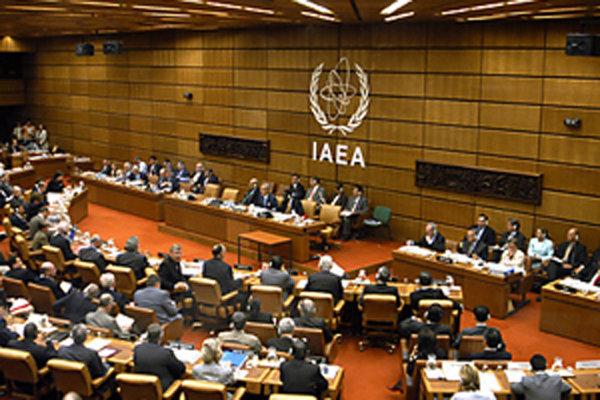
In the same DW account, the IAEA was described as warning that lack of access to Iran’s nuclear sites raises concerns about the spread of nuclear weapons, while also saying verification activities in Iran without delay are important. Watan News Agency reported Iran’s delegation urged “zero tolerance” toward the American and Israeli attacks on nuclear facilities under safeguards during a special meeting of the IAEA Board of Governors.
Regional Tensions and Nonproliferation Stakes
Beyond the immediate strikes, WANA reported that Ali Akbar Velayati, the Iranian Leader’s senior adviser on international affairs, said the emerging regional power architecture will not be based on weakening the resistance movement and warned that believing in lasting peace through unilateral concessions is a strategic mistake. WANA also said images of a vessel seized by Iran in the Strait of Hormuz surfaced online, with official reports saying the ship was detained for violating maritime regulations and navigation procedures. Mehr News Agency reported Iran’s delegation at the IAEA Board of Governors special meeting called the U.S. and Israeli attacks on nuclear facilities under safeguards the “most extensive and unprecedented” attacks since the IAEA was established.
Mehr said the delegation warned that normalizing attacks on peaceful nuclear facilities poses a serious threat to the non-proliferation regime and international security, and called for a decisive response from the international community. In the same Mehr account, Iran’s delegation described the attacks as undermining the objectives and principles of the Nuclear Non-Proliferation Treaty (NPT) and the IAEA Statute, and called on member states to prevent politicized, selective approaches and double standards.