
USA · 09 May, 2026 · 3 min read
Virginia Supreme Court Strikes Down Democrats' Redistricting Referendum, Nullifying April 21 Special Election
Virginia Supreme Court struck down the redistricting referendum and nullified the April 21 special election. The measure passed by a narrow margin, with Democrats hoping to gain four House seats.
How the Virginia ruling should be characterized.
9 of 10 outlets skipped it: WTVR lists justices’ election timing by party control..
11outlets compared
Same story, two versions
tap a side to read it in full
Shows partisan framing of the same court outcome.
Virginia ruling reshapes maps
The Virginia Supreme Court struck down the state’s Democratic-led redistricting referendum, nullifying the results of an April 21 special election in which 1.6 million Virginians approved redistricting that Democrats hoped would win four more House seats.
““Today’s action is an imperative step in the process we promised to pursue to explore every available option to restore the will of the voters.”
In a 4-3 ruling, the court said the legislature followed the wrong process for putting the question, an amendment to the state constitution, on the ballot, and the decision left voters returning to the polls in their current congressional districts.

Democrats had been counting on shifting Virginia from a 6-5 advantage to 10-1, but the ruling instead handed Republicans a boost in their effort to keep the House majority this fall.
The Virginia decision came after a U.S. Supreme Court ruling in a Louisiana case that weakened voting rights protections for minority communities, a change that Southern Republicans used to accelerate redistricting plans.
House Minority Leader Hakeem Jeffries said the court’s action was “an imperative step in the process we promised to pursue to explore every available option to restore the will of the voters.”
Competing reactions and appeals
Virginia Democrats moved quickly to challenge the ruling, with the state planning to appeal to the U.S. Supreme Court after the Virginia Supreme Court’s 4-3 decision that the legislature violated procedural requirements when it placed the constitutional amendment on the ballot.
Lt. Gov. Ghazala Hashmi said the opinion sent “the message that is sending unfortunately to voters is that their voice doesn’t count,” and she argued Virginia followed “those correct procedures constitutionally.”
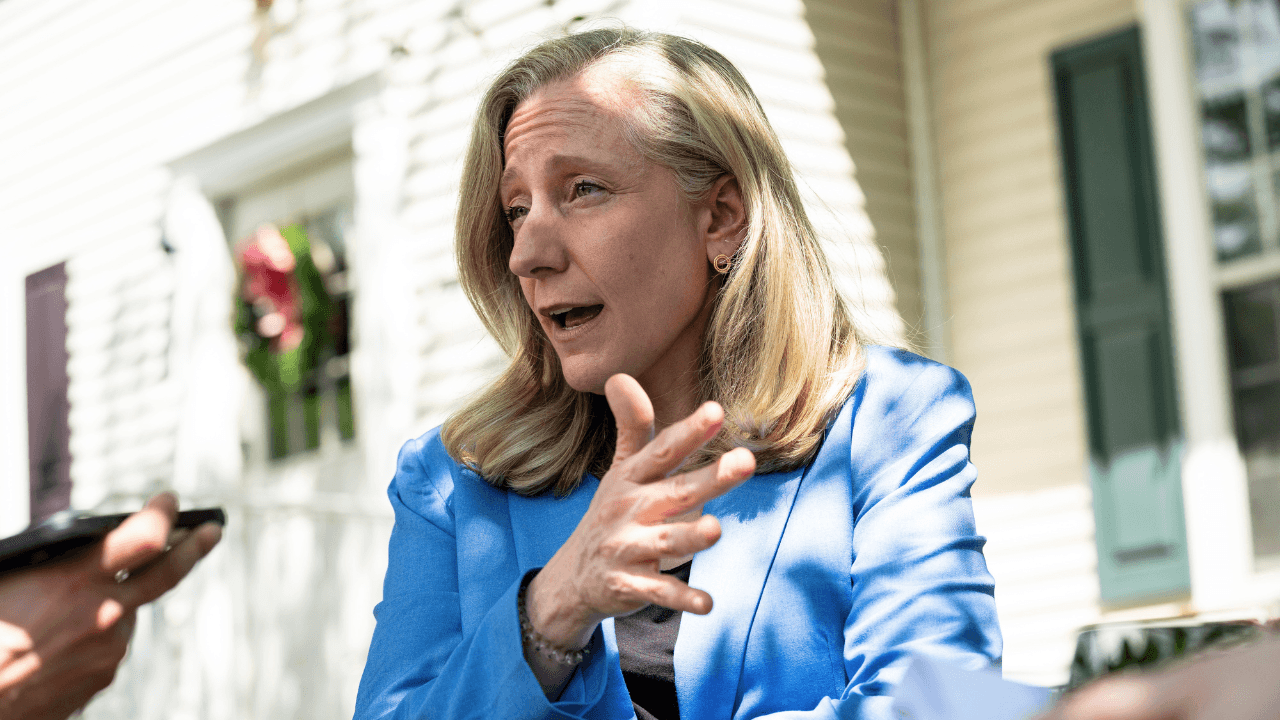
Republicans celebrated the outcome, and House Speaker Mike Johnson said in a statement that “This ruling is a victory for democracy and ensures Virginians have fair representation in Congress.”
The political fight also spread to other states as Southern Republicans rushed to redraw congressional maps after the Louisiana v. Callais ruling, while protesters flooded capitol buildings in Montgomery, Ala. and Nashville.
In Tennessee, the Republican-controlled state legislature voted Thursday to create a new congressional map that carves up the Black-majority district anchored by Memphis, a move that could wipe out the last seat held by Rep. Steve Cohen (D-Tenn.).
What’s at stake next
The Virginia ruling threatens to reshape the midterm battlefield by eliminating four House seats Democrats expected to flip, while leaving Republicans the possibility of netting between six and seven seats they would have otherwise lost, according to Cook Political Report analysts cited by The Hill.
““I think the General Assembly is going to look at all options on the table, including trying again for the constitutional amendment.”
Virginia Rep. Jennifer McClellan said “all options” are on the table for Democrats, including trying again for the constitutional amendment, and she framed the fight as opposing “the Jim Crow South” effort to dilute black voters and eliminate black representation.
The broader redistricting contest is tied to the U.S. Supreme Court’s Louisiana decision weakening the Voting Rights Act, which NPR described as remaking the redistricting race that President Trump began last year to help Republicans hold on to the U.S. House this fall.
In Alabama, Alabama Republicans approved legislation directing the governor to schedule new primary elections this year under a GOP-friendly map, while Decision Desk HQ chief elections analyst Geoffrey Skelley said it seems “up in the air” whether the court will move to lift an injunction.
With House control still narrow—Republicans holding a 217-212 edge with one Independent and five vacant seats—Democrats and Republicans are now racing through appeals, new maps, and election logistics as November approaches.