Published

Russia

Bus Driver Kicked Explosive Drone From Leipzig/Halle Airport, German Prosecutors Probe

Drone incident at Leipzig/Halle

A bus driver knocked an explosive-laden drone out of the air at Leipzig/Halle Airport late on Tuesday, potentially preventing an attack at the German airport that serves as a major NATO and cargo logistics hub.

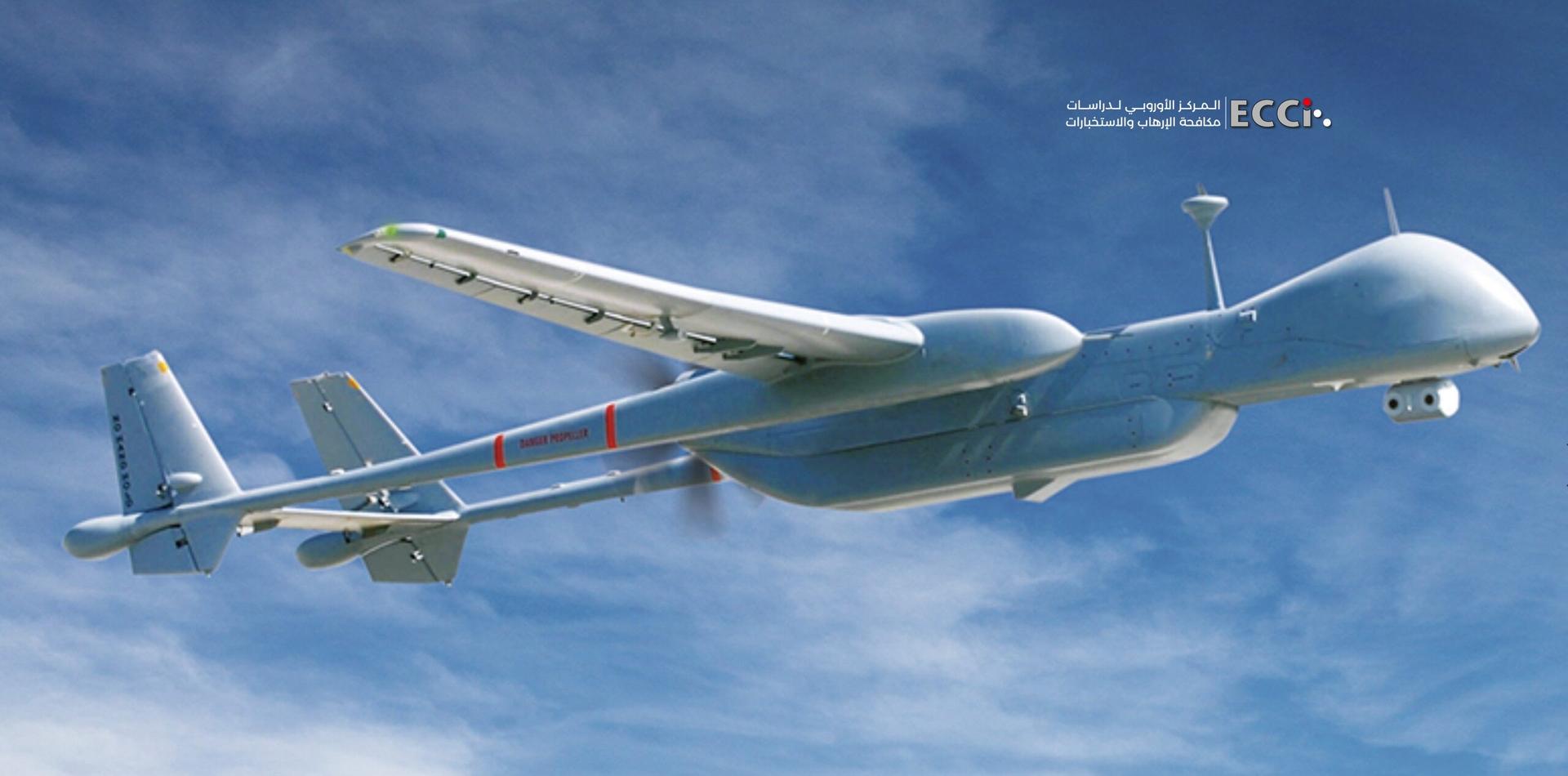
Image via Al-Markaz Al-Urubī li Dira­sāt Muqāba­t Al-Irihāb wa al-Istikhabarat

Across the sources

BBC stresses no proof; Guardian and POLITICO cite Russia-linked blame and election meddling fears.

BBC

There is no proof at this stage to link the flying bomb directly to Russia, which denies any role.
Read the original ↗

POLITICO.eu

The Kremlin has been accused of seeking to sway September’s elections in Saxony-Anhalt
Read the original ↗

Read the source excerpts alongside the original reporting.

At a glance

  1. Explosives-laden drone found at Leipzig/Halle Airport; authorities launched counterterrorism probe.
  2. Bus driver knocked the drone out of the air, potentially averting attack.
  3. Runways were closed and flights diverted during the incident.

Federal prosecutors launched a counterterrorism probe into what they said was a serious attack that could have impacted foreign and domestic security, and the drone was described as equipped with professional explosives and a detonator.

Senior lawmaker Detlef Seif, a member of the parliamentary interior committee, said, "A bus driver kicked the drone away while it was flying low. It then crashed and came to rest on the ground," and he added that the intervention may have prevented the intended attack.

Reuters reported that Chancellor Friedrich Merz held a call to discuss the drone incident, with a government spokesperson saying Merz was in constant contact with Interior Minister Alexander Dobrindt and other cabinet members about the incident on Tuesday at Leipzig/Halle Airport.

The airport is the main operational base for NATO's Strategic Airlift International Solution, known as SALIS, which uses Ukrainian Antonov An-124 cargo airplanes to deliver equipment to strengthen the defence pact's eastern flank, among other missions.

Russia blamed, officials react

German authorities have not named the man who stopped the drone or said where it came from, but Reuters reported that German authorities have in the past accused Moscow of carrying out hybrid attacks and that Moscow has denied those accusations.

Roderich Kiesewetter, a German lawmaker and parliamentary intelligence committee member, told a German newspaper earlier this week, "I assume this was a targeted hybrid attack — an attempted act of terror — orchestrated from Russia," as the BBC described renewed talk in Europe about hybrid war.

Interior Minister Alexander Dobrindt, for the state of Saxony where Leipzig/Halle Airport is located, said the incident opened a "new level of danger" and described it as a hybrid attack scenario.

Armin Schuster, the interior minister for Saxony, praised the bus driver's actions while telling regional broadcaster MDR, "But it's not a model to be emulated. Letting us know would be enough," according to Reuters.

The BBC said there was no proof at this stage to link the flying bomb directly to Russia, which denies any role, while also noting that the BBC had seen details of a 2024 plot in which Russian-linked proxies handled drones and explosives and delivered them to Germany.

Security stakes and next steps

The incident has triggered heightened security attention around Germany’s transportation and logistics infrastructure, with federal prosecutors describing it as a "serious attack" capable of undermining external and internal security.

AP reported that the drone was found late Tuesday at Leipzig/Halle Airport, later defused, and that an "object" collided with a plane Tuesday night, with the plane suffering only minor damage.

AP also tied the current investigation to a 2024 plot in which an incendiary device ignited at a logistics center at the airport and set fire to a freight container, part of a plot that Western security officials suspect was organized by Russian intelligence.

The stakes extend beyond the immediate airport disruption, because Leipzig/Halle is described as a major hub for international freight and for providing support to Ukraine, with NATO’s Strategic Airlift International Solution (SALIS) delivering equipment to NATO battle groups along its eastern flank from Finland to Romania.

In parallel, the AP background described that Western officials have accused Moscow of sabotage campaigns against Europe, and it noted that in May Russian President Vladimir Putin responded to findings of an Associated Press investigation by saying Moscow is not waging a sabotage campaign against Europe and demanded that AP "name one proven fact."

Explore the original reporting

Compare all 14 sources

How each outlet frames it

Every outlet we compared, the headline it ran, and a link to the original article.

Other

ABC News & Headlines – Australian Broadcasting Corporation

An explosives-laden drone was found at a key German airport. Here's what we know

07 August, 2026

Aviation International News

Leipzig Drone Threat Raises Security Risk in Europe

07 August, 2026

Western Mainstream

AP News
AP News

What to know as Germany investigates an explosive drone at a key cargo airport

06 August, 2026

BBC
BBC

German airport drone-bomb: Could Russia be involved?

07 August, 2026

CBC
CBC

German politicians praise bus driver's risky move with explosive drone at airport

07 August, 2026

DIE WELT
DIE WELT

Leipzig: "It goes without saying..." – Russia releases statement after drone incident

07 August, 2026

NewsNation
NewsNation

Terrorism investigation after drone with explosives found at German airport

06 August, 2026

NPR
NPR

Drone with explosives found at German airport, official sees 'new quality' of threat

06 August, 2026

POLITICO.eu
POLITICO.eu

Leipzig drone incident fuels fears of Russian election meddling

06 August, 2026

Reuters
Reuters

Bus driver kicked explosive drone out of the air at German airport, lawmaker says

07 August, 2026

The Guardian
The Guardian

Leipzig drone bomb was found near Ukrainian plane carrying ammunition, say police

06 August, 2026

Western Alternative

commonspace.eu
commonspace.eu

Explosive-Laden Drone Found at Germany's Leipzig Airport Triggers Counterterrorism Investigation

07 August, 2026

Asian

Vietnam.vn
Vietnam.vn

Germany issued a “red alert” after discovering a drone loaded with explosives at the airport.

06 August, 2026

West Asian

Al-Markaz Al-Urubī li Dira­sāt Muqāba­t Al-Irihāb wa al-Istikhabarat

Unmanned aerial vehicles – Have they become a tool in hybrid attacks?

07 August, 2026

Read stored source text: ABC News & Headlines – Australian Broadcasting Corporation

An explosives-laden drone was found at a key German airport. Here's what we know Fri 7 Aug 2026 at 1:12am , updatedFri 7 Aug 2026 at 4:33am German authorities have opened a counterterrorism investigation after a drone carrying explosives was found at Leipzig/Halle Airport, a cargo and military logistics hub, in what the interior minister has called a hybrid attack. Local media has since reported that the drone was laden with high-military-grade explosives and was found next to a Ukrainian aircraft at the facility. Police say "an object" collided with a cargo plane on Tuesday night, local time, but the plane was only damaged slightly. Germany's federal prosecutor said the incident constituted a "serious attack", describing the drone as fitted with professional explosives and a detonator. German officials have, however, denied reports the plane next to where the drone was found had been carrying munitions. Airport workers' discovery of the drone in a restricted area on Tuesday, local time, caused flight diversions and the closure of parts of the airport in the east of the country. Interior Minister Alexander Dobrindt said on Wednesday, however, that the incident opened a new level of danger. Here's why the airport may have been a target, and why it could be connected to the war raging between Ukraine and Russia. Why is Leipzig important? Located in Schkeuditz, between the cities of Leipzig and Halle, the airport opened in 1927. It was largely destroyed by Allied bombing during World War Two and was rebuilt under the Eastern Bloc German Democratic Republic. Following German reunification in 1990, it was privatised and renovated and became a cargo and logistics hub, including for NATO. The government classifies it as critical infrastructure, warranting heightened government attention and protection. The airport ranks as Germany's largest cargo hub after Frankfurt and is among Europe's busiest, with annual freight volumes totalling around 1.4 million metric tons. German logistics firm DHL moved its main hub to Leipzig/Halle in 2008, and, today, 7,000 DHL employees move 2,500 tons of freight through the airport every day with 23,600 flight movements every year. Facilities, including two 3,600-metre runways and extensive warehouses, have attracted other major transport and logistics companies, including Lufthansa Cargo and Amazon. What is the Ukraine connection? In addition to its commercial operations, Leipzig/Halle is an important logistics hub for the German military as well as its NATO partners. It is the main base for NATO's Strategic Airlift International Solution, known as SALIS, which is helping to deliver equipment to strengthen the defence pact's eastern flank. SALIS established a company called Antonov Logistics SALIS, which flies military and non-military goods in crisis situations for NATO and European Union countries. Since Russia's full-scale invasion of Ukraine, Leipzig/Halle-based Antonov Logistics SALIS is the sole organisation providing maintenance for the Antonov An-124-100, among the world's largest cargo aircraft. SALIS is currently operational almost every day in delivering equipment to NATO battle groups along its eastern flank from Finland to Romania and supporting EU and alliance nation missions. Who is behind the drone incident? According to media reports, this week's incident involved a drone found close to a group of Ukrainian An-124s. The newspaper Bild cited unnamed investigators as saying that a technical defect prevented the drone-mounted device from exploding. On Thursday night, federal prosecutors, who handle significant national security cases, took over the case from state prosecutors. "This constitutes a serious attack on the transportation and logistics infrastructure in Germany," federal prosecutors said in a statement, adding that there was sufficient evidence to suggest an explosion was attempted. Police said a cargo jet in the vicinity of Leipzig/Halle had collided with an object, thought to be a drone, on Tuesday. Anti-extremism prosecutors and counterterrorism officers have taken over the investigation, but government authorities have given no indication of who might have been behind the Leipzig/Halle incident. In the past, German officials have blamed Russia for what they term hybrid attacks — incidents of aggression that fall short of acts of war. "I assume this was a targeted hybrid attack — an attempted act of terror — orchestrated from Russia," Roderich Kiesewetter, a German politician and parliamentary intelligence committee member, told a German newspaper. Russia's embassy in Berlin did not respond to a request for comment on the drone incident. What are the stakes? Tensions have mounted between Germany and Russia over the war in Ukraine and allegations of Moscow's interference elsewhere in Europe. European security agencies have been investigating a series of incendiary devices in parcels that caught fire in 2024, raising concerns about sabotage of air cargo operators. Some of the devices were found at a DHL warehouse in Leipzig. German airports, meanwhile, are on high alert after a series of unauthorised drone overflights at sites including military facilities, energy terminals, seaports and logistics companies that police have said could have been organised by Russian agents. Russia has denied any involvement in the 2024 incidents and overflights. Reuters

Read stored source text: AP News

What to know as Germany investigates an explosive drone at a key cargo airport What to know as Germany investigates an explosive drone at a key cargo airport BERLIN (AP) — For the second time in just over two years, Germany’s Leipzig/Halle Airport has narrowly avoided a potential disaster, exposing the vulnerability of Europe’s critical infrastructure. A drone carrying explosives was found late Tuesday at the airport and later defused. The country’s top security official said the incident was a “new threat quality” and indicated it was “professionally” prepared. Separately, “an object” collided with a plane Tuesday night, police said. The plane suffered only minor damage. On Thursday night, federal prosecutors, who handle significant national security cases, took over the case from state prosecutors. They said the incident “constitutes a serious attack on the transportation and logistics infrastructure in Germany” which is “capable of undermining the external and internal security” of the country. In 2024, an incendiary device ignited at a logistics center at the airport and set fire to a freight container, part of a plot that Western security officials suspect was organized by Russian intelligence. Leipzig/Halle is a major hub for international freight and for providing support to Ukraine. The planes that regularly use it include Ukrainian Antonov transport aircraft. It is also home to NATO’s Strategic Airlift International Solution, or SALIS, which is currently operational almost every day in delivering equipment to NATO battle groups along its eastern flank from Finland to Romania and supporting EU and alliance nation missions. Here’s what else to know: Western officials have accused Moscow of sabotage campaigns against Europe Although German officials have not pointed to Russia in this case, Moscow has been widely accused by Western officials of running a campaign of sabotage and disruption across Europe with the aim of undermining support for Ukraine and destabilizing European nations. Officials have accused Russia of organizing plots to set fire to warehouses, launching drones and trying to kill enemies abroad as well as stealing defense technology and carrying out cyberattacks on critical European infrastructure. In May, Russian President Vladimir Putin responded to the findings of an Associated Press investigation which has tracked around 200 incidents of disruption across Europe blamed on Russia by Western officials since the invasion of Ukraine. He said Moscow is not waging a sabotage campaign against Europe and demanded that AP “name one proven fact.” Russia has been accused of drone plots in the past Russia has previously been accused of involvement in plots to use explosives hung from drones. A Ukrainian citizen accused of involvement in the 2024 plot to put explosives on DHL cargo planes traveled to a Lithuanian cemetery in mid-2024 where he dug up a cache of items buried by Russian military intelligence, including drone parts and cans of corn filled with explosives. The explosives could have hung from the drones as improvised bombs and were destined for the German city of Düsseldorf during the Euro 2024 football championship, Jacek Dobrzyński, spokesperson for Poland’s security minister, told AP last year. The investigation into the explosives plot involved many countries across Europe. Leipzig airport is a key node in Ukraine’s supply network Leipzig is a key node in Ukraine’s supply network alongside other airports across Europe from Belgium to Poland, said Eric Schouten, CEO of Dyami Security Intelligence based in Utrecht, the Netherlands. He said that Russia is investing in surveillance of airports, railroads and ports. “Even though an airport or a port is not near the frontline, you’re still at risk of spies, espionage and sabotage activity, which is part of hybrid warfare,” he said. He said that while civilian airports in Europe might be able to track drones, they can’t yet knock them down because of safety concerns and different regulations across the continent. “They only detect – it’s not deterrence,” Schouten said, adding that Europe will need to become aligned on how to knock down drones. “You cannot just jam or spoof, because aircraft will be affected.” German police press on with investigations The drone at Leipzig airport with “an unknown explosive device” was found by an airport employee near the south runway, police said, adding it was being examined after having its detonator removed. An investigation was underway. Meanwhile, investigators started a search on Thursday surrounding the airport for debris from the object that hit a freight plane. The collision happened after the plane aborted a landing at Leipzig/Halle because the runway was closed. The plane flew to another German airport, Hannover, about 200 kilometers (125 miles) to the northwest, where officials found slight damage. Top security official says the incidents don’t suggest “amateur work” German Interior Minister Alexander Dobrindt interrupted his vacation and rushed to the airport Wednesday night for a briefing by investigators. He later told reporters that while drone sightings and drone threats are something Germany has dealt with in the past, “that a drone armed with explosives is at an airport is a new threat scenario.” Dobrindt described what happened as “a hybrid attack scenario,” but didn’t offer more details of authorities’ assessment or specify who might be responsible. But he said it was reasonable to believe that such situations “must be very professionally prepared and implemented,” with technical know-how and experience of dealing with explosives. “All this doesn’t point to amateur work,” Dobrindt added. Germany’s drone defense challenged Dobrindt said Germany has a mobile drone defense unit and that there is drone defense technology at airports, but the explosive-laden drone was “conceived in such a way, according to what we know at present, precisely to be able to get around drone defense.” He didn’t elaborate. “A few months ago, I also made it clear to the public that we need to raise the threat level — moving away from an abstract threat to a high-level threat,” he said Wednesday. “And this is evident right now: the assessment we made months ago — that we are facing a high-level threat — is a reality.” ___ Associated Press journalists Emma Burrows in London and Sam McNeil in Brussels contributed reporting.

Read stored source text: Aviation International News

WE USE COOKIES ON THIS SITE. This website, or its third party tools, use cookies to enhance your browsing experience. By using this site you agree to this use of cookies. Learn More About Privacy Policy If you decline, your information won’t be tracked when you visit this website. A single cookie will be used in your browser to remember your preference not to be tracked. !AIN logo Closing in 0... LATEST POPULAR AIRCRAFT FOR SALE SECTIONS Business Aviation Defense Aerospace & Air Transport FutureFlight Rotorcraft General Aviation SUSTAINABILITY & ENVIRONMENT CHANNELS Aircraft Maintenance Avionics Charter & Fractional Safety All Categories News Archive Newsletter Archive MORE Airshows & Conventions Aviation Events Compliance Countdown Expert Opinion In-Depth Reports Print Archives Videos Webinars Whitepapers ABOUT About AIN Our Writers History Advertise Contact Us Subscribe Security Leipzig Drone Threat Raises Security Risk in Europe Russia widely believed to have gotten an explosives-carrying drone into the German airport !Leipzig-Halle Airport Russian agents are strongly suspected of being responsible for a drone threat to Ukrainian cargo aircraft at Leipzig-Halle Airport in Germany this week. Print Copy By Charles Alcock • Managing Editor August 7, 2026 The discovery of a drone loaded with explosives at Leipzig-Halle Airport (EDDP) in Germany on Tuesday night signals new levels of risk for aircraft operators, according to security experts. With German authorities still investigating how the small quadcopter got close to Ukrainian cargo aircraft—with a DHL freighter forced to divert—analysts say the incident bears all the hallmarks of Russian efforts to destabilize Europe, as seen in earlier incidents in Poland, Lithuania, and Denmark. According to Rhys Jones, an analysis output manager with Osprey Flight Solutions, the Leipzig incident is consistent with Russian tactics in which various facilities, including restaurants and supermarkets, have been targeted with explosives. The use of a small quadcopter with limited range and payload strongly suggests that the planned attack was initiated close to the German airport. Osprey senior aviation security analyst Sean Patrick told AIN that if Russia is confirmed as the culprit, the incident signals its ability to expand its European sabotage campaign in a way that could threaten aviation operations elsewhere. “They want to send a message that ‘we are everywhere’ that ties down resources and potentially disrupts support for the Ukrainian war effort,” he explained. The Osprey team is supporting operators, including smaller business aviation companies, to recalibrate their approaches to security, urging them to ensure they know how to assess shifting risk and respond to it. “If a pilot spots something [such as a drone at an airport], do they know who to report it to? Is the operator using CCTV effectively, and are they using intelligence-led steps [to plan operations]?” Jones asked. According to Patrick, if the Leipzig incident marks a new stage in Russian hostile action in Europe, operators should be braced for disruption such as short-notice airport closures. “This is the second-busiest cargo airport in Germany; it definitely signals an escalation,” he commented. Dyami Security Intelligence founder Eric Schouten shares the view that this week’s incident should heighten awareness among aircraft operators. “Business aviation [operators] need to talk about what can be learned from this and make plans, with more training for crews and security briefings,” he told AIN. The shifting security environment could also affect the cost and scope of aviation insurance. “Underwriters are now assuming that hybrid warfare is having a significant impact on the operational risk,” Schouten concluded. More In Security Canada Targets Increased Domestic Defense Production Saab offers Gripen with future fighter choice still to be decided Security Air Chiefs: Allied Integration Essential as Threats Intensify Evolving threats demand deeper multinational cooperation Security Boeing Offering Cyber Protection with SkyGuard Service Digital twin technology eliminates the need for physical access to the aircraft Security TSA Urges Operators To Prep Pax during FIFA Traffic Surge GA has faced Real ID compliance challenges Security Security Specialist Warns of Bizav Cyberattack Threats Cyviation said small operators need more help to be protected Security Defeating Spies in the Sky Espionage on corporate aircraft presents a threat Security GPS Signals Jammed on Royal Air Force Falcon 900LX Flight Royal Air Force aircraft flew close to the Russian border on flight from Estonia Security Mitigating Cyber Threats on Business Jets Access points into an aircraft Wi-Fi is rapidly increasing Security !AIN logo AIN Products Aviation International News (AIN) FutureFlight Corporate Aviation Leadership Summit (CALS) SUBSCRIPTIONS Subscribe Customer Service Renew RESOURCES Print Archives Expert Opinion In-Depth Reports Videos Webinars Airshows & Conventions Aviation Events Compliance Countdown ABOUT AIN About Our Writers History Contact Us Advertise * AI, Learn About Us Here Copyright ©2026 AIN Media Group, Inc. All Rights Reserved. Terms of Use | Privacy Policy | Cookie Policy | Content Policy |

Read stored source text: BBC

- Published As Germany investigates how a drone loaded with explosives reached a runway at Leipzig airport, there is renewed talk in Europe of hybrid war. The interior minister is warning of a "new level of danger" from an attack that "may involve foreign powers". There is no proof at this stage to link the flying bomb directly to Russia, which denies any role. But as well as the means and the motive, Moscow does have form. The BBC has seen details of the investigation into a plot in 2024 in which Russian-linked proxies in Poland and Lithuania not only handled drones and explosives but also delivered them to Germany. The flying bomb The quadcopter was discovered at Leipzig airport late on Tuesday night, forcing one runway into lockdown as a bomb disposal robot rolled into action. On the tarmac close by were several Ukrainian Antonov cargo planes, stripes along their enormous bodies in the blue and yellow of the country's flag. One reads, "Be Brave Like Kherson", the southern city now on the frontline of Russia's invasion. Pictures published by German media suggest the drone was a relatively small device which airport staff spotted "floating" between the Ukrainian planes. Around the same time, a DHL cargo plane collided with an "unidentified object" as it pulled up into the sky, unable to land in Leipzig. Teams are still working to establish whether that was a second drone. They are also trying to trace who launched the devices and why. A previous plot A previous Russian-backed plot involving Leipzig airport could provide clues. In 2024, a parcel containing a sophisticated incendiary device caught fire at the airport's DHL hub shortly before it was loaded onto a plane. Similar packages then ignited in the UK and Poland, causing extensive damage. A group of men are currently on trial in both Lithuania and Poland, where prosecutors believe they were part of a substantial network of proxies recruited by Russian military intelligence. But there was a subplot that has been little discussed before. Last September, Lithuanian prosecutors said that investigators had also seized RDX explosives meant for "other terrorist attacks". The amount was significant: equivalent to 6kg of TNT. "Some of the devices were manufactured to intensify the blast," the prosecutor added. The BBC has since had access to case documents that describe how several of the men on trial were paid to transport those explosives around Europe, concealed in cans of sweetcorn and chopped tomatoes. The detonators were hidden inside headphone sets. The suspects also handled drone parts and the case talks specifically of attachments, suitable for holding a bomb. Prosecutors allege that some of the items were brought into the EU from the Russian exclave of Kaliningrad. Almost two dozen suspects have been charged with terror offences, but with the men's handlers still at large, believed to be in Russia, it is not clear whether the entire network was disbanded or all the hidden material found. While there is no evidence of a link to the Leipzig drone bomb, the 2024 plot certainly highlights the potential. Vladyslav's story One of the suspects charged in Poland, a Ukrainian called Vladyslav D., described in detail to investigators how he made multiple long car trips in July 2024 following instructions from someone he knew as "Warrior". He has since pleaded not guilty in court. One message sent him to the edge of a Lithuanian forest where he found a carrier bag containing "three or four packs of headphones", soggy with rain. He had already collected two cans of corn "lightly covered with soil" from another location, telling investigators he had no idea what was inside. He was ordered to leave the headphones many hours' drive away in Poland where he noticed "a guy on a bicycle" collect them from beside the road. For another assignment he received a pin for a location inside a Lithuanian cemetery and was told to dig beneath some plastic flowers. He quickly uncovered a bin bag wrapped in brown tape. "Inside were drone components: small plastic propellers, I think four pieces," Vladyslav told investigators. These items were to be left by a road in central Poland for pick-up. Finally there was a trip to Germany where he was given the code to access a hostel room in Dusseldorf. He was instructed to leave the drones and other items inside. The intended targets were never revealed. Moscow's motive? In statements to investigators, Vladyslav D. said he was paid more than $2,000 (£1,487) in cryptocurrency for his efforts. His motive was clear. And what about the Leipzig case? Few details about the drone bomb are yet public. Some German sources report that the explosive was Semtex, which contains RDX - the explosive found in the food cans in a Lithuanian cemetery. We do not know how much the drone found at the airport was carrying and the physical damage may have been limited. "The drone casing, if it was metal, might have put a hole in the plane but just a blast wave probably would just have dented it unless they put some fragmentation inside," explosives expert Professor Jackie Akhavan of Cranfield University explained. But if Russia was behind this, its aim was more likely to sow fear. Andrei Soldatov, an expert on Russia's intelligence agencies, said it "makes sense" to suspect Moscow, pointing to a clear pattern of sabotage and hostile activity, from arson attacks on facilities supporting Ukraine to drones over sensitive sites in Europe. Germany is one of Kyiv's biggest suppliers of military aid. "It's a message. You get something like that [bomb] into one of the biggest European airports and you send the message that, 'Guys, we can do that. Remember'," Soldatov explained. "You hint to the adversary that you might cause a really big problem: that tomorrow might be more serious." And the potential motive? Moscow is under intense pressure from Ukraine's long-scale drone attacks, he said, and the fact that Russian President Vladimir Putin "has been humiliated, repeatedly". International response "We are aware of the incident, which the German authorities continue to investigate," a Nato official told the BBC. Antonov Airlines has also been cautious so far in its response. The firm supplies planes for certain Nato operations but declined to say whether that includes military support for Ukraine. Asked whether the Ukrainian planes might have been targeted, a spokeswoman in Kyiv told the BBC: "We are not making any such assumptions…We don't know what this drone was or why it was there." But Russia watchers are clear. "This is Russian interference," said John Lough of the New Eurasian Strategies (NEST) Centre. "It's all part of undermining support for Ukraine by pointing to the dangers of escalation and, frankly, scaring the German authorities." He sees high potential for a surge in such hybrid attacks now because Ukraine has "changed the balance" of the war. "My expectation is that such activity will increase quite sharply over the coming months. I think it's a dangerous moment."

Read stored source text: CBC

Chancellor Friedrich Merz held a call to discuss the drone incident earlier this week at a German airport, a government spokesperson said on Friday, a day after federal prosecutors launched a counterterrorism probe into what ⁠they said was a serious ⁠attack that could have impacted domestic security. The spokesperson added that Merz was in constant contact with Interior Minister Alexander Dobrindt and other cabinet members about the incident on Tuesday at Leipzig/Halle Airport. The drone was defused by experts after it crashed into the ground, but prosecutors say the device was equipped with professional explosives and a detonator. Meanwhile, a senior lawmaker from the governing conservative Christian Democratic Union Party gave the most detailed account yet of how the drone was spotted and stopped, which included a remarkable claim. "A bus driver kicked the drone away while it was flying ⁠low. It then crashed and came to rest on the ground," Detlef Seif, who is a member of the ⁠parliamentary ⁠interior committee, said. "The bus driver's action ​was very daring and courageous, but also very dangerous. It is possible that his intervention prevented the intended attack." Authorities have not named the man or said where the drone came from and how it managed to get into a restricted part of the airport. Armin Schuster, ​the interior minister for the ⁠state of Saxony, where Leipzig/Halle Airport is located, praised the bus driver's actions. "But it's not a model to be emulated. Letting us know would be enough," Schuster told regional broadcaster MDR. Leipzig/Halle ⁠is the main operational base for NATO's Strategic Airlift International Solution, known as SALIS, which uses Ukrainian Antonov An-124 cargo airplanes to deliver equipment to strengthen the defence pact's eastern flank, among other missions. It is also used by some logistics companies. German authorities ‌have in the past accused Moscow of carrying out hybrid attacks — incidents of aggression that fall short of acts of war. Moscow has denied those accusations. Russia's embassy in Berlin did not respond to a Reuters request for comment on the Leipzig/Halle drone incident. "I assume this was a targeted hybrid attack — an attempted act of terror — orchestrated from Russia," Roderich Kiesewetter, a German lawmaker and parliamentary intelligence committee member, told a German newspaper earlier this week. Europe says Russia is ramping up a sabotage campaign. It just doesn’t know how to deal with it Why Russia is worried about Germany’s Taurus missile German media reported that the drone ​was found close to several Antonovs, among the world's biggest freighters. A Reuters journalist saw police collecting evidence near one of the ⁠planes early on Wednesday. But the Interior Ministry later denied the drone was near cargo aircraft packed with munitions destined for Ukraine. Tensions have mounted between Germany and Russia over the war in Ukraine and allegations of Moscow's interference elsewhere in Europe. How NATO is tracking airspace threats over eastern Europe European security agencies have been investigating a series of incendiary devices in parcels that caught fire in 2024, raising concerns about sabotage of air cargo operators. German airports, meanwhile, are on high alert after a series of unauthorized drone overflights at sites including military facilities, energy terminals, seaports and logistics companies. Russia has denied any involvement in the 2024 incidents and overflights. Located in Schkeuditz, between the cities of Leipzig and Halle, the airport opened in 1927. It was largely destroyed by Allied bombing during the Second World War and was rebuilt in the former East Germany.

Read stored source text: commonspace.eu

German authorities have launched a counterterrorism investigation after an airport worker discovered a drone carrying an explosive device in a restricted cargo area at Leipzig/Halle Airport late on Tuesday (August 4), prompting a temporary suspension of flight operations at one of Europe's most strategically important logistics hubs. According to the Dresden Public Prosecutor's Office and Saxony police, the drone was found near a parked Antonov cargo aircraft operated by Ukraine. Bomb disposal specialists deployed a remotely operated robot to inspect the device before safely removing its detonator and neutralizing the threat. Officials said the detonator failed to function, preventing an explosion. German media, citing security officials, reported that the drone was discovered only a few meters from an Antonov cargo aircraft operated by Ukraine. The aircraft is part of the Antonov fleet that has been operating from Leipzig/Halle since Russia's full-scale invasion of Ukraine in 2022, after the destruction of Antonov's main base at Hostomel Airport near Kyiv. Leipzig has since become a crucial operating hub for Antonov Airlines, including NATO's Strategic Airlift International Solution (SALIS) programme, which provides participating countries with access to Antonov transport aircraft for military logistics and heavy cargo flights. Leipzig/Halle is also used by the German armed forces and serves as DHL's largest European cargo hub, making it an important transit point for shipments linked to Ukraine. The security alert forced Leipzig/Halle Airport to halt operations temporarily, diverting several incoming flights. During the disruption, a DHL cargo aircraft that had aborted its landing reportedly struck an unidentified object while climbing away from the airport. The aircraft landed safely in Hanover, where inspectors found damage to its nose. Authorities are investigating whether the airborne collision is connected to the drone incident. Saxony Interior Minister Armin Schuster described the discovery as a "very serious security incident," while Germany's Interior Minister Alexander Dobrindt interrupted his vacation to travel to Leipzig for consultations with security officials. Authorities have not announced any arrests, but security services are reportedly treating the case as a suspected attempted attack. The incident is not the first instance of sabotage targeting European infrastructure at the airport. Leipzig/Halle was previously linked to a July 2024 parcel fire involving an explosive device at a DHL facility, an attack that German intelligence later attributed to Russian operatives. Moscow denied involvement. Following the latest incident, Ukraine's ambassador to Germany, Oleksii Makeiev, suggested Russia could be responsible, though investigators have not identified any suspects and Russia's embassy in Berlin had not commented as of Wednesday (August 5) evening. Source: commonspace.eu with International Business Times UK (London) and Politico.eu (Brussels).

Read stored source text: DIE WELT

The drone incident at Leipzig Airport is, in Russia’s view, a “hastily cobbled-together provocation.” In its own perspective, the Russian Embassy presents the events in a statement. Russia firmly rejects any responsibility for the drone incident at Leipzig Airport. The Russian Embassy in Berlin expressed in a Friday release that it is “concerned about a new wave of anti-Russian hysteria in Germany.” Regarding the allegations of an attempted Russian attack, the embassy wrote: “It is obvious that this is a hastily cobbled-together provocation that only serves the interests of the Kyiv regime and the militaristic wing of the European political establishment.” “The greatest danger that Germany faces today does not lie in alleged ‘hybrid attacks’ from Moscow, which do not exist,” the embassy continues. The danger, instead, lies “in politicians who enthusiastically develop scenarios of an imminent war with Russia and who want German citizens to participate in it.” With such reports, European politicians merely aimed to justify their support for Ukraine. The Russian view of the drone incident In its statement, the embassy presented the events according to its own view: An attack drone was “allegedly discovered by chance on the night of August 5, 2026 at Leipzig Airport and brought to the ground by a bus driver (!)” It goes on: “The drone was allegedly equipped with explosives, which allegedly also did not detonate by chance in the immediate vicinity of a Ukrainian transport aircraft. Thus a chain of ‘fortunate coincidences’ ensured that victims were avoided and the Ukrainian aircraft, which transports tons of European weapons for the Ukrainian forces, remained unharmed.” The drone was discovered in the security area of the freight operations at Leipzig/Halle on the night of Wednesday by an airport employee. The explosive device attached to it was defused by experts from the Federal Police. Several Ukrainian freight aircraft were in its vicinity. The airport is considered a hub for military aid deliveries to Ukraine. Federal Interior Minister Alexander Dobrindt (CSU) had informed himself on Wednesday with representatives of the police and security authorities at Leipzig Airport about the situation. He subsequently spoke of a “new threat scenario.” Without naming a possible perpetrator, the interior minister saw an event that “possibly also involves foreign powers.” Suspicions point to Russia, but there is as yet no evidence.

Read stored source text: NewsNation

06 August 2026, Saxony, Schkeuditz: Police are on the scene at Leipzig/Halle Airport. An investigation is underway following the drone incident that occurred early Wednesday morning. (Photo by Hendrik Schmidt/picture alliance via Getty Images) BERLIN (Reuters) – German authorities have opened a counterterrorism investigation after a drone carrying explosives was found at Leipzig/Halle Airport, a cargo and military logistics hub, in what the interior minister has called a hybrid attack. Airport workers’ discovery of the drone in a restricted area on Tuesday caused flight diversions and the closure of parts of the airport in the east of the country. German Interior MinisterAlexander Dobrindtsaid on Wednesday that the incident opened a new level of danger. Following are some details about Leipzig/Halle airport and this week’s drone incident there: According to media reports, this week’s incident involved a drone found close to a group ofUkrainian An-124s. One of those Ukrainian planes was carrying a payload of military ammunition, news outlets including Sueddeutsche Zeitung reported on Thursday. Anti-extremism prosecutors and counterterrorism officers have taken over the investigation, but government authorities have given no indication of who might have been behind the Leipzig/Halle incident. In the past, German officials have blamed Russia for what they term hybrid attacks — incidents of aggression that fall short of acts of war. “I assume this was a targeted hybrid attack — an attempted act of terror — orchestrated from Russia,”Roderich Kiesewetter, a German lawmaker and parliamentary intelligence committee member, told a German newspaper. Russia’s embassy in Berlin did not respond to a request for comment on the drone incident. Tensions have mounted between Germany and Russia over thewar in Ukraineand allegations of Moscow’s interference elsewhere in Europe. European security agencies have been investigating a series of incendiary devices in parcels that caught fire in 2024, raising concerns about sabotage of air cargo operators. Some of the devices were found at aDHLwarehouse in Leipzig. German airports, meanwhile, are on high alert after a series of unauthorized drone overflights at sites including military facilities, energy terminals, seaports and logistics companies that police have said could have been organized by Russian agents. Russia has denied any involvement in the 2024 incidents and overflights. Located in Schkeuditz, between the cities of Leipzig and Halle, the airport opened in 1927. It was largely destroyed by Allied bombing during World War Two and was rebuilt under the Eastern Bloc German Democratic Republic. Following German reunification in 1990, it was privatized and renovated and became a cargo and logistics hub, including forNATO. The government classifies it as critical infrastructure, warranting heightened government attention and protection. The airport ranks as Germany’s largest cargo hub after Frankfurt and is among Europe’s busiest, with annual freight volumes totalling around 1.4 million metric tons. German logistics firm DHL moved its main hub to Leipzig/Halle in 2008, and, today, 7,000 DHL employees move 2,500 tons of freight through the airport every day with 23,600 flight movements every year. Facilities, including two 3,600 m (11,811 ft) runways and extensive warehouses, have attracted other major transport and logistics companies, includingLufthansaCargo andAmazon. In addition to its commercial operations, Leipzig/Halle is an important logistics hub for the German military as well as its NATO partners. It is the main base for NATO’s Strategic Airlift International Solution, known as SALIS, which is helping to deliver equipment to strengthen the defense pact’s eastern flank. SALIS established a company called Antonov Logistics SALIS, which flies military and non-military goods in crisis situations for NATO and European Union countries. Since Russia’s full-scaleinvasion of Ukraine, Leipzig/Halle-based Antonov Logistics SALIS is the sole organization providing maintenance for the Antonov An-124-100, among the world’s largest cargo aircraft. (Writing by Joe Bavier; Editing by Ludwig Burger and Barbara Lewis)

Read stored source text: NPR

Drone with explosives found at German airport, official sees 'new quality' of threat BERLIN — A drone with explosives was found at Germany's Leipzig/Halle Airport and the device was defused, authorities said Wednesday, in an incident that the country's top security official said posed a "new quality of danger." Both the runways at the major freight hub were closed and several flights, including one passenger plane, were diverted to other airports after a flying object was sighted nearby shortly before midnight Tuesday. An anti-explosives robot was deployed to check an object near the south runway. Regional police and prosecutors later said an airport employee discovered a drone near the airport's south runway with "an unknown explosive device," and the object was examined by police. They removed its detonator. That the drone was carrying explosives "is a new quality of danger," German Interior Minister Alexander Dobrindt told reporters at the airport after interrupting his vacation to travel to the scene. "Drone sightings, drone threats including in a hybrid context, are something we know from the past," he added. "That a drone armed with explosives is at an airport is a new threat scenario." Dobrindt described what happened as "a hybrid attack scenario," but didn't offer more details of authorities' assessment or specify who might be responsible. He said questions about details of the explosives, the origin of the drone and who was behind the incident were a matter for the ongoing investigation. The regional interior minister of Saxony state, Armin Schuster, said authorities were looking for parts of a possible second drone. Police and prosecutors said an apparent second flying object collided with a freight airplane after it aborted a landing at Leipzig/Halle because the runway was closed. The plane flew to another German airport, Hannover, about 200 kilometers (125 miles) to the northwest, where officials found slight damage. The north runway at Leipzig/Halle was reopened after about two hours. The south runway was scheduled to be out of action for maintenance on Wednesday. Authorities said there was no danger to passengers or airport employees, and flights weren't affected during the day. Photos from the scene showed police technicians with an explosives-disposal robot near a Ukrainian plane. The airport is a leading cargo hub and the planes located there include Ukrainian Antonov transport aircraft. NATO said it was aware of the incident but referred queries to German authorities. In 2024, an incendiary device ignited at a logistics center at the airport and set fire to a freight container, part of a plot that Western security officials suspect Russian intelligence was behind. The flight it was supposed to take was delayed. Western officials have accused Russia and its proxies of staging dozens of attacks and other incidents across Europe since the full-scale invasion of Ukraine more than four years ago.

Read stored source text: POLITICO.eu

The unmanned vehicle packed with explosives has added to sense of vulnerability ahead of key regional races. AI generated Text-to-speech BERLIN — A drone packed with explosives discovered at Leipzig Airport is raising fears of foreign interference in upcoming German regional elections in which far-right politicians have campaigned on fears of escalations with Moscow. The drone — found at a strategic airport serving Ukrainian and NATO aircraft as well as a major DHL logistics hub — is being seen as evidence of a potential act by "foreign powers,"said German Interior Minister Alexander Dobrindt. The Kremlin has been accused of seeking to sway September’s elections in Saxony-Anhalt and Mecklenburg–Western Pomerania, states in the former communist East Germany where pro-Russian sentiment remains strong and where the far-right Alternative for Germany (AfD) party could take power for the first time at the state level. “We do of course see that Russia attempts every day, in one way or another — through hybrid means and various measures — to exert influence here in Germany in a manner that seeks to undermine our democracy and erode trust in politics and politicians,”said Martin Giese, a foreign ministry spokesperson. Russian disinformation campaigns haveportrayed German Chancellor Friedrich Merz and his government as warmongers. They aim to undermine the already unpopular chancellor and boost Russia-friendly forces such as the AfD and the far-left Sahra Wagenknecht Alliance (BSW) — both of which are strong in eastern Germany. “The state elections in Saxony-Anhalt and in eastern Germany are, of course, a major target of Russian influence, because these are pivotal elections in the heart of Europe,” said Stefan Meister, a Russia expert at the German Council on Foreign Relations. He said that it is too early to attribute the explosive-laden drone to Russia as investigations are still ongoing. But he added that Moscow is clearly waging a broad hybrid campaign targeting the region ahead of next month’s votes. “This could be the first time right-wing populists come to power,” Meister said. “And with that, the chancellor might even fall — or at the very least, the coalition would be severely weakened — and a pro-Russian party would come to power in one of the federal states.” “There is a major campaign underway on the Russian side to influence these elections in favor of the AfD and the BSW,” he added. Polls show that the AfD hasa chance of winning an outright majorityin Saxony-Anhalt on Sept. 6 and ispoised to be the largest partyin Mecklenburg–Western Pomerania and is expected toperform wellin Berlin when those states hold elections on Sept. 20. The drone incident risks raising fears in Germany that their country's support for Ukraine is bringing the war closer to home. The Leipzig-Halle airport has been a target in the past. In July 2024, an incendiary parcelcaught fire at a DHL facility thereshortly before it was due to be loaded onto an aircraft. European investigators later identified 22 suspects allegedly working for Russian military intelligence in the wider parcel plot. The airport is among Germany’s most strategically important transport hubs. It is the home base for NATO’s SALIS airlift program, which gives nine participating countries access to Ukrainian Antonov aircraft capable of carrying oversized military cargo for national, EU and alliance missions. The incident adds to a feeling of insecurity, which could help populist parties, said Meister. “It’s once again obvious that we’re simply very vulnerable,” he said. An interior ministry spokesperson said Wednesday that the government was monitoring a campaign it called “Matryoshka,” and regarded it as serious. German officials said this week that fabricated videos that falsely accused candidates of corruption, sexual misconduct and other crimes appeared to have mimicked trusted outlets such as the German regional public broadcaster ARD and the U.K.’s BBC. Independent researchers have gone further. Deutsche Wellecountedmore than 180 fake posts linked to Matryoshka targeting September’s three elections. The posts largely attacked candidates from centrist parties, while sparing the AfD and BSW, according to researchers. Chris Lunday contributed to this report. Germany was once seen as Europe’s anchor of stability. Now Friedrich Merz’s own party is discussing whether the chancellor should go after little more than a year in office. “There are many indications pointing in that direction,” said Dobrindt. Jean-Luc Mélenchon, the leading left-wing hopeful in next year’s contest, wants Europe to reject Berlin’s economic model. Health Minister Nina Warken will be the first woman to hold the powerful chancellery chief post.

Read stored source text: Reuters

BERLIN, Aug 7 (Reuters) - A bus driver knocked an explosive-laden drone out of the air, potentially preventing an attack this week at a German airport that serves as a major NATO and cargo logistics hub, a senior lawmaker said on Friday. The man spotted the drone flying low while he was working at Leipzig/Halle airport late on Tuesday, then kicked out at it in what Detlef Seif described as a courageous but dangerous act. Sign up here. The drone, which prosecutors said was equipped with professional explosives and a detonator, then crashed nearby, Seif, from the governing conservative CDU party, told journalists. DRONE FOUND NEAR UKRAINIAN ANTONOVS, MEDIA REPORTS Federal prosecutors have launched a counterterrorism probe into what they say was a serious attack that could have impacted foreign and domestic security. The incursion was reported on Wednesday. Seif's statement was the most detailed account to date of how the drone was spotted and stopped. Authorities have not named the man or said where the drone came from and how it managed to get into a restricted part of the airport. Leipzig/Halle is the main operational base for NATO's Strategic Airlift International Solution, known as SALIS, which uses Antonovs to deliver equipment to strengthen the defence pact's eastern flank among other missions. It is also used by logistics companies including DHL (DHLn.DE). German authorities have in the past accused Moscow of carrying out hybrid attacks — incidents of aggression that fall short of acts of war. Moscow has denied those accusations. And Russia's embassy in Berlin did not respond to a Reuters request for comment on the Leipzig/Halle drone incident. German media reported that the drone was found close to several Ukrainian Antonov An-124 cargo airplanes, among the world's biggest freighters. A Reuters journalist saw police collecting evidence near one of the planes early on Wednesday. STATE MINISTER PRAISES DRIVER "A bus driver kicked the drone away while it was flying low. It then crashed and came to rest on the ground," Seif, who is a member of the parliamentary interior committee, said. "The bus driver's action was very daring and courageous, but also very dangerous. It is possible that his intervention prevented the intended attack." Armin Schuster, the interior minister for the state of Saxony, where Leipzig/Halle airport is located, praised the bus driver's actions. "But it's not a model to be emulated. Letting us know would be enough," Schuster told regional broadcaster MDR. Chancellor Friedrich Merz held a call to discuss the drone incident, a government spokesperson said on Friday, adding that he was in constant contact with Interior Minister Alexander Dobrindt and other cabinet members. Additional reporting by Thomas Seythal; Writing by Joe Bavier; Editing by Ludwig Burger and Andrew Heavens Our Standards: The Thomson Reuters Trust Principles.

Read stored source text: The Guardian

A catastrophe with multiple casualties was possibly narrowly averted by the discovery of a drone carrying explosives at Leipzig airport, German officials said, as they examined whether a foreign state could be behind the plot. One of the Ukrainian aircraft next to where the bomb drone was found was loaded with military ammunition, according to a classified police report quoted by the public broadcasters WDR and NDR and the Süddeutsche newspaper. The interior minister, Alexander Dobrindt, who said on Wednesday Germany faced a “new level of danger”, said only an apparently “ripped” detonator had prevented the device going off near Ukrainian cargo planes on the tarmac at the shipping and military hub. The highly explosive Ukrainian cargo, with a tank filled with jet fuel, had apparently been transported from France to Leipzig shortly beforehand and was presumably intended for onward transport, the report said. The airport is about 12.5 miles (20km) from the centre of Leipzig, a city of more than 600,000 people. The facility hosts a major cargo processing centre that employs hundreds of people round the clock and is adjacent to two busy autobahn routes. The Bild newspaper reported that the drone found near the Ukrainian plane had a handmade remote detonator that did not work, and investigators hoped it could offer clues as to its origin and the culprits. Leipzig airport’s status as a Nato and German military logistics hub, as well as the the base for Ukraine’s Antonov Airlines in Europe, has directed suspicion toward Russia, which German and European authorities say has carried out repeated sabotage attacks. The German government and authorities have stopped short of pointing the finger at Moscow for what marked a clear escalation of the threat level in Europe. But Dobrindt said investigators were treating the incident as part of a “professional hybrid threat scenario” with a focus on “foreign powers” as likely perpetrators. Roderich Kiesewetter, a member of the German parliament’s intelligence committee, blamed Russia directly. “I consider the threat to Germany posed by hybrid attacks orchestrated by Russia to be serious,” said Kiesewetter, a member of the co-ruling Christian Democrats. “I also believe that the attempted drone attack at Leipzig airport was a targeted hybrid attack – in other words, an attempted act of terrorism – orchestrated by Russia.” An airport staff member discovered the drone shortly before midnight on Tuesday, “hovering” near the ground between two Antonov Airlines An-124 cargo airplanes, among the world’s biggest freighters. Police said a drone defence sensor system at the airport, considered “critical infrastructure” by Germany, had not picked up the drone. They now believe based on security footage it had been on site for several hours before it was found. Dobrindt told reporters that the drone seemed to have been modified to circumvent electronic detection. It was attached to a package of explosives roughly the size of a fist, according to the WDR-NDR-Süddeutsche report, and investigators said the substance inside was believed to be semtex, a powerful plastic explosive. The discovery of the drone led the airport to suspend air traffic, forcing a DHL cargo plane from Marseille on its approach to take off again. It then collided with what is believed to have been a second drone. The media report said that plane had also been carrying unspecified “dangerous goods” before it made an emergency landing in Hanover, about 155 miles north-west, with minor damage. Bild said the drone that hit the DHL plane had a camera used to film the attack. Air traffic had been diverted on Wednesday from the airport’s southern runway but was back to normal on Thursday with no additional security measures reported. Ukraine has been using Leipzig airport as an alternate location for the transport of military goods since the start of Russia’s full-scale invasion in February 2022, according to official records. German defence ministry officials said its armed forces were not conducting military transport operations at the airport at the time of the incident. The airport has previously been targeted. A firebomb, posted via DHL, exploded at the facility in July 2024 while a second was sent to the UK and caught fire at a warehouse in Birmingham. Two similar packages were also found in Poland. A subsequent pan-European investigation identified 22 suspects in Lithuania and Poland who were suspected of having been employed by Russian intelligence. Testimony this week at a trial in Lithuania of five people suspected of mailing the incendiary devices showed how narrowly the plane from Leipzig avoided being set on fire in mid-flight. A DHL company representative told the court the parcel ignited on the ground at its logistics centre at Leipzig airport shortly before loading, rather than during the flight, because the plane was delayed.

Read stored source text: Vietnam.vn

According to The Guardian, the discovery of a small drone carrying explosives in the security area of the cargo zone near the southern runway of Leipzig Airport, a major German transport and military hub, caused panic and led to the diversion of flightpaths on the morning of August 5. German police published a specialized robot for defusing explosives to neutralize and destroy the improvised explosive device. Germany issued a “red alert” after discovering a drone loaded with explosives at the airport. The German Interior Minister warned that the discovery of a drone carrying explosives at Leipzig Airport represents a “new level of danger” for the country. A DHL cargo flight, forced to abort its landing at Leipzig Airport, collided with an unknown object in the sky during takeoff, and the aircraft later landed safely at another site. In a public statement on the evening of August 5, German Interior Minister Alexander Dobrindt said that the attack carried out by a drone loaded with explosives at Leipzig Airport did not appear to have been carried out by amateurs, and investigators are also examining whether this attack is part of a professionally intimidatory scenario planned by a foreign power. According to local media reports, a quad-rotor drone carrying the explosive device was found near a Ukrainian Antonov transport aircraft. The German newspaper Bild suggested that the explosives were made from fertilizer and gasoline, while the public radio and television broadcasters NDR and WDR, along with the newspaper Süddeutsche Zeitung, reported that the explosive device contained penterythritol tetranitrate (PETN). Ukraine’s ambassador to Germany, Oleksiy Makiyiv, blamed Russia for the incident; Moscow has not commented on the allegation to date. Germany and other European countries have previously recorded numerous incidents of drones operating illegally over airports, military facilities, ports, and shipping companies. These countries have accused Russian operatives of being behind some of these incidents, a claim Moscow has denied strongly. Source: https://vietnamnet.vn/duc-bao-dong-do-sau-vu-phat-hien-uav-mang-chat-no-o-san-bay-2542482.html

Read stored source text: Al-Markaz Al-Urubī li Dira­sāt Muqāba­t Al-Irihāb wa al-Istikhabarat

European Centre of Excellence for Counter-Terrorism and Intelligence Studies – Germany and the Netherlands ECCI Unmanned aerial vehicles – the biggest shift in hybrid warfare tactics Incidents involving a payload-carrying drone reveal potential gaps in Germany’s drone countermeasures. With multiple authorities responsible for countering these threats, calls are mounting for unified competencies and enhanced detection and defense capabilities, along with restructuring the protection framework for airports and critical infrastructure to face hybrid threats. Calls for centralized responsibility instead of multiple authorities Following the discovery of at least one drone laden with explosives at Leipzig/Halle Airport, the National Security Council convened. Government spokesman Steffen Seibert announced that discussions took place by phone under the chairmanship of Chancellor Friedrich Merz (CDU/CSU). According to Seibert, Merz is in constant contact with Federal Interior Minister Nancy Faeser and other members of the federal government regarding the Leipzig events. The German federal government established the National Security Council in August 2025 to boost its ability to act on national security issues. The council aims to unify expertise across internal, external, economic, and digital security, as well as civil and military defense. Alongside ongoing investigations after the discovery of a drone loaded with explosive material at Leipzig/Halle Airport, the focus is on how to counter such attacks. Is Germany sufficiently equipped for this, and what needs to be adjusted if necessary? It also concerns identifying the responsible entity and the timing of intervention. Thomas Rocsmampf, Chair of the Defense Committee in the Bundestag (CDU/CSU), called for concentrating responsibility within the Federal Ministry of the Interior or its Federal Police. His position: “We need centralized accountability rather than multiple federal aviation security authorities, and material equipment capable of reliably countering the diverse threats.” Foreign affairs spokesperson for the same party, Rüdiger Krischer, supported consolidating competencies, arguing that the Federal Interior Ministry needs clear responsibility to monitor all drone attacks, while SPD Interior expert Sebastian Vedler sees the issue differently. He stated: “Having different competencies at airports is not a problem in itself as long as cooperation is close, runs smoothly, and with minimal friction. It must always be clear who is responsible and for what, and when.” Who is involved in countering drones? Different agencies and institutions intersect in defending against drones depending on the occasion, mission, and location: • Federal Police: responsible for defense against drones, for example over rail lines or airports. Since the end of 2025, it has its own drone defense unit. • State police forces: in most cases, responsible for handling unwanted drones, as preventing risks is a matter for the states. • German Armed Forces: responsible for securing airspace over their bases. Since the spring amendment to the Aviation Act, it can provide easier support to the federal states in drone defense when needed. • Infrastructure operators, such as airports, must have emergency plans to deal with unwanted drones. Critical infrastructure includes not only airports but also some energy and water facilities. • Joint Center for Defense Against Drones of the Federal and State Governments: focuses on detecting and countering drones, and exchanging information on the topic. It serves as a coordination point for state police, the Federal Police, the Federal Criminal Police Office, and the German Armed Forces. It is headquartered at the Federal Police Directorate. • Joint Center for Countering Hybrid Threats: hybrid threats are often covert operations with unclear actors aimed at sowing fear and insecurity among the population. Drone flight missions or attacks can serve this purpose as well. The center facilitates information exchange among intelligence agencies, federal and state police authorities, and other federal agencies such as the Federal Office for Information Security (BSI). Security sources confirmed that the explosives used in the bombing were substances “Semtex” and “PETN.” Semtex is a plastic explosive used in civil demolition operations and has fallen into the hands of terrorists several times, including the 1988 Lockerbie bombing that brought down a passenger plane over Scotland. The newspaper Bild quoted investigation results detailing how the explosive device was assembled. According to the report, the explosives were placed inside a regular metal can mounted on a drone, with the detonator fixed in a hole beneath the can. It is also alleged that the drone had a dropping mechanism. Experts from the Federal Police disassembled the bomb. Furthermore, the report notes that the drone was equipped with two SIM cards that could be used to control it or its dropping mechanism. The ZDF television magazine Frontal, citing a report, stated that the drone was equipped with 5G antennas. Drone expert Christian Kaiser called this a “discovery disaster,” explaining that mobile phone technology facilitates remote control of drones: “In theory, the operator could be sitting in a café in Leipzig or even abroad, needing only an internet connection on his device.” Kaiser added that the airport’s frequency scanner cannot distinguish between a drone equipped with this technology and a mobile phone. Indeed, the systems at Leipzig/Halle Airport did not register any activity. Initial reports suggested that the Antonov aircraft was also carrying military ammunition, but various sources denied this. Dieter Sief (CDU) told Reuters that all previous discussions indicated “that the aircraft was not loaded with ammunition or weapons.” What do experts think? Both coordinating bodies are relatively new, and several laws have been amended to address external threats. However, terrorism expert Peter Noman believes Germany is not well prepared. The expert from King’s College London has been discussing this for years without any concrete action. Significant steps are needed: in drone defense systems, in detection systems, in the chaos of jurisdiction that still exists, and in creating a unified legal framework.” Technologically, Germany is fully capable of protecting critical infrastructure, according to Rheinmetall CEO Armin Paburger. He said that first one must determine what to protect, then consider the appropriate technology. He added: “This should not be done half-heartedly, but in a proper manner that allows monitoring drones coming from long distances as well as those that suddenly fly into range.” Rheinmetall, per Paburger’s words, collaborates with Telekom to use cell towers in the future to enable early detection of drones across Germany. The defense company has also developed an early warning system that can identify and track potential aerial threats at long ranges. Other defense companies are also developing drone detection and defense systems. Can more steps be taken? Defense politician Bastian Ernst (CDU/CSU) called for NATO consultations. He said: “For me, it is clear that we have reached a point where Article 4 of the NATO Treaty should be activated similarly to our partner countries.” The aim is to send a signal that Germany will not submit to intimidation and will act alongside its allies. After serious airspace violations in Estonia and Poland, both countries requested consultations under Article 4 in 2025. Any alliance member can request consultations if it believes its territorial integrity, safety, or political independence is threatened from outside. However, the actor in the Estonia and Poland cases was clearly Russia. A drone equipped with explosive and detonating devices was discovered near Ukrainian transport aircraft at Leipzig/Halle Airport. A airport employee shot it down. Because the runway was closed, a cargo plane landing had to abort and circle back, colliding with an unknown smaller bird, possibly a second drone. Federal Interior Minister Nancy Faeser warned of a hybrid attack scenario carried out by highly professional perpetrators and did not rule out outside forces behind the incident.