Climateupdated 20m ago3 min read
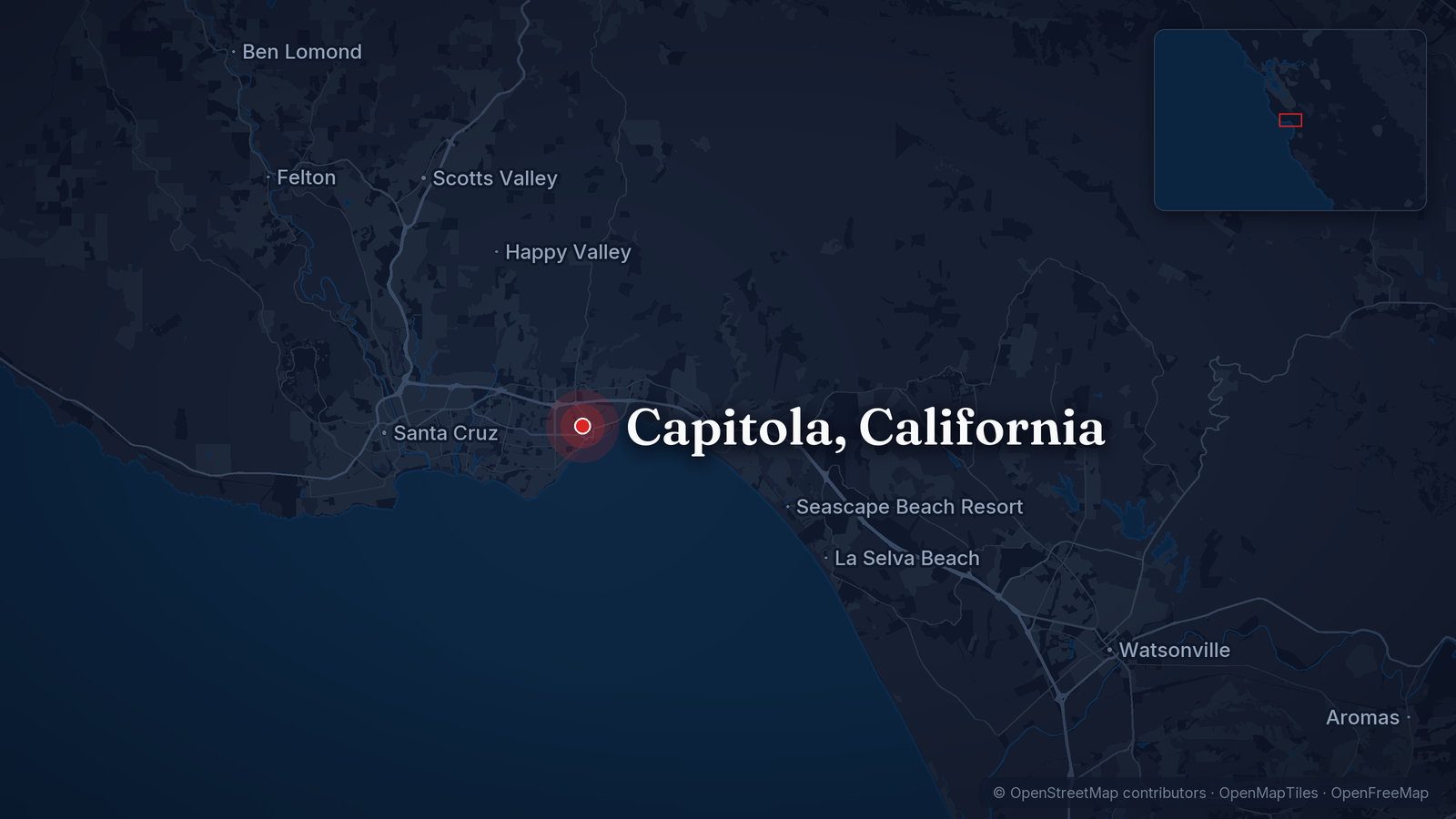
MapCapitola Officials Say El Niño King Tides Trigger Evacuation Warnings, No Serious Damage
“The king tides have been exacerbated by the El Nino weather pattern as well as human-fuelled climate change.”
“Their effects this year are being amplified by the ongoing super El Niño, which has warmed the ocean, leading to an increased volume of seawater.”
Map: © OpenStreetMap contributors, ODbL · Cropped for layout
This article is an automated aggregation of coverage from news outlets. Our editorials offer in-depth analysis curated by the NewsCord team.
King tides caused coastal flooding and evacuation warnings along the Santa Cruz coastline. Capitola reported no serious damage to homes or businesses despite wave impact.
Save coverage image
CBS News was read line by line by the Watchdog: 0.0. See the score →
King tides hit Bay Area
Capitola officials said powerful El Niño-fueled king tides brought large waves and evacuation warnings to parts of the Santa Cruz County coastline on Tuesday, while city officials reported no serious damage to homes or businesses as waves breached the seawall and pushed into Capitola Village. Capitola Interim City Manager Rudy Escalante said, "Because of where we face in a south, southwest direction, we may have dodged a little bit of a bullet," and he added that crews had been preparing for the conditions for three months. National Oceanic and Atmospheric Administration announcements placed record-high coastal water levels in the fishing community of Charleston, Oregon, at roughly 1.12 metres above the mean high water level, about 3.4 metres above the mean low water mark.
“Capitola Village fully reopened after crews completed cleanup efforts Wednesday afternoon.”
The conditions prompted evacuation warnings along portions of the coast, including areas of Aptos, Seacliff, Rio Del Mar and Capitola, and Capitola Village fully reopened after cleanup crews completed efforts Wednesday afternoon. The National Weather Service warned that breaking waves between 20 and 30 feet were possible, and the San Francisco Department of Emergency Management issued a high surf warning for Wednesday.
Pier collapses, records fall
In Pacifica, the L-shaped municipal pier crumbled into the surf after a wave as tall as its platform crashed into it, and a bystander said, "Oh my god, it’s gone. Oh my god," as the collapse unfolded.
The Guardian said super El Niño weather sent seawater rushing into beachside communities and flooding roads and businesses, and it cited National Weather Service figures showing Los Angeles and Santa Barbara tied or broke all-time high tide records on Wednesday at 8.19 and 8.21ft.
The Los Angeles Times described the Pacifica pier collapse as parts of the structure toppling into the waves after vertical supports buckled, and it said the collapse came not long after the predicted peak of high tide for the region.
The New York Times reported that the ocean crashed into an arm of the Pacifica Pier about 1,100 feet offshore and caused it to topple on live television.
Robbie Munroe, a meteorologist with the National Weather Service in Los Angeles, said, "We’re kind of in uncharted territory," as the mix of seasonal king tides, an unusually strong El Niño, and incoming Pacific swells pushed ocean water into coastal neighborhoods.
What comes next, what’s at risk
California’s Office of Emergency Services and Department of Water Resources asked operators of levees and dams to inspect facilities ahead of the storm, and the state prepared sandbags, portable flood barriers and materials for emergency repairs.
“In September, Gov. Gavin Newsom proclaimed a state of emergency for El Niño.”
CalMatters reported that Gov. Gavin Newsom proclaimed a state of emergency for El Niño in September and directed agencies to speed up permits, move supplies and people and suspend some of the state’s own rules.
The National Weather Service meteorologist Sebastian Westerink warned that the wildcard would be wind chop on the bay, which could push water onto the runways during high tide, and airport spokesperson Doug Yakel said, "While we do not know exactly what conditions might materialize, we are prepared to address any flooding issues that might arise."
The Weather Channel said additional king tide flooding was likely along the West Coast during Christmas week, then again in late January, and it quoted physical oceanographer Greg Dusek saying, "The highest king tides of the year along the West Coast typically occur around the winter and summer solstices."
National Geographic warned that intense rain and enormous waves driven by this year’s super El Niño threaten to shut down parts of Highway 1 through Big Sur, and Daniel Swain said, "People, myself included, doubt Highway 1 through Big Sur will remain open for much of the winter this year," as the road faces landslides and sea-driven erosion.