Climateupdated 23m ago3 min read
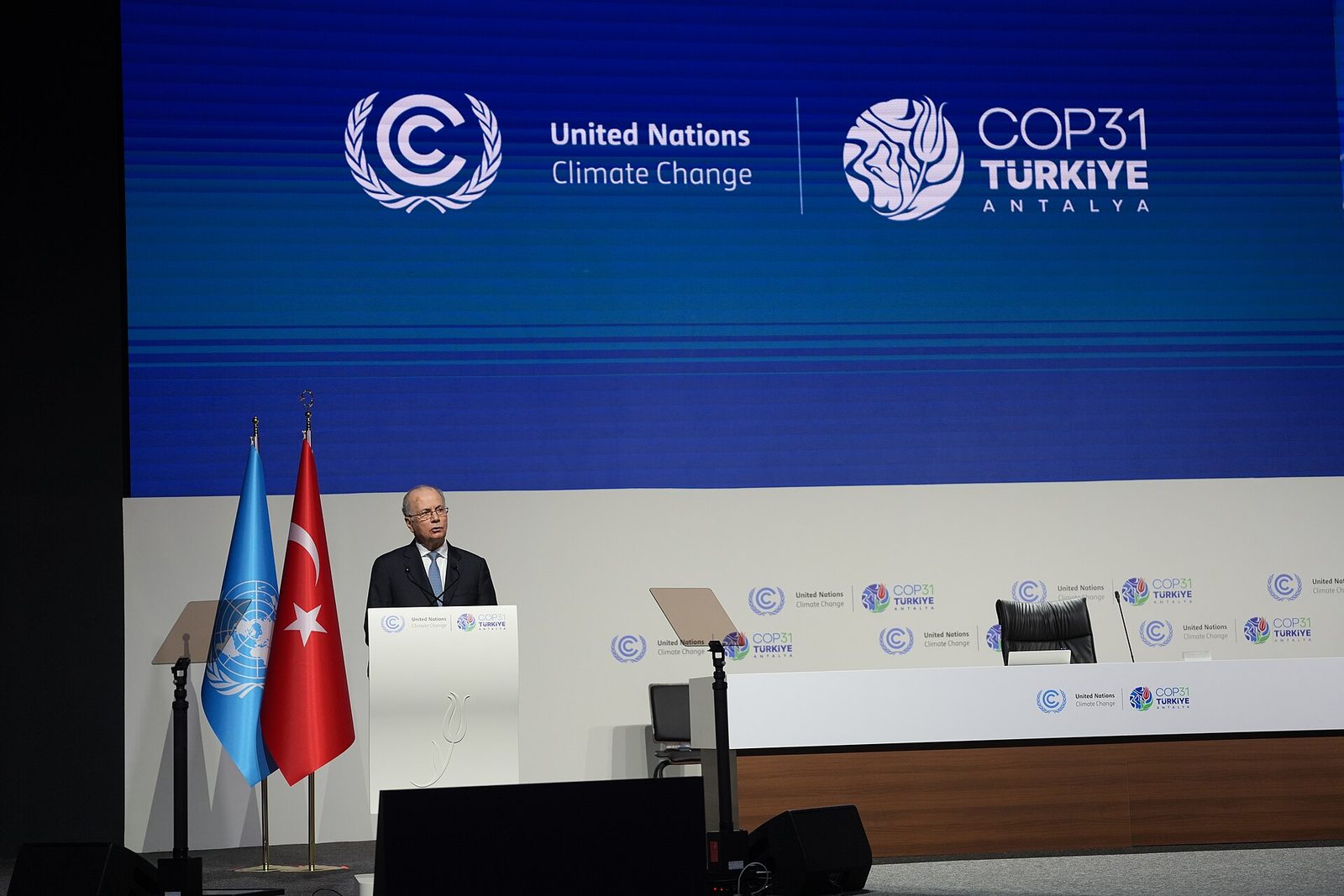
Archive photo · 12 November 2026EU and 27 Member States Reject COP31 “Antalya Pact” Over Fossil Fuels References
5 Other1 Latin American1 Western Alternative1 Western MainstreamPhoto: Xuthoria, CC BY-SA 4.0 · Cropped for layout
This article is an automated aggregation of coverage from news outlets. Our editorials offer in-depth analysis curated by the NewsCord team.
EU and 27 rejected Antalya pact for omitting fossil fuels references. COP31 ended without a general political agreement due to fossil fuels and finance disputes.
Save coverage image
8 outlets in this story. Read their headlines below.
Outlets did split on NOAA Says El Niño Labels Like “Mega” Don’t Mean 10°C Above Normal →
COP31 cover decision rejected
The European Union and all 27 Member States rejected a COP31 cover decision at the UN Climate Change Conference in Antalya, Turkey, saying the compromise would put at stake the Paris Agreement and its basic principles for a liveable future. The EU said it and its Member States engaged “endlessly” with all Parties during the two weeks of COP31 to limit global warming through the Paris Agreement and to implement climate commitments already made among global partners.
Carbon Brief said COP31 failed to reach agreement on a “pact” that lacked clear references to curbing fossil fuels or scaling up climate finance, and it said the “Antalya pact” proposed by the joint Turkish-Australian presidency was rejected in the final hours by the EU, the UK and several climate-vulnerable nations. The EU argued that staying as close as possible in magnitude and duration to 1.5°C above pre-industrial levels is a must to limit the temperature overshoot, while Carbon Brief said UNFCCC chief Simon Stiell expressed “deep disappointment” and spoke of “scope to improve, modernise and reform” the UN climate process.
Fossil fuels and finance
Ireland’s climate minister Darragh O’ Brien, speaking on behalf of the EU, said the negotiations had been “hijacked by fossil fuel producers” and said the EU would “not accept a COP that greenwashes fossil fuels.”
RFI reported that Australia’s Climate Change and Energy Minister Chris Bowen described the failure as deeply disappointing and identified fossil fuels and climate finance as the main obstacles.
Carbon Brief said the talks did not “collapse” because several negotiated items were still adopted, and it said the rejection of the cover decision represented, for the first time, “those who want a higher level of ambition actively reject[ing] the lowest common denominator on offer”.
RFI said the proposed agreement, known as a “cover decision”, failed to explicitly mention fossil fuels and that Murat Kurum told delegates, “I understand that there is no agreement on this text. For that reason, these decisions have not been adopted,” at the closing session.
What happens next
The failure of the Antalya political declaration left the International Maritime Organization preparing to resume discussions on decarbonizing maritime transport, with the European Union, the United Kingdom, and climate-vulnerable island states rejecting the agreement proposal presented by Türkiye and Australia. As the IMO prepares for technical work ahead of the 85th meeting of the Marine Environment Protection Committee, the IMO Net Zero Emissions Framework remains a draft approved in 2025 but still awaiting adoption, and it envisions progressively more stringent requirements for greenhouse gas emission intensity from fuels used by ships.
The Asociacion de Cargadores de España said the regulatory framework adoption was postponed in October 2025 and that a new IMO extraordinary session is provisionally planned for December 4, subject to confirmation at MEPC 85. Simon Stiell urged governments to draw lessons from the negotiations, warning that “the world cannot afford to see this moment repeated,” while the EU said it looks forward to consultations initiated at COP31 to strengthen the UNFCCC process and to advance international climate action.