Chinaupdated 2h ago2 min read
China And Pakistan Open Karakoram 2026 Joint Army Drills In Xinjiang
This article is an automated aggregation of coverage from news outlets. Our editorials offer in-depth analysis curated by the NewsCord team.
China and Pakistan launch Karakoram 2026 joint army training in Korla, Xinjiang Focuses on counter-terrorism in high-altitude terrain with UAV operations and live-fire drills
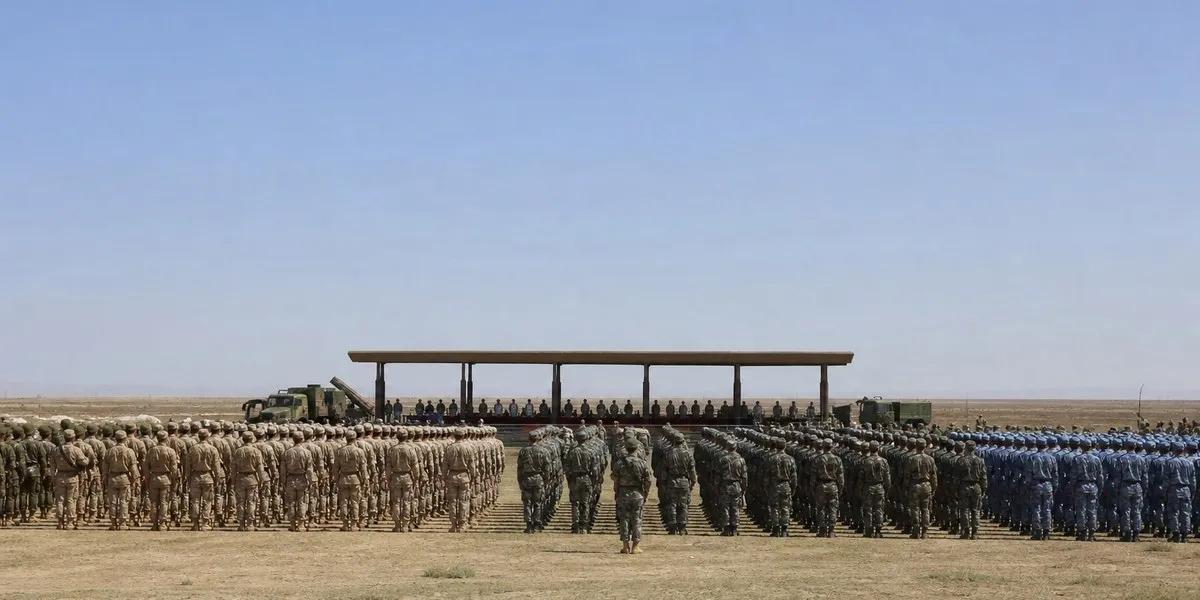
8 outlets told this the same way.
Shared framing
The most repeated headline emphasis is that this is a first joint army drill, while other titles highlight Chinese equipment or operational integration. Several reports reuse agency or official-source material, so the repetition does not establish independent judgments about an escalation in military ties.
6 of 12 outlets · 6 of 12 headlines analysed
- The Express Tribune
first-ever joint army training exercise
- https
first-ever joint army training exercise
- UA.NEWS
first-ever joint army drills — Anadolu Agency
See the headlines
First-drill status foregrounded
These titles call the drill first or first-ever. This emphasises novelty; it does not establish that the countries have never trained or cooperated militarily before. Several records reproduce or cite Anadolu material, while the captured CPEC Info text also mentions earlier joint military activity.
- The Express TribuneReporting · OngoingChina, Pakistan begin first-ever joint army training exercise
- httpsReporting · OngoingChina, Pakistan begin first-ever joint army training exercise
- UA.NEWSReporting · OngoingChina and Pakistan launch first-ever joint army drills — Anadolu Agency
Attributed to Anadolu Agency.
- Anadolu AjansıReporting · OngoingChina, Pakistan begin first-ever joint army training exercise
- Global TimesReporting · OngoingFirst China-Pakistan army joint training features an all-Chinese equipment lineup, signaling deep interoperability: expert
- Telegraph IndiaReporting · OngoingChina, Pakistan hold first joint army drills in Xinjiang with all-Chinese weapons
Other angles in this collection
Chinese-supplied equipment as the salient feature
3 outlets · 3 headlines
Global Times, Telegraph India and Times of India foreground the Chinese source of the equipment. The repeated supplier detail does not by itself demonstrate dependence, a new alignment or independent reporting; the openings cite Chinese state-media accounts.
- Telegraph IndiaReporting · OngoingChina, Pakistan hold first joint army drills in Xinjiang with all-Chinese weapons
- The Times of IndiaReporting · OngoingChina, Pakistan hold high-altitude army drills with Beijing-supplied arms
- Global TimesReporting · OngoingFirst China-Pakistan army joint training features an all-Chinese equipment lineup, signaling deep interoperability: expert
Integration and interoperability emphasis
2 outlets · 2 headlines
Global Times attributes its interoperability interpretation to a military expert, while Defence Security Asia presents the exercise as a test of army integration. These are interpretations of capability and cooperation, rather than evidence that deeper integration has already been achieved.
- Global TimesReporting · OngoingFirst China-Pakistan army joint training features an all-Chinese equipment lineup, signaling deep interoperability: expert
Attributed to Wang Yunfei, military affairs expert.
- Defence Security AsiaAnalysis · Ongoing[VIDEO] China-Pakistan Launch Karakoram 2026, Testing Army Integration in Xinjiang
All 12 analysed headlines
- Global TimesReporting · OngoingFirst China-Pakistan army joint training features an all-Chinese equipment lineup, signaling deep interoperability: expert
- DawnReporting · OngoingPakistani, Chinese armies begin joint training exercise in Xinjiang
- The Express TribuneReporting · OngoingChina, Pakistan begin first-ever joint army training exercise
- Latest news from AzerbaijanReporting · OngoingChina and Pakistan launch Karakoram 2026 military exercise
- Defence Security AsiaAnalysis · Ongoing[VIDEO] China-Pakistan Launch Karakoram 2026, Testing Army Integration in Xinjiang
- httpsReporting · OngoingChina, Pakistan begin first-ever joint army training exercise
- أمد للإعلامType unclear · Stage unclearعناوين الصحف الدولية 5/8/2022
- Telegraph IndiaReporting · OngoingChina, Pakistan hold first joint army drills in Xinjiang with all-Chinese weapons
- The Times of IndiaReporting · OngoingChina, Pakistan hold high-altitude army drills with Beijing-supplied arms
- The Diplomatic InsightReporting · OngoingPakistan, China Open ‘Karakoram 2026’ Army Drills in Xinjiang
- UA.NEWSReporting · OngoingChina and Pakistan launch first-ever joint army drills — Anadolu Agency
- Anadolu AjansıReporting · OngoingChina, Pakistan begin first-ever joint army training exercise
Counts describe this collection. One headline may support more than one angle.
Exclusions: Different event (1).
Analysed 15 Oct 2026.
Reviewed by Codex validator (AI) · 15 Oct 2026
Karakoram 2026 in Xinjiang
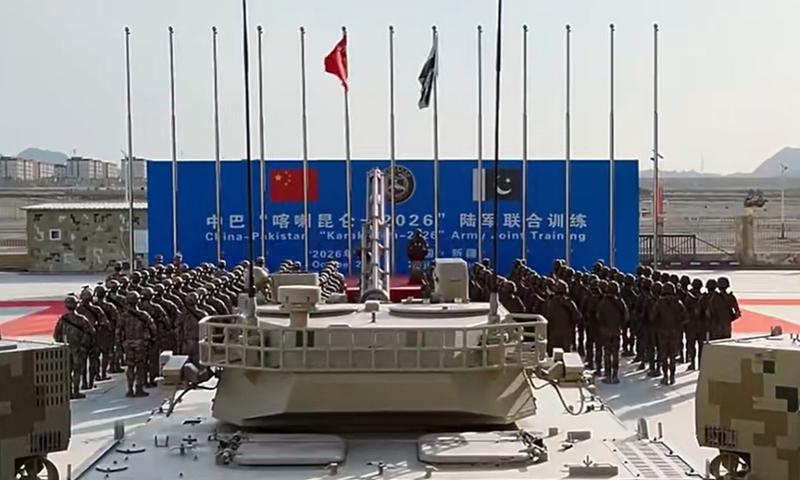
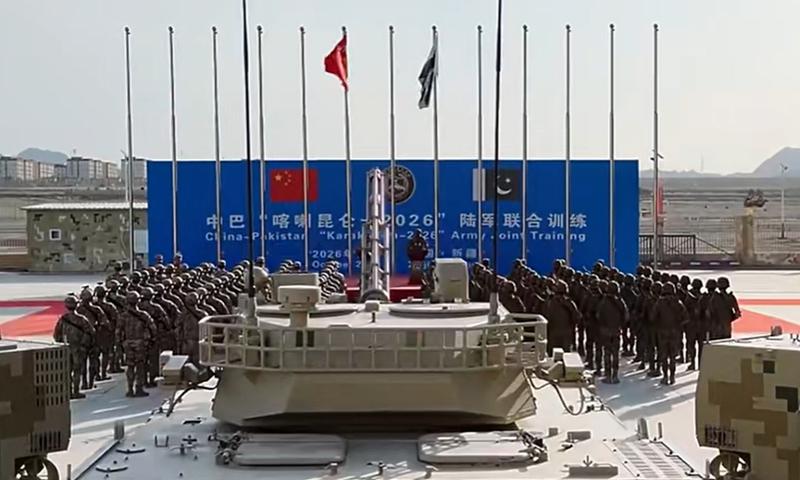
China and Pakistan opened Karakoram 2026 in Xinjiang on October 14, bringing regular army forces into a joint counter-terrorism training framework at a training base near Korla. Senior Colonel Chen Xi, a spokesperson for the Chinese Ministry of National Defence, described the activity as the first joint army training between the countries, and the exercise centered on high-altitude counter-terrorism clearance operations. The exercise ran as a nine-day program and combined unmanned aerial vehicle operations, mobile target engagement, long-range sniping, and joint command drills.
Army Major Wang Hanbo, serving with a formation under the Xinjiang Military Command, identified closer coordination and improved counter-terrorism mission execution as objectives, while the training used Chinese-provided weapons and equipment. The Chinese provision of all training weapons and equipment concentrated sustainment responsibilities on the Chinese side while Pakistani personnel examined how Chinese platforms function together in an integrated ground combat training environment.
All-Chinese equipment lineup
China Military Bugle, the official media account of Beijing’s armed forces, held the opening ceremony of Karakoram 2026 at a training base in Korla city in the Xinjiang Uygur Autonomous Region. The exercise included UAV operations, target search and firing, long-range sniping, joint command, and live-force drills, with Pakistani troops observing Chinese weapons and equipment. CCTV’s military channel said the weapons and equipment in the training were provided by China and included “Type 191 rifles, Type 201 squad machine guns, Type 11 armoured assault vehicles, Type 08 infantry fighting vehicles, as well as artillery, unmanned and anti-unmanned systems”.
Wang Yunfei, a military affairs expert, told Global Times that the choice of medium-weight wheeled vehicles for high-altitude operations and Pakistan’s use of an all-Chinese lineup signaled deepening military trust and potential future procurement. Zhang Jueshe, another military affairs expert, told Global Times that China and Pakistan complement each other well in counter-terrorism and that cooperation could be advanced via intelligence sharing, joint operations, technology transfers, experience exchanges and economic cooperation.
Interoperability and follow-on
The exercise aimed to enhance operational interoperability, exchange military expertise, and strengthen bilateral defence cooperation through joint counter-terrorism operations in high-altitude areas. The program included skills training in UAV operation, on-the-move target search and firing, and long-range sniping, and it also covered joint command and live-force exercises. The Diplomatic Insight said the equipment was entirely Chinese-supplied and listed Type 191 rifles, Type 201 squad machine guns, Type 11 armored assault vehicles and Type 08 infantry fighting vehicles, along with artillery and unmanned and anti-unmanned systems.
Defence Security Asia said the strategic implications extended beyond the training ground because closer army coordination could influence regional assessments of China-Pakistan military cooperation, while the available information established neither a combined contingency plan nor a permanent joint operational deployment arrangement. Global Times said the exercise would expand the scope of China-Pakistan military cooperation, reflect growing mutual trust, and strengthen counter-terrorism collaboration through the sharing of experience and expertise.