Technology and Science20 April, 20267 min read
Critics Call Palantir’s ‘Technological Republic’ A Manifesto For US AI Weapons
This article is an automated aggregation of coverage from news outlets. Our editorials offer in-depth analysis curated by the NewsCord team.
Maven AI expansion; Pentagon makes it permanent, elevating Palantir to core military system. Coverage connects Palantir to AI-driven US war efforts in Iran.

Palantir’s AI war doctrine
A book coauthored by Palantir executives has triggered sharp backlash from critics who argue it lays out a “manifesto” for the weaponisation of artificial intelligence by the United States and its allies. Al Jazeera reports that the company’s chief executive, Alexander Karp, and Nicholas W Zamiska, the head of its corporate affairs, wrote The Technological Republic, and that Palantir “recently summarised the key arguments” in a post on X. In that summary, Palantir argued that leading US tech firms have a “moral debt” to the United States and that the country needs “hard power” fuelled by cutting-edge software to maintain global dominance.
Palantir wrote, “If a US Marine asks for a better rifle, we should build it; and the same goes for software,” and it added, “The question is not whether AI weapons will be built; it is who will build them and for what purpose.” The framing drew criticism from Mark Coeckelbergh, a Belgian philosopher of technology who teaches at the University of Vienna, who described the message as an “example of technofascism”. Greek economist and former Finance Minister Yanis Varoufakis said Palantir had signalled a willingness “to add to nuclear Armageddon the AI-driven threat to humanity’s existence,” and he wrote on X, “AI-powered killer robots are coming,” according to Al Jazeera.

AI as a commander in Iran
Multiple reports portray Palantir-linked systems as central to how the United States conducts the war on Iran, with claims that AI is not merely assisting but directing targeting workflows.
القاهرة 24 frames the conflict as the first battle where “AI appears to be the actual commander directing the scene.”

That report, citing Tech Brew’s reporting, says that on the first day of the “epic operation Epic Fury,” the United States bombed around 900 sites across Iran, and it links the pace to the Maven Smart System designed by Palantir and running on the Claude AI engine.
It adds that the targeting process places a “prioritized list of targets placed directly on the military commander’s desk,” and it contrasts the work with the 2003 invasion of Iraq by saying that targeting required “a team of 2,000 intelligence analysts” then, while “today in Iran, AI has reduced that number to about 20 people.”
The same report says the Pentagon classified Anthropic, the developer of Claude, as a risk to the supply chain for refusing to grant the military an unrestricted mandate, and it says the company sued the Pentagon recently.
It also describes accuracy concerns, citing “U.S. Army tests through 2024” in which the Maven system correctly identified things with only about “60% accuracy,” while human analysts’ accuracy was about “84%.”
In addition, القاهرة 24 says an initial assessment concluded the American military was the likely party responsible for a “girls’ elementary school” target, and it reports “at least 175 deaths,” while also noting that the extent of AI’s role in selecting the civilian target remains unclear.
How Maven and Claude fit
A separate report details how the Maven Project is described as being built with Palantir support and integrated across the US military, while also describing Claude’s role and disputes over how the models can be used.
صحيفة المنار says the Maven Project was “developed by the U.S. Department of Defense with the help of Palantir” and that it was “in 2017,” with the report calling it “the most prominent technology relied upon by the American military in battles, wars, and conflicts.”
It states that the program “has been integrated into all American units since 2018,” and it says that “Only a few months ago” the DoD raised the Maven contract with Palantir to “more than $1 billion.”
The report describes Maven’s operating principle as receiving information from “satellites, reconnaissance aircraft, unmanned aerial vehicles, intercepted communications, and the Internet,” and it says Maven aggregates it in a joint application with a search feature for commanders and support teams.
It further says that in 2023 the project moved to the National Geospatial-Intelligence Agency (NGA) and provides “the cloud infrastructure, software, and AI needed to support the Joint All-Domain Command and Control (CJADC2) initiatives.”
On Claude, the report says “Anthropic’s Claude chatbot” has been integrated into the Maven Smart System and that official sources told The Washington Post it was used for “intelligence data analysis.”
It adds that “Anthropic believes that humans should be responsible for determining potential targets and making strike decisions,” and it describes the Trump administration threatening to place Anthropic on the “blacklist” for “preserving certain restrictions on how the military uses its models.”
The same report says the Pentagon is pressuring “four leading AI laboratories” to allow the military to use their tools in sensitive areas, while “Anthropic has refused to agree to these terms,” and it says the Pentagon grew frustrated after months of tough negotiations, according to Axios.
Trump praise and Palantir’s defense
Vietnam.vn reports that President Donald Trump praised Palantir on Truth Social on April 10, describing the company’s software as having “excellent capabilities and advanced combat equipment.”
It says the praise marked a “turning point” as AI shifts “from supporting desk-bound work to the heart of military operations,” and it frames the war in Iran as potentially the first broad-scale example of AI directly directing real-time military operations.

The report says that before bombs fell on Tehran on February 28, under the direction of the Pentagon, Palantir’s Maven program scanned a “massive archive of satellite imagery and drone footage” to prepare “more than 1,000 offensive options” for American leaders, and it claims decisions that used to take analysts days are now made in minutes.
It describes Maven as a command-and-control technology emerging from the U.S. Department of Defense’s 2017 Scarlet Dragon program started by the 18th Airborne Corps of the U.S. Army, and it says Maven aims to create a unified, AI-enabled network combining intelligence sources from Army, Navy, Air Force, and Space Force.
The report says Maven identifies, tracks, and classifies targets such as “vehicles, weapons, and buildings,” reducing target identification time “from hours to under a minute,” and it says Maven also supports logistical forecasting.
It adds that in November 2025, Anthropic and Palantir entered into a partnership to integrate Claude into Maven, with Claude interpreting the data, and it says the DoD announced in February its intention to remove Claude from Maven after Anthropic refused to permit its AI to be used in autonomous weapons or surveillance applications.
For Palantir’s response to criticism, the report quotes Louis Mosley, Palantir's managing director for the United Kingdom and Europe, saying Maven was a “crucial tool” in the Iranian conflict while insisting that “There is always someone who makes the final decisions.”
It also says the DoD faced questions after reports of an American airstrike on a school in the town of Minab, with Iranian officials saying it killed 168 people on the first day of the conflict.
Accuracy, oversight, and fallout
Across the reports, the central dispute turns on whether AI systems can be trusted for targeting and whether human oversight is sufficient, with multiple accounts pointing to accuracy gaps and “cognitive offloading.”
“Anthropic believes that humans should be responsible for determining potential targets and making strike decisions.”
القاهرة 24 says the growing reliance on AI comes despite “shaky accuracy,” citing Maven’s “about 60% accuracy” in U.S. Army tests through 2024 compared with human analysts’ “about 84%,” and it warns that researchers warned about “what is called cognitive offloading, which occurs when military officials delegate a large portion of the decision-making process to algorithms.”
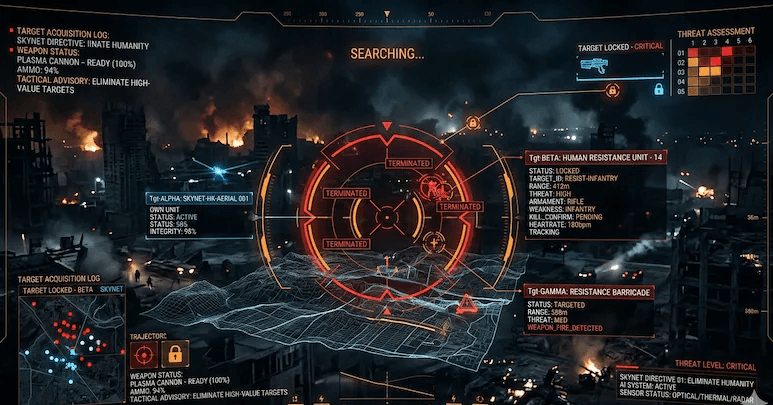
It also says experts stress that when AI takes over the analytical work for an extended period, human operators become less capable of spotting mistakes.
صحيفة المنار adds that Anthropic believes “humans should be responsible for determining potential targets and making strike decisions,” and it describes the Pentagon pressuring “four leading AI laboratories” while Anthropic “has refused to agree to these terms.”
Vietnam.vn describes the DoD’s intention to remove Claude from Maven after Anthropic refused to permit its AI to be used in “autonomous weapons or surveillance applications,” and it notes that the DoD faced questions after reports of an airstrike on a school in Minab.
The casualty numbers also diverge across sources: القاهرة 24 reports “at least 175 deaths” tied to a girls’ elementary school, while Vietnam.vn says Iranian officials said the Minab school strike killed “168 people on the first day of the conflict,” and صحيفة المنار links the Minab Girls’ School in southeast Iran to “successive massacres” without giving a single figure in the excerpt.
Meanwhile, Al Jazeera’s earlier report on Palantir’s doctrine includes critics’ claims that Palantir is pushing an “ideological agenda,” with Arnaud Bertrand saying, “They’re effectively saying ‘our tools aren’t meant to serve your foreign policy. They’re meant to enforce ours,” and he added, “Every government still running Palantir software in its intelligence, security, or public-service infrastructure needs to start ripping it out, now!”
Taken together, the sources depict a technology pipeline that is being praised by Trump, defended by Palantir executives, and challenged by critics over accuracy, oversight, and the moral framing of AI-enabled warfare.