Financeupdated 1h ago2 min read
Archive photo · 8 June 2026Federal Reserve Holds Interest Rates Steady Ahead of November 3 Midterm Elections
“Warsh said the midterms and politics ‘played no role in the decision’ to keep rates where they are.”
“Even if the Fed were to do something radically different, the economy would not have time to adjust before the elections”
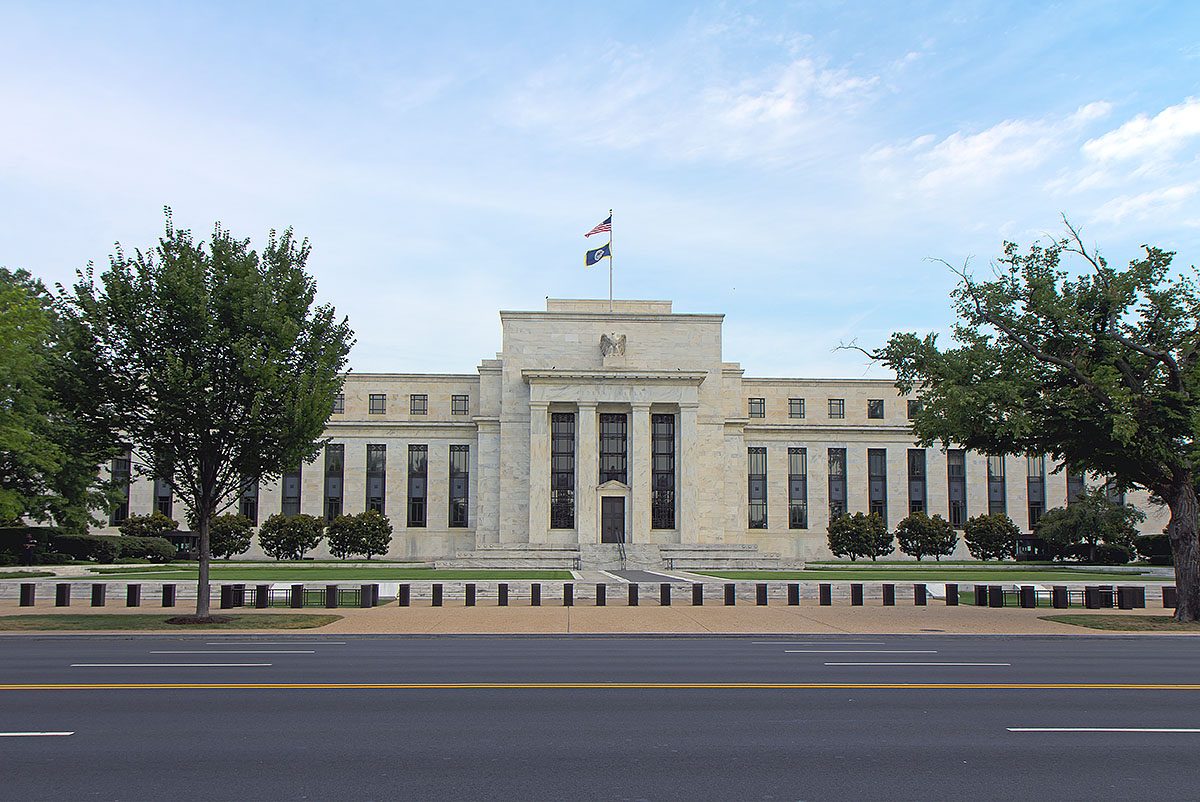
Photo: G. Edward Johnson, CC BY 4.0 · Cropped for layout
This article is an automated aggregation of coverage from news outlets. Our editorials offer in-depth analysis curated by the NewsCord team.
Federal Reserve keeps the federal funds rate at 3.75%-4.00%, pausing after two increases. Markets expected hold ahead of midterms amid ongoing inflation concerns.
Fed pauses before midterms
The U.S. Federal Reserve held interest rates steady on Wednesday, keeping the federal funds rate in a target range between 3.75% and 4.00% as the 12-member Federal Open Market Committee voted 10-2.
Fed Chair Kevin Warsh told reporters that policymakers opted to leave rates unchanged as they awaited further economic data, saying, "The committee believes the accumulation of more information will help it determine the policy stance appropriate to ensure a timely return of inflation to the 2% goal."
The Fed’s statement tied the pause to inflation that remains above its goal, with the central bank saying, "Inflation remains elevated."
The Fed’s decision came just days before the November 3 midterm elections, and the Fed’s benchmark rate was described as a significant drop from a recent peak attained in 2023 while still standing well above a 0% level established at the outset of the COVID-19 pandemic.
Dissent and political pressure
Fed Governor Lisa Cook and Cleveland Fed President Beth Hammack dissented from the decision, with the FedWatch framing showing markets expecting a quarter-point hike at the Fed’s next meeting in December. ABC News reported that Fed Chair Kevin Warsh spoke at a press conference in Washington, D.C., and Warsh said policymakers had opted to leave rates unchanged while they awaited further economic data.
The Guardian reported that Warsh told reporters, "Politics played no role in the decision," and the Fed chair added, "I didn’t hear an utterance about politics." The dispute over rates also played out against President Donald Trump’s criticism of the Fed, with the Guardian noting Trump said that "interest rates in the United States should be 1% or less" after the September rate hike.
What comes next for markets
The Fed’s next steps hinged on incoming inflation and price data, with the central bank emphasizing that it needed more information before moving forward with a rate hike.
NBC News said the Fed’s preferred inflation gauge, the personal consumption expenditures price index, would be released Thursday and was expected to touch 3.7%, while economists at Morgan Stanley said the Fed might not be done tightening.
The Fed’s schedule also changed, with Warsh announcing plans for the Fed to reduce the number of meetings at which it votes on interest rates from eight to seven next year and by two in 2028.
The AP account said Michael Reynolds, vice president of investment strategy at Glenmede, expected the Fed to hike by a quarter point at its next meeting Dec. 8-9, and Reynolds added, "It’s likely going to take one more (hike) from the Fed to get interest rates into restrictive territory."