Technology and Science04 September, 20263 min read
Nepal Rescuers Pull Two Survivors From Trishuli River Hydropower Tunnel After Glacier Collapse
This article is an automated aggregation of coverage from news outlets. Our editorials offer in-depth analysis curated by the NewsCord team.
Two survivors pulled from Trishuli tunnel nine days after glacier collapse. Killing more than 1,300 and leaving over 5,600 missing.
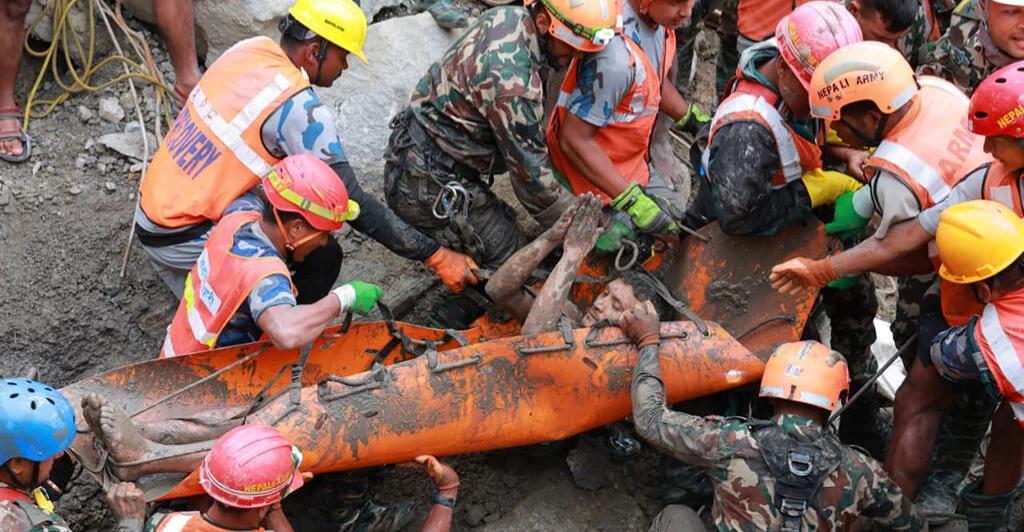
Glacier collapse, tunnel rescues
Nepal’s flood disaster tied to a glacier collapse on August 26 killed more than 1,300 people and left over 5,600 missing, and nine days later rescuers pulled two survivors from a tunnel linked to a hydropower station on Nepal’s Trishuli River. The two workers were taken to an army hospital in Kathmandu after the Upper Trishuli 3A Hydropower Station rescue, and the army said it had also recovered a body from the site. Reuters reported that officials and rescue workers believe the August 26 collapse trapped at least 900 people in tunnels related to six hydropower projects along the river.
“‘I was in the control room, so my responsibility was to save everyone’s lives.”
In videos released by Nepali authorities, Kabir Maharjan was hoisted from a hole in the ground as bystanders cheered, and his colleague Sanjay Sah was brought out on a worker’s back before army doctors fitted an oxygen mask and checked his vitals inside a rescue tent. Sah later described his actions after he urged colleagues to flee, saying, “I was in the control room, so my responsibility was to save everyone’s lives.”

Costs, rebuilding, and tools
Nepal’s national disaster risk reduction and management authority chief Dharma Raj Upreti put flood damage at at least $2.56 billion, saying the sum included costs for the early recovery stage during the first four months. Reuters reported that property, housing and infrastructure worth at least 387.5 billion Nepalese rupees ($2.56 billion) were lost, and that Nepal will need to rebuild around 20,000 houses in flood-ravaged areas, with at least 7,500 destroyed. The same Reuters account said the disaster could result in commercial insurance losses exceeding $132.3 million, with hydropower projects accounting for most claims, and that eleven Nepali hydropower projects lie in the affected region.
Al Jazeera described rescue teams working more than a week after flash floods devastated communities in the Himalayas, with more than 1,270 people killed and more than 4,700 still missing. In the middle of the search, Al Jazeera quoted Sanjay Kc of the Nepalese army engineering department saying, “We still hope there are some survivors inside,” as bulldozers removed mud blocking a tunnel entrance in Rasuwa district.

Early warning, climate stakes
As scientists and officials sought explanations for the disaster, Euronews reported that Nepal’s Prime Minister Balendra Shah linked the catastrophe to climate change and said, “The Bhote Koshi River rise in Rasuwa was not an ordinary flood.”
“‘The Bhote Koshi River rise in Rasuwa was not an ordinary flood.”
Euronews also quoted ICIMOD’s Dr. Farooq Azam saying, “There simply was no detection or time to issue a warning,” and described the difficulty of setting up alerts for rock and ice avalanches.
The same Euronews report said the Intergovernmental Organization for International Mountain Development concluded the surge was likely triggered by an avalanche of ice and rock, and not by the breaching of a glacial lake.
In parallel, Al Jazeera reported that Nepal’s National Disaster Risk Reduction and Management Authority said 1,252 bodies had been recovered while the total number of missing in Nepal remained at 4,216.
Al Jazeera added that Nepal’s Prime Minister Balendra Shah said authorities would continue searching for survivors while also starting rehabilitation and rebuilding efforts, and it quoted Dharma Raj Upreti telling Reuters that “There is no point in rebuilding the houses in the same locations” to avoid exposing people to the same risks.