Other25 October, 20252 min read
Guterres Warns UN Security Council’s Veto System Endangers Global Peace Without Urgent Reform
This article is an automated aggregation of coverage from news outlets. Our editorials offer in-depth analysis curated by the NewsCord team.
UN Security Council’s veto power causes paralysis and undermines conflict resolution. Current Security Council structure fails to represent modern global geopolitical realities.

6 outlets told this the same way.
Outlets did split on Lebanon Returns 37 Smuggled Artefacts to Egypt After 2020 Port Seizure →
UN Security Council Challenges
On United Nations Day marking 80 years since its founding, UN Secretary-General António Guterres warned that the Security Council’s fragile legitimacy and persistent gridlock threaten global peace. He attributed these issues in part to the Council's veto system and unrepresentative structure. Speaking from Hanoi, he pressed for urgent reforms to make the Council more effective.
“On United Nations Day, marking 80 years since its founding, UN Secretary-General António Guterres called for reforms to the Security Council, warning that its fragile legitimacy and ongoing gridlock threaten global peace.”
He noted that while the Council has achieved much, recent divisions and unilateral actions have undermined its legitimacy and moral authority. He urged expanding membership to reflect current global realities and demographics. This expansion would help the Council better fulfill its core mission of maintaining international peace and security.

UN Veto Reform and Representation
Guterres supported efforts to limit veto misuse and increase representation. West Asian media reported that he endorsed proposals from France and the UK to voluntarily restrict the use of the veto. He also called for expanding membership to include regions that are currently underrepresented.
Reports highlighted reactions during the debate floor: Russia praised the UN but criticized Western governments. Guyana emphasized the need for better representation. The United States advocated for operational reforms and a merit-based selection process for the next Secretary-General, moving away from regional rotation.
Urgency of UN Reform
The stakes were framed in stark terms. Guterres warned that without reform the world faces grave danger. He said that failure to act poses serious risks for the future.
“Guterres stressed that those with seats on the Council have a duty to honor global faith in the institution, warning that without reform, the world faces grave danger.”
He argued reform is essential to deliver justice and safety and to restore the Council’s moral authority. Reform would also enable the Council to fulfill its core mission of maintaining international peace and security.
He further cautioned that when members violate the UN Charter, trust and global stability are eroded. This erosion intensifies the urgency of reform.
UN Security Council Reform
Representation was a central theme. Guterres and several member states argued that the Council’s structure—with five permanent members holding veto power—is out of step with global demographics, excluding permanent voices from entire regions. Calls to expand membership repeatedly referenced Africa and Latin America, while some coverage also highlighted the Caribbean and Asia-Pacific.
The discussions underscored Africa’s heavy role in peacekeeping despite its lack of a permanent seat. Broadening membership, advocates argue, is necessary to make the body more representative and effective.

Media Coverage of UN Reform
Coverage choices also diverged among different news outlets.
“The article also featured a symbolic moment honoring Mr. Antonio, a mechanic who built a ballot box and expressed a humble wish to cast the first vote for lasting global peace.”
Mirage News added a human-interest vignette, honoring a mechanic named Mr. Antonio who built a ballot box and wished to cast the first vote for global peace, symbolizing public faith in reform.
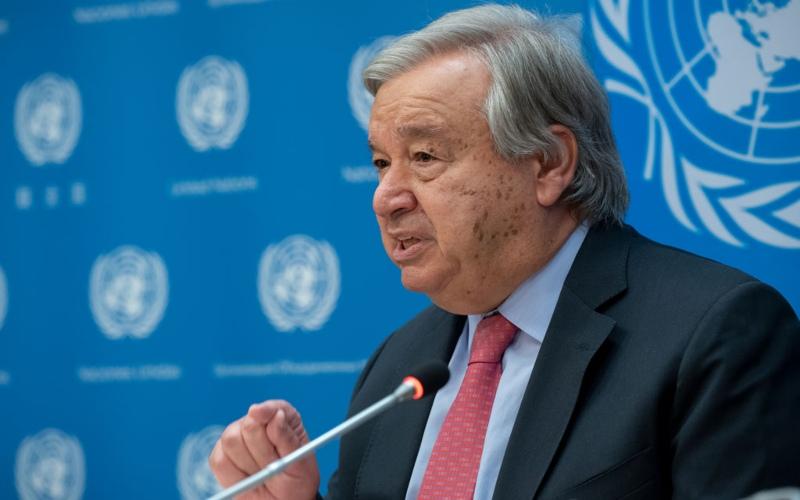
The Eastleigh Voice emphasized procedure and accountability, noting that Guterres spoke via video from Hanoi and asserting that those on the Council must honor global faith in the institution.
Arab News bundled the Security Council story with separate, unrelated reports on Filipino inflation and an aviation dispute that grounded UN aid flights in East Africa.
This aviation dispute was linked to record defense profits amid conflicts in Gaza and Ukraine, marking a broader, regionally inflected news agenda than other outlets.
Anadolu Ajansı, by contrast, stayed tightly focused on the reform brief and its implications for legitimacy and moral authority.