Technology and Science13 August, 20263 min read
Heart Aerospace Completes First Flight Of X1, The World’s Largest All-Electric Aircraft
This article is an automated aggregation of coverage from news outlets. Our editorials offer in-depth analysis curated by the NewsCord team.
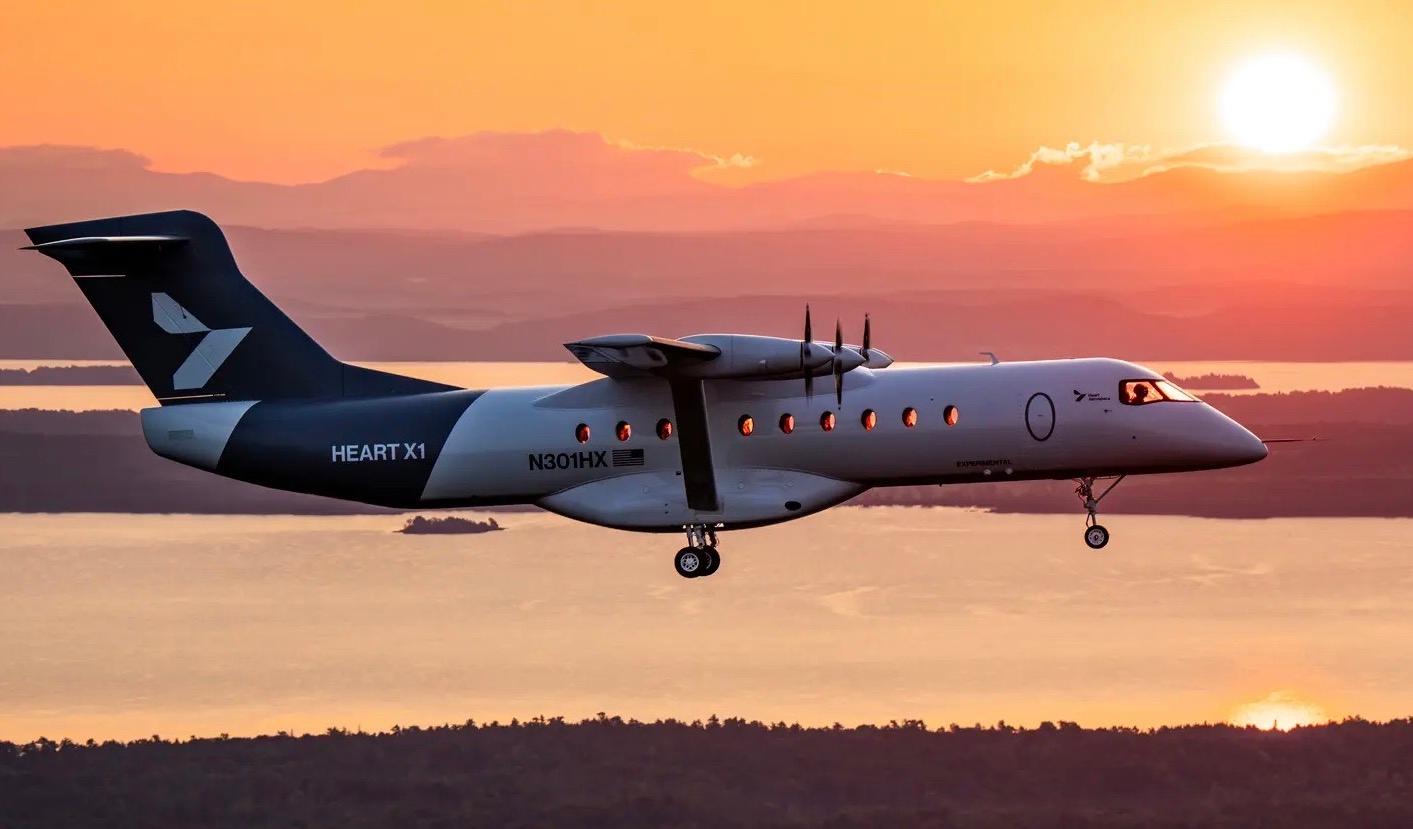
Heart Aerospace completed the X1's first flight at Plattsburgh International Airport on August 12, 2026. The X1 is the world's largest all-electric aircraft, with a ~32-meter wingspan.

X1’s $5 first flight
Heart Aerospace’s X1, described as the world’s largest all-electric aircraft, made its first test flight on August 12 at Plattsburgh International Airport in upstate New York. The piloted mission lasted 27 minutes, reached an altitude of 1,100 feet AGL, and used an all-electric propulsion system that delivered more than one megawatt of power. The flight was conducted under an FAA Special Airworthiness Certificate in the Experimental Category (SAC-EC), with a test profile that included taxi, takeoff, climb, maneuvering, and landing.
Powered entirely by batteries, X1 used approximately $5 worth of electricity during its first flight, and the company said the mission was designed to demonstrate all-electric flight at a scale relevant to commercial airline operations. Anders Forslund, Founder and CEO of Heart Aerospace, said, "With the first flight of X1, Heart Aerospace has demonstrated electric flight at the scale of a commercial airliner."
From demonstrator to ES-30
InsideEVs said the X1 electric aircraft will be used to validate key technologies, aerodynamics, and flight performance until Heart’s end goal, a hybrid aircraft dubbed the ES-30, receives type certification targeted for 2031. The ES-30 is described as a hybrid-electric prop aircraft that will carry 30 passengers and their luggage on distances as long as 500 miles with a full tank and a full battery, while Heart claims 125 miles on electricity alone with a 30-minute charge. PR Newswire UK | Other said the ES-30 is a conventional fixed-wing, 30-seat hybrid-electric regional airliner being developed for FAA Part 25 certification, and it framed the X1 as a full-scale demonstrator representative of the production aircraft.
Ars Technica reported that the X1’s battery-electric propulsion system delivered more than one megawatt of power during the maiden flight, and it said testing of the X1 and a planned follow-on X2 aircraft will shape development of the ES-30. Ars Technica also said the ES-30 would combine two inboard electric motors with commercial turboprop engines that run on jet fuel, enabling 125 miles of all-electric flight and 500 miles of flight range when operating in hybrid mode.

Airlines, costs, and timelines
PR Newswire UK | Other said Heart expects the ES-30 to reduce aircraft operating costs by more than 40% compared with legacy regional aircraft, and it attributed the reduction to lower energy costs, reduced maintenance requirements, and greater aircraft uptime and reliability. The same release said entry into service is targeted for 2031, while Heart is developing the first pre-production ES-30 at its pilot manufacturing plant in Los Angeles with flight testing scheduled to begin in 2028. United Airlines, Air Canada, and JSX were named as having voiced interest in the hybrid-electric plane, and PR Newswire UK | Other quoted United’s Chief Financial Officer Michael Leskinen saying, "Electric commercial aircraft have real potential to deliver a better travel experience for passengers while strengthening our business."
Ars Technica added that United Airlines has committed to eventually purchasing 100 aircraft from Heart Aerospace, and it described the test as arriving as jet fuel prices have skyrocketed because of the US war with Iran. In the same thread of cost and scale, InsideEVs said the electricity bill for the whole first test flight was just $5, and it framed that figure as a selling point for air transport companies looking to cut fuel costs.