
Lebanon · 10 April, 2026 · 1 min read
Hezbollah MP Raad Condemns Israeli Strikes as Defeated Enemy's Failed Tactic
Israeli airstrikes in Lebanon killed over 300 civilians, including in Beirut. Strikes hit Beirut's residential areas and shops, causing civilian casualties.
Framing of the Israeli strikes and their strategic significance.
6 of 7 outlets skipped it: ali Yusuf Harshi, the personal secretary and nephew of Hezbollah leader Naim Qassem, was killed in an airstrike in Beirut’s Tallet Khayat neighborhood..
16outlets compared
Same story, two versions
tap a side to read it in full
Al-Manar TV Lebanon
“Israeli airstrikes across Lebanon reflect a defeated enemy seeking to compensate for battlefield failure, amid continued attacks on civilian areas.”Read the original ↗
The New York Times
“Israel’s military launched what it described as its most powerful attacks on Lebanon on Wednesday, killing hundreds of people and turning joy over the ceasefire in Iran into panic.”Read the original ↗
Shows a stark contrast in tone: Al-Manar casts the strikes as a desperate, defeated foe suffering civilian damage, while the Times emphasizes unprecedented aggression and casualty scale, framing the strikes as a decisive military pressure on Hezbollah and the ceasefire process.
Hezbollah's Defiance
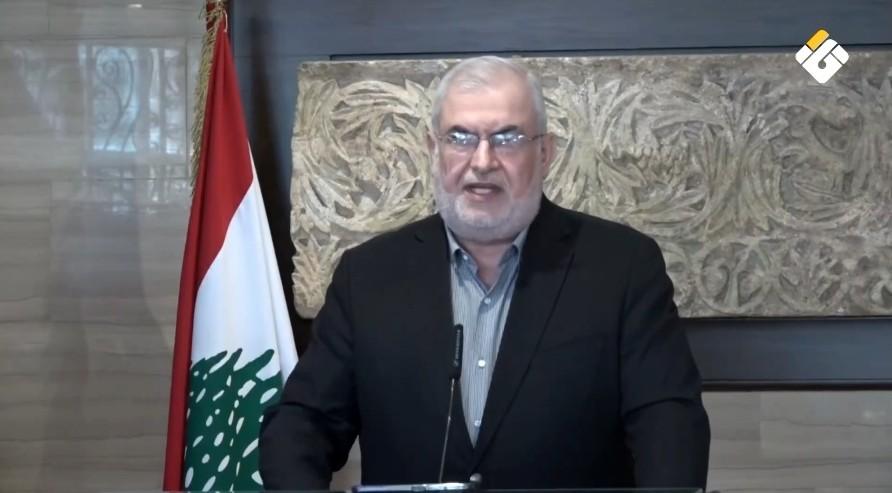
Hezbollah MP Mohammad Raad framed Israeli airstrikes as the actions of a defeated enemy seeking to compensate for battlefield failure.
“Israeli airstrikes across Lebanon reflect a defeated enemy seeking to compensate for battlefield failure”
Raad warned that lamenting losses in a way that fuels division amounts to incitement and indirectly serves Israeli objectives.
He asserted that sovereignty requires resilience, unity, and refusal to yield to external pressure.
The New York Times reported that Israel said it would continue striking the Iran-backed militia.T
Iran said it would not attend peace talks if the truce was not extended to Lebanon.
The Times of Israel documented European condemnation of Israeli strikes.
Civilian Toll and Destruction
The Australian Broadcasting Corporation reported the death toll rose to more than 300.
Locals insisted the victims had no connection to Hezbollah.
The Guardian described how Israeli strikes came after a US-Iran truce that did not apply to Lebanon.
NBC News reported Israel launched its most powerful attacks on Lebanon.
AP News detailed how Lebanon reeled after the deadliest day of the renewed war.
International Reactions
European leaders issued sharp condemnations.
“We do want to see the ceasefire extended to Lebanon”
The Times of Israel reported British Foreign Minister Yvette Cooper saying the ceasefire must be extended to Lebanon.
French Foreign Minister Jean-Noel Barrot called the Israeli strikes unacceptable.
Spain's Foreign Minister accused Israel of violating international law.
Italian Prime Minister Giorgia Meloni said Israel had disrespected the two-week ceasefire.
AP News reported Israel made a surprise announcement authorizing direct talks with Lebanon.
Lebanese Political Divisions
Al-Janoobiyya published a scathing critique of Hezbollah's stance.
The article argued that sovereignty means the decision of war and peace lies in the hands of the Lebanese state alone.
It described Hezbollah as practicing bravado with words while the Lebanese citizen pays the price with blood and livelihood.
This internal political tension reflects the broader challenge Lebanon faces.