Yemen · updated 3h ago · 3 min read
Houthis Seize Kahbub Mountains as Trump Cancels Strikes, Fighting Spreads in Taiz
Houthis push to seize Kahbub Kahboub Mountains to isolate the Red Sea coast. Trump reportedly canceled planned U.S. airstrikes against the Houthis.
US approach: does Trump plan strikes or avoid direct attacks?.
2 of 3 outlets skipped it: saudi temporarily closed an East-West oil pipeline after drone attack.
Reuters was read line by line by the Watchdog: 4.0. See the score →
79outlets compared
Same story, two versions
tap a side to read it in full
ABC News
“does not currently plan on launching direct military attacks against the Houthis”Read the original ↗
Al Jazeera
“asking for United States air strikes on the Houthis but was turned down both times”Read the original ↗
One stresses continued US non-strikes, the other ties refusal to Saudi requests.
Houthis push toward Bab al-Mandeb
The Houthi movement sought to seize strategic highlands aimed at isolating the Red Sea coast from areas under forces sponsored by Saudi Arabia, as reports surfaced of Washington pulling back from carrying out military strikes.
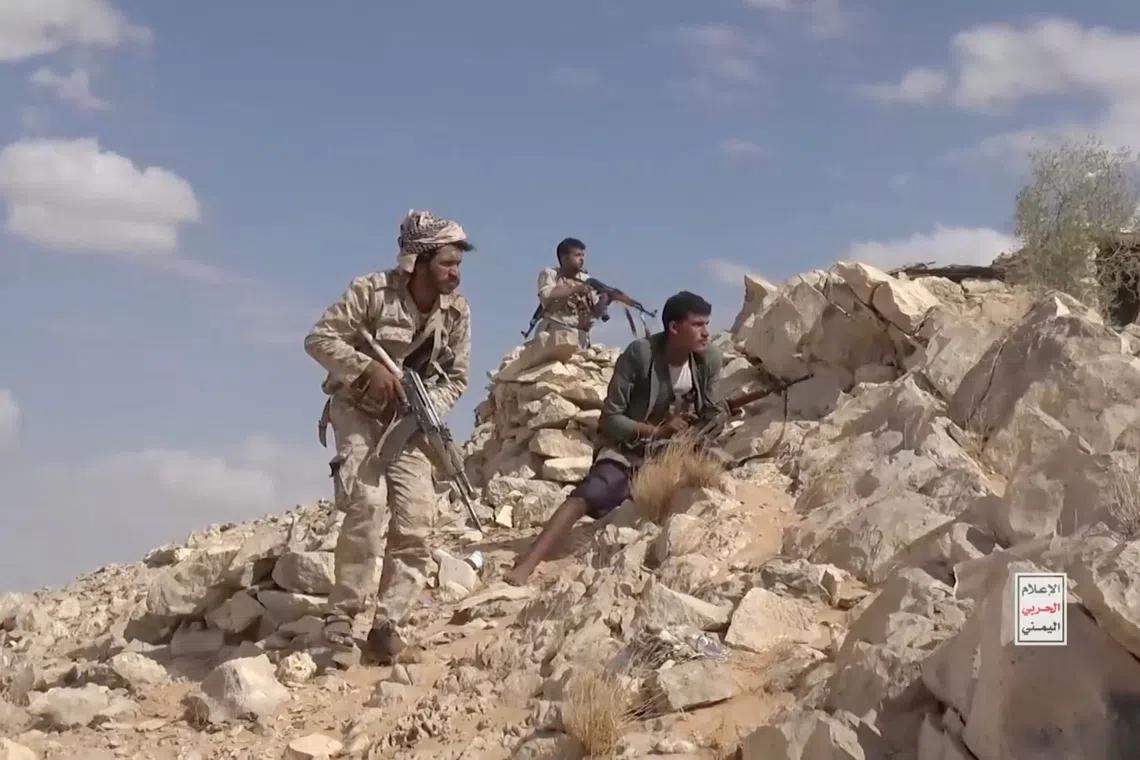
Yemeni military sources said the Houthis concentrated on seizing the strategic Kahbub (Kahbub) mountains located between the provinces of Taiz and Lahij, and fierce fighting took place on the outskirts of the Al-Wazi'iyah district in Taiz and the Ras Al-Arah region on the Indian Ocean coast.

The escalation produced a humanitarian toll of about seven hundred dead and thousands injured, with internal displacement of more than 120,000 Yemenis and the flight of thousands more across the sea to African shores.
Reuters reported that the Houthis advanced to take vital highlands that separate the coast from the south, following press reports indicating that U.S. President Donald Trump canceled at the last moment airstrikes Washington planned to execute against the group.
The New York Times said the American administration was preparing to launch raids in response to new Saudi appeals, but Trump ordered the operation canceled while aircraft were loaded with ammunition.
Trump weighs strikes, backs off
Rashad al-Alaimi requested American support to counter the rapid ground advance of the Houthi group near the Bab al-Mandab Strait, and a source at his office said Trump did not make any direct pledges to provide military aid.
Axios, citing American officials, reported that Trump reversed a plan to strike the Houthis based on a Saudi request, to avoid opening a new front of conflict and to prevent disrupting navigation in the vital waterway.

Reuters said Trump spoke by phone with Rashad al-Alimi, head of Yemen's Presidential Leadership Council, and the sources noted that al-Alimi asked for American support for his government in its fight against the Houthis.
Reuters also said two sources, one Yemeni and the other Western, told it that Trump did not make any direct pledge to provide military support during the call.
U.S. Secretary of Defense Lloyd Austin justified Washington’s reluctance to strike the Houthis by saying that the United States will not repeat what it did in Iraq and Afghanistan, and he added: "We did not completely destroy the Houthis, and there are other things we need to focus on such as Iran and China".
Mountains, displacement, and stakes
Brig. Gen. Hasan Jouni said battles on the western and southwestern fronts of Taiz were intensifying along the mountainous belt from Al-Wazi’ah to Jirdad and Jabal Kuhjub, and he said the fighting paved the way for controlling the mountains to continue fighting in other directions.
Jouni added that the mountainous region forms an eastern wall to the coast and separates the area from the city of Aden, while he said control of these mountains paves the way for developing positioning and military operations for both government forces and the Houthis.
Reuters reported that five Yemeni military sources said the Houthis were seeking to take control of strategic heights known as Jebel Kuhub in the Taiz and Lahij governorates, to secure their rear lines around Bab al-Mandab and open new fronts.
The United Nations warned that displacement could rise as fighting intensifies, and Djibouti’s Finance Minister Ylias Douali said the situation is “becoming more difficult” for his country.
Al-Manar said the Bab el-Mandab Strait lies between Yemen, Djibouti, and Eritrea, and it warned that disruptions could affect global supply chains, leading to higher transportation, insurance, and fuel costs.