Technology and Science19 June, 20263 min read
Investors Pour Billions Into Commonwealth Fusion Systems, Targeting Arc Power Plant Near Richmond, Virginia
This article is an automated aggregation of coverage from news outlets. Our editorials offer in-depth analysis curated by the NewsCord team.
Fusion startups have attracted substantial investment from venture funds and tech giants. The push toward commercial fusion faces major technical hurdles and uncertain timelines.

Fusion race accelerates
Fusion startups are racing toward commercial nuclear power as investors pour capital into projects that aim to harness the nuclear reaction that powers the Sun to generate nearly unlimited energy on Earth.
TechCrunch links the bullish wave to three advances—more powerful computer chips, more sophisticated AI, and powerful high-temperature superconducting magnets—and points to a U.S. Department of Energy lab announcement at the end of 2022 that produced controlled fusion with more power than the lasers imparted to the fuel pellet.
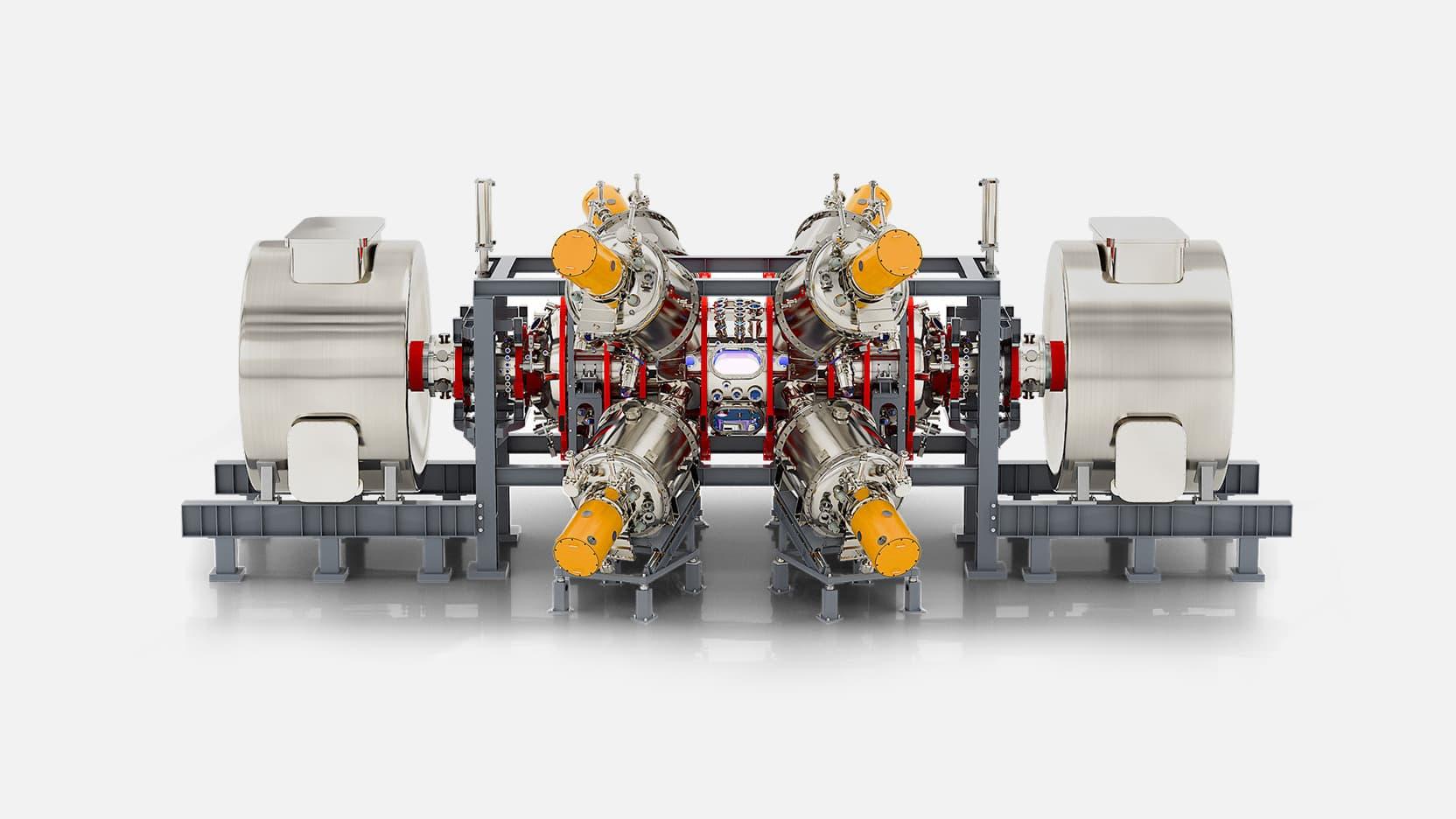
Commonwealth Fusion Systems (CFS) has raised about a third of all private capital invested in fusion companies to date, adding $863 million in its latest round and bringing its total raised near $3 billion, with Sparc expected to be operational in late 2026 or early 2027.
CFS plans later this decade to begin construction on Arc, a commercial power plant intended to produce 400 megawatts of electricity near Richmond, Virginia, and Google has agreed to buy half its output.
TAE Technologies, founded in 1998 and spun out of the University of California, Irvine by Norman Rostoker, uses a field-reversed configuration in which two plasma shots collide and the plasma is bombarded with particle beams to keep it spinning in a cigar shape.
TAE merges with TMTG
TAE Technologies is set to merge with Trump Media and Technology Group (TMTG), with the two companies saying the aim is to create "one of the first publicly traded nuclear fusion companies". BFM reports that the deal is scheduled for mid-2026, and that at the closing TMTG and TAE shareholders will own 50% each of the new company, valued at $6 billion. The same BFM account says the companies outline a timeline to build, as early as 2026, "the world's first industrial-scale fusion plant" with a capacity of 50 megawatts of electric power.
BFM adds that the new company will be co-led by Devin Nunes, the CEO of TMTG, and Michl Binderbauer, CEO of TAE, and that TMTG went public in March 2024. TechCrunch also says TAE announced in December 2025 that it would merge with Trump Media and Technology Group in an all-stock transaction valued at $6 billion, with TAE receiving $200 million plus another $100 million upon filing paperwork with the Securities and Exchange Commission.
Records and next obstacles
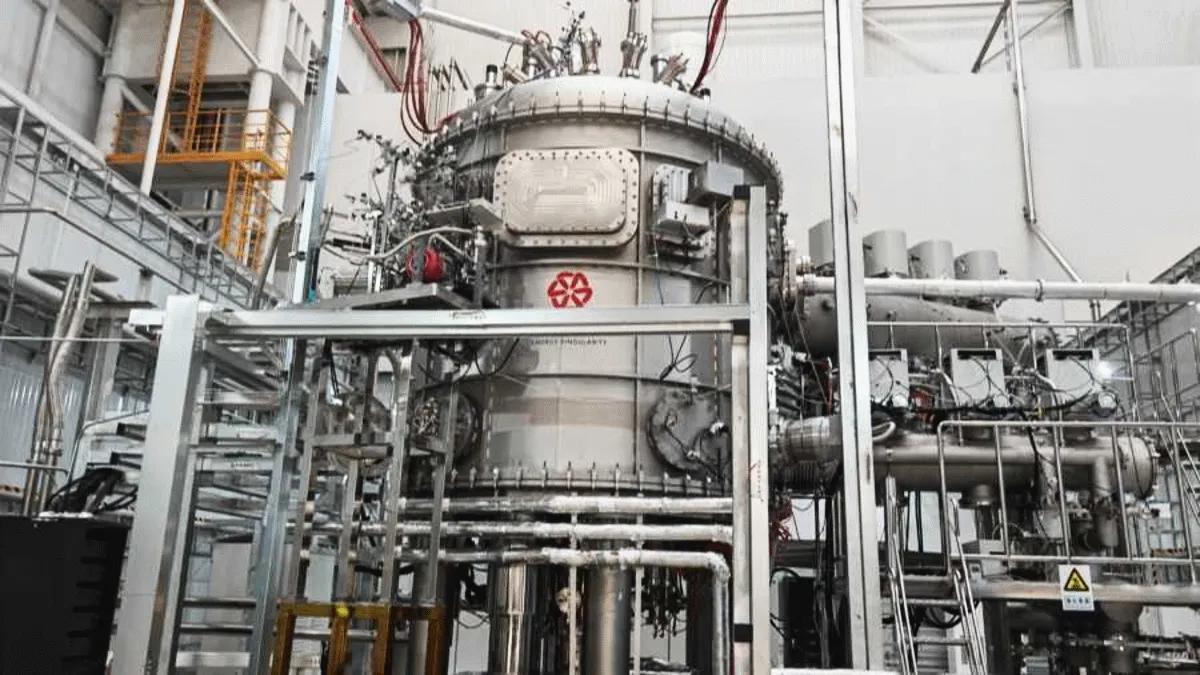
In China, Energy Singularity says its HH70 tokamak sustained a stable plasma current for 1,337 seconds, tying the French WEST record, while the performance was achieved with AI-driven control systems. Enerzine reports that the HH70’s 1,337-second duration precisely matches the record held since February 2025 by the French WEST tokamak, operated by the French Alternative Energies and Atomic Energy Commission (CEA). Enerzine also says Energy Singularity is already working on its next-generation device, the HH170, which aims to achieve a fusion-energy gain factor (Q) greater than 10 by 2027.
The same Enerzine account frames the milestone as necessary but insufficient, stating that maintaining a stable plasma for twenty-two minutes is a necessary but insufficient step toward producing electricity from fusion. Meanwhile, TechCrunch describes how CFS expects Sparc operational in late 2026 or early 2027 and later construction of Arc near Richmond, Virginia, while Helion plans to produce electricity from its reactor in 2028 and its first customer is Microsoft.