Iran29 August, 20262 min read
Iran Acting Defense Minister Seyed Majid Ibn-ol-Reza Says Iran Will Not Halt Defense Capabilities
This article is an automated aggregation of coverage from news outlets. Our editorials offer in-depth analysis curated by the NewsCord team.
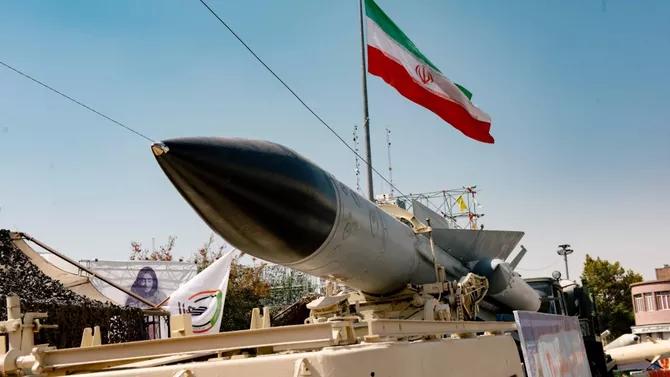
Iran will continue building defense capabilities, manufacturing more sophisticated weapons and equipment. Acting defense minister says Iran will not halt defense expansion, seeking greater deterrence.

Defense pledge after directives
Acting Defense Minister Brigadier General Seyed Majid Ibn-ol-Reza said Iran will not halt building defense capabilities and reaffirmed the armed forces will “spare no effort in realizing a “Strong Iran.” In a message to the Supreme Commander of the Armed Forces, Ibn-ol-Reza said the leadership’s guidance during Government Week served as an explicit command for defense personnel to build an even stronger nation. He said the Ministry of Defense considers itself directly tasked with fulfilling the leadership’s decree and that defense readiness must advance continuously to counter present and future threats.
Ibn-ol-Reza also said Iranian youth and elite specialists developed key technologies during severe sanction years and converted their technical expertise into defensive capabilities on the battlefield. He concluded by pledging that defense personnel would not abandon their posts and would never halt the development of Iran’s defense power.
Deterrence and sanctions pressure
Iran’s acting defense minister, Brigadier General Majid Ibn Reza, said his ministry would seek to add to Iran's current military capacities by manufacturing more sophisticated equipment and weapons. In the same statement, Ibn Reza said, “The recent imposed wars have shown us that a strong Iran is an Iran that is always ready; an Iran that must constantly enhance its capabilities and be prepared for today's and tomorrow's threats,” linking the pledge to deterrence against foreign threats.
Radio Free Europe/Radio Liberty reported that Iranian President Masud Pezeshkian told Iranian state television on August 28 that sanctions imposed on Iran are hurting the economy and that he “really don’t know what to say” when asked about the impact of US-imposed sanctions. RFE/RL also reported that Pezeshkian said Iran’s exports and imports had fallen by 25 to 35 percent in recent months as the US maintains its naval blockade of Iranian ports, citing AFP.

Arms production scale and resistance
Brigadier General Reza Talaei-Nik, a Ministry of Defense and Armed Forces Logistics spokesperson, said Iran has built strategic stocks of weapons, equipment and ammunition before the war while production continued during the conflict through a network of around 9,300 knowledge-based and private companies. Caspian Post, citing Mehr, reported Talaei-Nik said these firms support about two-thirds of the defense industry and that Iran’s arms production has more than doubled since the 12-day war. Talaei-Nik said Iran produces more than 1,000 types of weapons, equipment and ammunition, and that defense self-sufficiency exceeds 90 percent.
Radio Free Europe/Radio Liberty reported that Iranian Foreign Minister Abbas Araqchi said Iran would neither “forgive nor forget the assassination” of Ayatollah Ali Khamenei, and that Khamenei’s death opened a new phase of resistance for the country. RFE/RL said Araqchi told a conference in Tehran that the movement to avenge the death of the elder Khamenei would continue, as IRNA quoted him at the 40th International Islamic Unity Conference in Tehran.