Iran · 04 August, 2026 · 3 min read
Iran and Oman Make Progress on Deal to Reopen Strait of Hormuz
Iran proposes traffic control and fee collection for Hormuz under Oman oversight. Iran and Oman nearing agreement to reopen Hormuz with Tehran's influence over navigation.
Whether US and Iran are directly negotiating.
6 of 8 outlets skipped it: intermediate corridor proposal could merge northern and southern routes.
The Jerusalem Post was read line by line by the Watchdog: 6.9. See the score →
17outlets compared
Same story, two versions
tap a side to read it in full
PBS
“The officials spoke on condition of anonymity to discuss the sensitive negotiations unfolding behind closed doors.”Read the original ↗
Divergent claims about talks’ venue shape perceived US leverage and deal feasibility.
Hormuz deal talks advance
Iran and Oman have made progress toward a deal to reopen the Strait of Hormuz, with regional officials saying ships would enter the Persian Gulf through an Iranian-controlled route and exit through a route controlled by Oman.
“ships would enter the Persian Gulf through an Iranian-controlled route and exit through a route controlled by Oman”
Negotiations are still underway, and U.S. officials said any deal could be linked to lifting the U.S. blockade on Iran's ports, while a U.S. official familiar with the negotiations said any "temporary" routes would not involve approvals by Iran or charges.

Iran’s Foreign Ministry spokesman Esmail Baghaei said the bilateral talks with Oman are focused on "establishing safe inbound and outbound shipping lanes," and he added that the final results would be announced once concluded.
U.S. Secretary of State Marco Rubio told reporters that "there's been progress made in those talks, but not finality yet," as the strait—an open international waterway before the U.S. and Israel attacked Iran on Feb. 28—remains a central flashpoint.
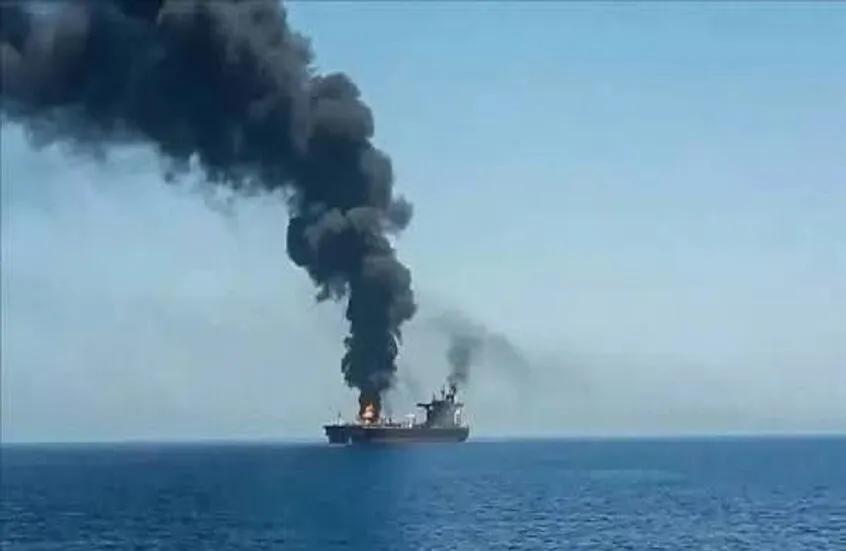
The dispute is playing out alongside reports of continued disruption, including a cargo ship reported being "hit by an unknown projectile" in the strait off the coast of Oman, according to the United Kingdom Maritime Trade Operations Center.
Tolls, control, and denials
The emerging framework includes service fees for security and preserving the maritime environment, and Trump reiterated his opposition to tolling in the strait, saying, "I'm not going to let them charge."
Treasury Secretary Scott Bessent told CNBC that "there is a chance we may have a deal today or tomorrow to open the strait," and he said the question of charges would be handled as "freedom of movement."

Iran’s position on control is contested in the reporting, with the Jerusalem Post describing a proposed arrangement under which Iran would secure access to the strait through its Iranian side and work would begin to clear naval mines in the middle of the strait.
At the same time, Iran denied any U.S. negotiations, and the Jerusalem Post reported that a source said the Americans were "far more" flexible in their demands than the Omanis.
In parallel, CNN en Español reported that Iran insisted it is negotiating only with Oman for a temporary agreement, while a senior Gulf official suggested there is a 50% chance of reaching a deal by Friday.
What’s at stake next
The potential agreement would be a strategic shift, because the PBS report says any agreement formalizing Iran's control of the strait would mark a significant strategic victory for Tehran, and it notes the U.S. could seek to block the deal by refusing to lift the blockade.P
“Any agreement formalizing Iran's control of the strait would mark a significant strategic victory for Tehran”
The Jerusalem Post framed the stakes as a question of whether the deal would be acceptable to the U.S., quoting a source saying, "Iran conveyed a message: Any solution that we agree to and sign must also be approved by Washington."
The dispute is also tied to the broader war timeline, with the PBS report saying the strait was hit after the U.S. and Israel attacked Iran on Feb. P28 and that an interim agreement in June collapsed over escalating hostilities focused on the strait.
France 24 reported that Trump said a pact to reopen the Strait of Hormuz could be finalized this Wednesday, August 5, while Reuters-linked sources said the proposed agreement between Iran and Oman would grant Tehran control over ships entering the Gulf through the Strait of Hormuz.
Meanwhile, the La Vanguardia report said Iran’s blockade has caused an 80% drop in ship traffic, with only 12 vessels daring to cross it in the last day, underscoring how quickly the situation could affect maritime movement even as talks continue.