Iranupdated 1h ago3 min read
MapIran’s Qalibaf Says U.S. Must Meet Demands To Reopen Strait Of Hormuz In Two Days
“it will be possible to reopen the Strait of Hormuz within two days”
“Consultations through mediators are very intensive.”
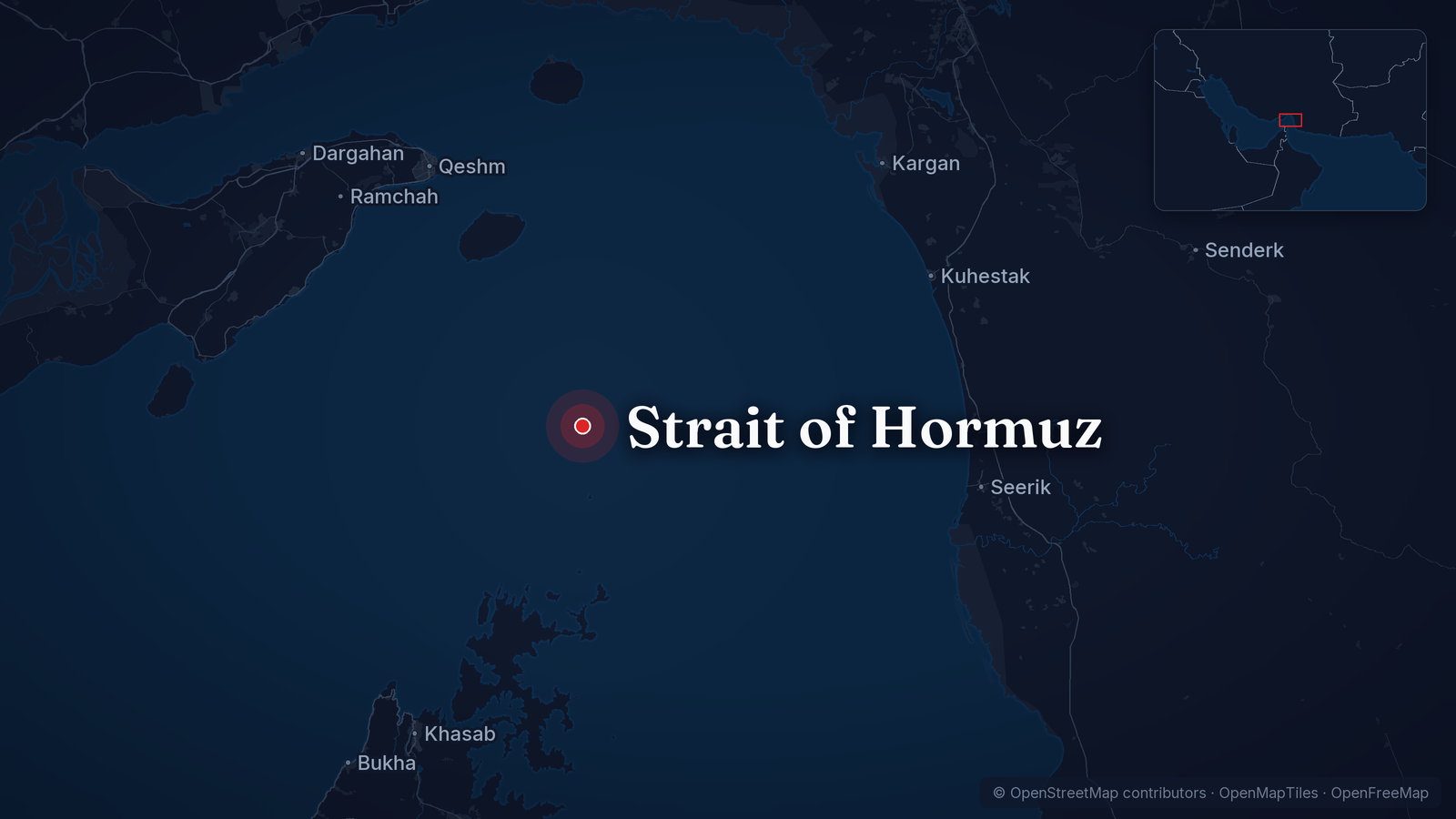
Map: © OpenStreetMap contributors, ODbL · Cropped for layout
This article is an automated aggregation of coverage from news outlets. Our editorials offer in-depth analysis curated by the NewsCord team.
Strait of Hormuz could reopen within two days if the U.S. meets Iran's demands. Talks mediated by Qatar include Iran's seven-step plan as preconditions.
Save coverage image
The Jerusalem Post was read line by line by the Watchdog: 3.0. See the score →
Two-day Hormuz condition
Iran’s parliament speaker Mohammad Baqer Qalibaf told a parliamentary session that “Iran will never surrender; resistance has driven US, Israel into desperation,” while he insisted “the ball is now in Washington’s court” over how to avoid war. Iran’s Foreign Ministry spokesman Esmaeil Baghaei said Iran could reopen the Strait of Hormuz and resume negotiations within two days if the United States meets Iran’s “legitimate” demands, and he said Iran had reduced Tehran’s seven-day plan to two days. Iran’s Foreign Minister Seyed Abbas Araghchi said consultations mediated by Qatar and Pakistan had become “extremely intensive,” with frequent delegation visits, phone conversations and message exchanges.
Iran’s President Masoud Pezeshkian said his administration was committed to resolving challenges through dialogue and stressed that no one benefits from war. Iran’s officials framed the offer as conditional on Washington’s decisions, with Baghaei saying “everything depends on the American side’s decision” on how to proceed.
Warnings after Qeshm strikes
Iran’s warnings followed U.S. attacks on Qeshm Island, which the sources described as “defensive” actions while Iran and its officials said they had offered a “firm and rational response” to the joint offensive by the United States and Israel.
Mohamad Baqer Qalibaf told the United States that “the ball is in the American court to avoid war,” and he said Iran’s military and strategic response to any enemy mistake would be unpredictable.
A senior Iranian official told Reuters that Iran and the United States were far from reaching a deal to end the war, and the official said “Tehran's conditions must be met if the US wants Hormuz reopened.”
The Reuters account also said the Revolutionary Guards downed a U.S. MQ-9 drone overnight in the skies over the east of the Strait of Hormuz.
The same Reuters reporting said mediators were working to narrow gaps after Qatari mediators traveled to Tehran on Monday night for talks on a version of the draft US-Iran deal that had been under negotiation for the past eight days.
Diplomacy, escalation risks
Reuters said contacts between Iran and the United States to end their eight-month war were continuing after days of Iranian talks with Qatari mediators ended with altered proposals but no breakthrough. Iran’s Foreign Minister Abbas Araqchi told state media that “Consultations through mediators are very intensive,” and he said “everything depends on the political rationality of Washington.” Reuters also said oil prices fell nearly 4% on Monday on hopes that the latest round of mediation could lead to a diplomatic solution, even as Iranian sources believed a new U.S. attack was still more likely than a deal.
China’s Foreign Minister Wang Yi told senior Iranian security official Ali Bagheri Kani in Beijing that all parties should focus on political solutions rather than resorting to arms again, and Russia’s Foreign Ministry said reports of new military action against Iran were a cause for extreme concern. Reuters reported that a Qatari liquefied natural gas (LNG) tanker was struck in the Gulf by unidentified objects on Friday, and it said the last reported incident with a Qatari tanker happened in early July.