Iranupdated 25m ago2 min read
MapIran Executes Hassan Dioband, Hamid Kazemi, Reza Zanganeh Over January Protests in Karaj
“The increase in executions has also coincided with the US-Israeli strikes against Iran, which began in late February.”
“However foreign-based NGOs gave higher figures and the BBC received multiple accounts from Iranians of security forces opening fire on unarmed protesters.”
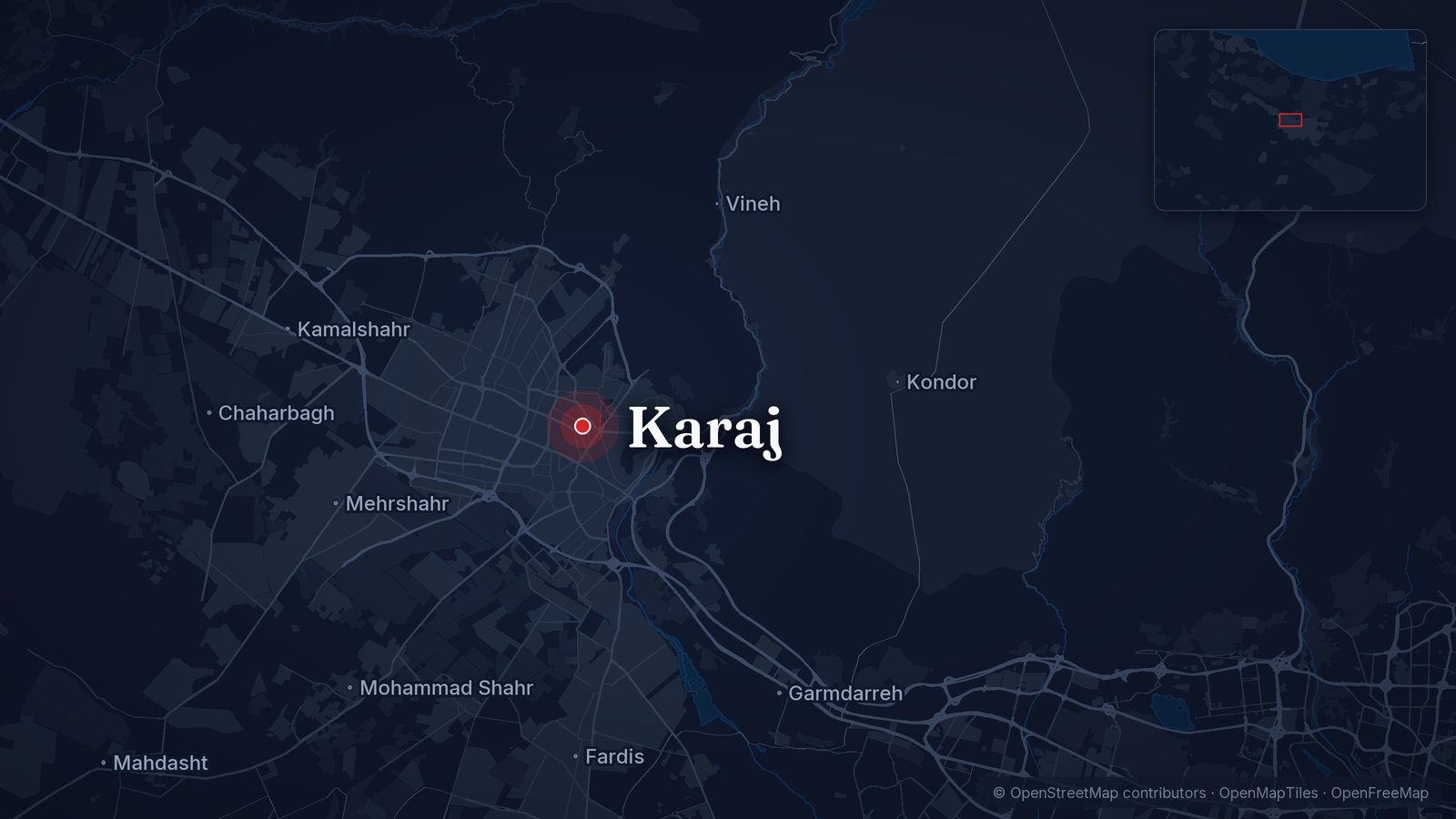
Map: © OpenStreetMap contributors, ODbL · Cropped for layout
This article is an automated aggregation of coverage from news outlets. Our editorials offer in-depth analysis curated by the NewsCord team.
Iran executed Hassan Divband, Hamid Kazemi, and Reza Zanganeh for armed disturbances in January protests. They were convicted of operations for Israel and the United States, state media said.
Save coverage image
The Independent was read line by line by the Watchdog: 7.3. See the score →
Executions in Karaj
Iran executed three men on Sunday, Hassan Dioband, Hamid Kazemi and Reza Zanganeh, after the judiciary said they were convicted over January 2026 protests in Karaj, west of Tehran. The judiciary’s Mizan news agency said the three were convicted of carrying out operations on behalf of Israel and the United States by throwing Molotov cocktails and grenades, using bladed weapons and firearms, and setting fire to public facilities.
The Supreme Court upheld their convictions and found them guilty of "participating in operational activities on behalf of the Israeli Zionist regime, the United States and hostile groups". The hangings at dawn of Dioband, Kazemi and Zanganeh brought the number of men hanged over the January protests to at least 39, and Norway-based Iran Human Rights warned that many more were at risk.
Charges and alleged damage
Iranian authorities said the three men were accused of using firearms, grenades and Molotov cocktails, setting fire to public facilities, and damaging an electricity substation in Karaj, causing power outages in some areas. Iranian authorities reported more than 3,000 deaths and blamed the violence on "terrorist acts" orchestrated by the US and Israel.
Dioband was arrested on January 11 after investigations identified him as a suspect in attacks on public property and incitement to violence, and ten others accused of participating under his supervision were later arrested. The judiciary said Dioband was arrested on 11 January after investigators identified him as a suspect in attacks on public property and incitement to violence, and it said the Supreme Court subsequently upheld the sentences.
Supreme Court, assets, and fallout
The judiciary said the three were sentenced to death and ordered to have their assets confiscated, and it said the executions were carried out after the Supreme Court upheld their sentences. The executions were the latest in a series linked to the protests, including those of people accused of having ties to Israel and the United States, and the protest movement peaked on 8 and 9 of January.
UN human rights chief Volker Türk was alarmed by the rise in death penalties, and he warned in August that at least 56 people had been executed on national security-related charges since 19 March. Rights groups described the trial as unfair, and Norway-based Iran Human Rights warned that many more were at risk.