Iranupdated 2h ago3 min read
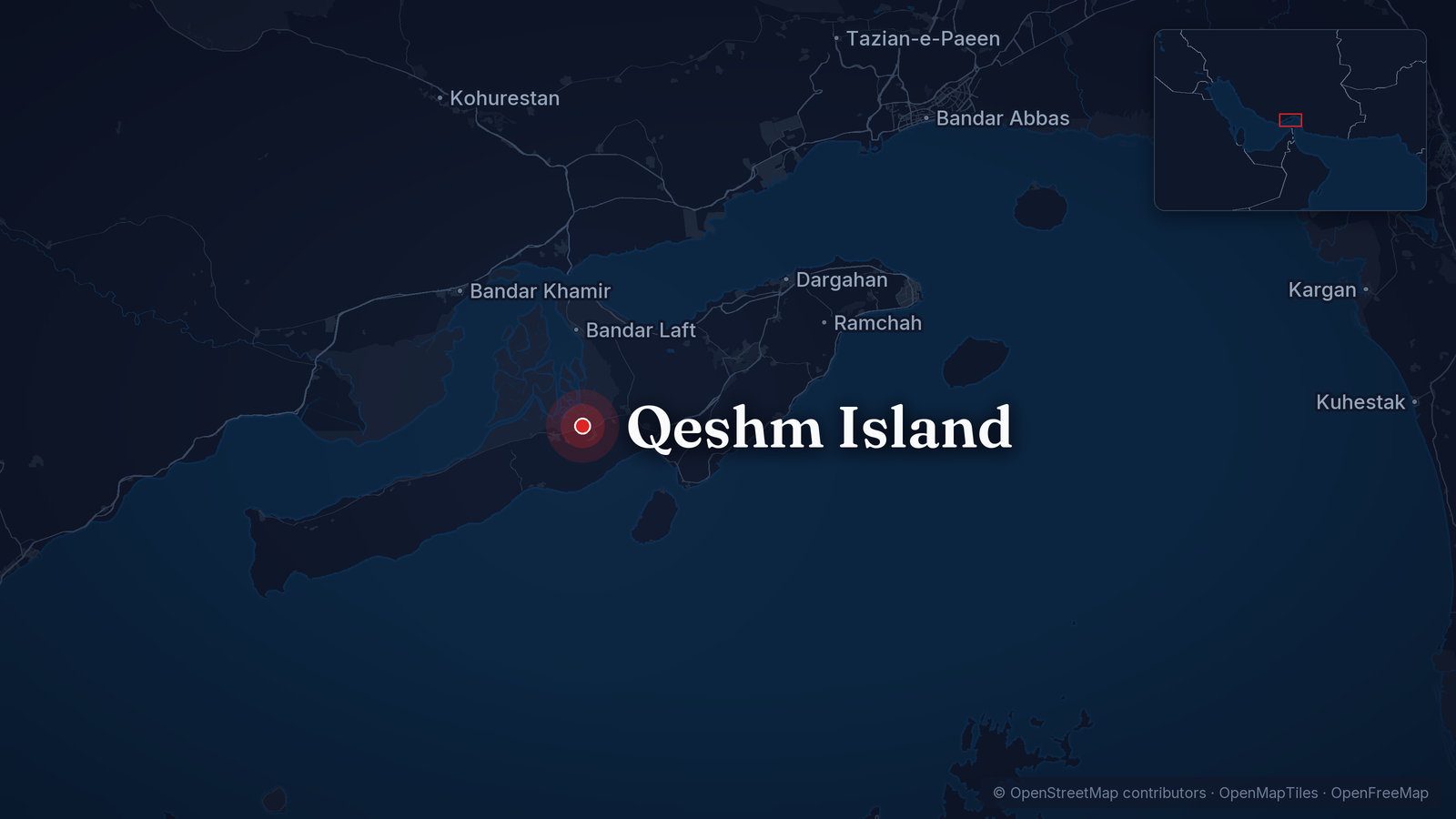
MapIran Warns of Unlimited Response After U.S. Strikes Qeshm Island, Kuwait Reports Drone Attacks
“The strike was in response to IRGC aggression targeting U.S. personnel and assets.”
“Tuesday’s US strikes appear similar to others in recent weeks around the Strait of Hormuz”
Map: © OpenStreetMap contributors, ODbL · Cropped for layout
This article is an automated aggregation of coverage from news outlets. Our editorials offer in-depth analysis curated by the NewsCord team.
US strikes Qeshm Island; Iran escalates with drone attacks on Gulf targets. Kuwait repelled drones; Bahrain intercepted attacks amid regional flare-up.
Save coverage image
Daily Mail was read line by line by the Watchdog: 6.0. See the score →
Qeshm Strike, Gulf Retaliation
The U.S. launched airstrikes on Iran's Qeshm Island on Tuesday, and Iran's army chief warned Wednesday that Tehran would respond more forcefully and severely, without geographical limitations, if the U.S. military takes action again. The Iranian army said it launched drone strikes on U.S. military targets in Kuwait, and the Iranian army said its combat drones targeted Patriot air defense systems and launch pads used by the U.S. military at the Ali Al Salem Air Base in Kuwait. Kuwait said it repelled the first Iranian attack in two months after the U.S. strikes on the island, and Kuwait's military said its air defences engaged "drone threats" but did not report any casualties or damage.
The UK Maritime Trade Operations (UKMTO) centre issued a warning Wednesday after it received a report of another tanker coming under attack in the Strait of Hormuz, saying the tanker was hit by an unknown projectile about 13 nautical miles off the coast of Oman on Tuesday evening. The Iranian army said it continued to claim control over the strategic Strait of Hormuz, while the U.S. said it was enforcing a naval blockade of the country's Persian Gulf and Gulf of Oman ports.
Kuwait, Bahrain, and Missing Crew
Kuwait's foreign ministry condemned the attack, saying it "flagrantly violated Kuwait's sovereignty, directly threatened its security and stability, and constituted a grave breach of international law." Bahrain's military said its air defence systems had "intercepted and destroyed several Iranian aerial attacks," and Bahrain reported four attacks over the past six days following a two-month lull. The United Arab Emirates' state oil firm said a crew member was missing after one of its tankers was attacked in the Gulf waterway on Tuesday, and ADNOC said the rest of the crew were safely evacuated and 11 were receiving medical care.
The UKMTO reported that a tanker was struck by an unknown projectile about 13 nautical miles (24km) north of Khasab, in Oman's Musandam peninsula, and it said the attack caused a fire on board that was extinguished. Iran said two oil tankers and a ship carrying liquefied natural gas (LNG) had caught fire after hitting naval mines while sailing along an "authorised route," while the U.S. and Iran remained in a standoff over the Strait of Hormuz.
Escalation Risks and Negotiations
The BBC said the recent exchanges of fire, as well as deadlock in negotiations on a peace deal, have raised fears of a major escalation in the nine-month-old war. Qatar, which mediated in stalled indirect talks between Iran and the US, said the Iranian attacks on its neighbours were a "dangerous escalation that threatens to complicate efforts aimed at containing tensions." The U.S. and Iran reached a preliminary agreement to end the conflict and reopen the strait in June, but the BBC said it collapsed within weeks after Iranian attacks on shipping resumed and the U.S. reinstated its blockade.
The BBC said Iran insisted it would not give up some measure of control over the waterway and began targeting vessels using a southern route through Omani waters that avoids its preferred route through Iranian waters. The BBC reported that the U.S. military has been providing protection for tankers shuttling through the Strait of Hormuz, allowing crude oil exports from Gulf states to reach around 80% of pre-war levels, according to analysts.