Iran08 September, 20263 min read
Iran’s Islamic Revolutionary Guard Corps Destroys MQ-1 Drone West Of Strait of Hormuz
This article is an automated aggregation of coverage from news outlets. Our editorials offer in-depth analysis curated by the NewsCord team.
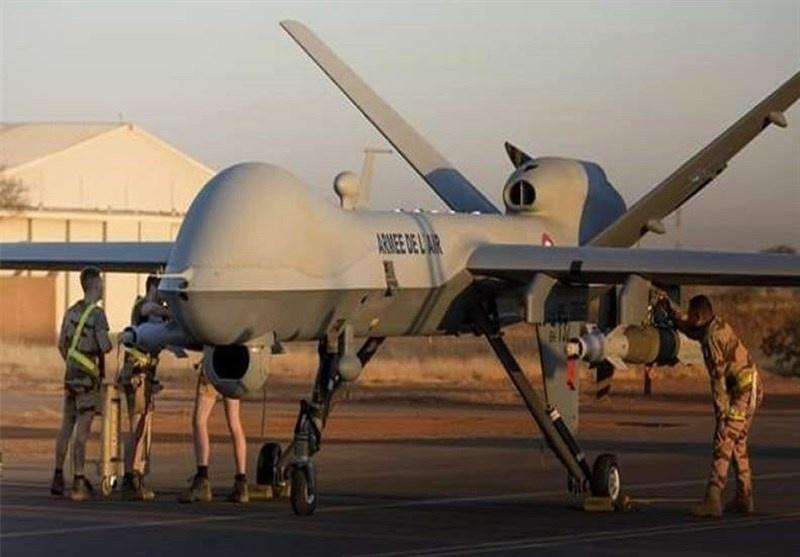
IRGC announced it intercepted and destroyed a MQ-1 drone west of the Strait of Hormuz IRGC said the drone was shot down by air defenses west of Hormuz
62 outlets told this the same way.
The Independent was read line by line by the Watchdog: 5.2. See the score →
Drone, blockade, and talks
Iran’s Islamic Revolutionary Guard Corps said Tuesday that an MQ-1 drone was intercepted and "destroyed" west of the Strait of Hormuz, adding that the drone was shot down by air defenses and providing no details on its operator or the exact location.
The drone claim came amid heightened tensions between Iran and the US over navigation through the Strait of Hormuz, where the two countries have remained at odds over navigation through the strategic waterway.

Negotiations in Oman between Iran and Gulf Arab states were postponed at the request of some regional countries, Iranian media reported, with the postponement coming hours after an attack on an Iranian commercial cargo vessel killed one person in the Strait of Hormuz.
Omani Foreign Minister Badr Albusaidi said on X that the meeting, scheduled for Monday, had been postponed "in the interests of consensus," while Iranian state media reported an attack off Qeshm Island that killed one person and wounded four others.
The US and Israel launched large-scale attacks on Iran on Feb. 28, targeting government buildings, military sites, missile infrastructure and air defenses, and the conflict has since expanded across the region as diplomatic efforts have sought to end the hostilities.
Voices on responsibility
Iran’s President Masoud Pezeshkian said on social media, "Our people can’t be bullied into submission. Iran won’t surrender," as the Strait of Hormuz dispute remained tied to the wider US-Iran conflict.
Trump offered a different assessment, saying Iran "wants to make a deal so bad" that "they’re calling constantly," while he spoke at his golf course in Doonbeg, Ireland, where he was attending a tournament.

Omani Foreign Minister Badr Albusaidi framed the postponement as a consensus move, while the Omani Energy Minister Salim al-Aufi told remarks cited by Reuters that disruptions in the Hormuz Strait are likely to be short-lived and expected to stabilize in the medium term.
Iranian authorities reported one person killed and four crew members injured aboard an Iranian commercial vessel attacked off its shores, and the British Maritime Trade Operations agency reported a vessel hit by a shell during its passage through the Strait on Sunday, causing a fire and forcing the crew to evacuate.
An Iranian source said the understanding reached between Tehran and Muscat does not mean the waterway will reopen immediately, and Iranian media quoted the source saying Tehran presented seven conditions to the United States to reopen the strait.
What’s at stake next
The postponement of the regional meeting in Oman, including a session scheduled for Monday in the Omani city of Salalah, left the question of security of navigation in the Persian Gulf Strait unresolved as attacks targeting the strategic waterway continued. Oman announced the postponement of the regional meeting planned for Monday "in order to preserve consensus," and the Oman News Agency said the meeting was postponed "to create conditions conducive to constructive dialogue" supporting sustainable understandings. Iranian officials tied reopening the Strait of Hormuz to US conditions, with an Iranian source confirming that navigation will remain halted unless Tehran’s conditions are implemented, and that the understanding with Oman does not itself constitute a decision to open the maritime passage.
The dispute over passage routes remained central to the conflict, with Al Jazeera reporting that before the war about one-fifth of the world’s oil and liquefied natural gas (LNG) supplies were shipped from Gulf producers via this route, and with traffic through the Strait of Hormuz becoming one of the central issues in the conflict. As negotiations stalled, oil prices surged and shipping activity declined, with Brent crude oil up as much as 3.6% on Monday surpassing $108 per barrel before ceding gains, while preliminary vessel-tracking data showed the number of cargo ships transiting the Hormuz Strait decreased early in the week to below the 10-day average of 14.